 Save
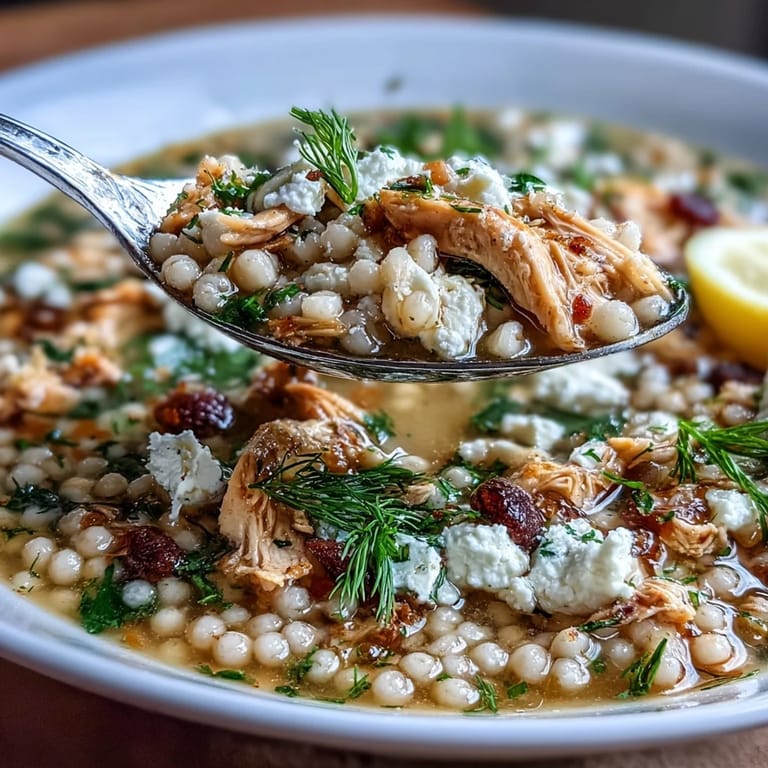
Save My neighbor Maria handed me a steaming bowl of this soup on a gray Tuesday afternoon, insisting I taste what she'd made for her family. One spoonful and I was transported, the bright lemon cutting through the creamy feta while tender chicken dissolved on my tongue. She laughed at my expression and said, 'It's nothing fancy, just what my grandmother made in Athens.' That bowl changed how I thought about simple weeknight cooking.
I made this for my book club last month, quadrupling the batch because I wasn't sure if everyone would want seconds. They did, and then I had four people asking for the recipe before dessert arrived. What surprised me most was how it tasted even better the next day, the flavors somehow becoming deeper and more connected overnight.
Ingredients
- Boneless, skinless chicken breasts (2, about 400 g): Use breasts that are roughly the same thickness so they cook evenly and don't end up with one piece overdone while the other is still raw.
- Low-sodium chicken broth (1.2 liters or 5 cups): I learned the hard way that regular broth can make this taste too salty, especially once the couscous absorbs the liquid.
- Bay leaf (1): Don't skip this tiny leaf, it's the quiet backbone that makes everything taste more intentional and layered.
- Yellow onion, finely chopped (1 medium): The finer you chop it, the faster it softens and the more evenly it distributes its sweetness throughout the soup.
- Carrots, peeled and diced (2 medium): Cut them small enough that they cook in the same time as everything else, about the size of a pea or slightly larger.
- Celery stalks, diced (2): This is what gives the soup its whisper of earthiness, the thing people taste but can't quite name.
- Garlic cloves, minced (3): Mince these fine and add them after the softer vegetables so they don't burn and turn bitter.
- Extra virgin olive oil (2 tablespoons): Use the good stuff here since you're tasting it raw, not buried under other flavors.
- Pearl couscous (150 g or 3/4 cup): Unlike regular couscous, these tiny pearls stay distinct and don't turn to mush, keeping the soup texture light and interesting.
- Lemon zest and juice (1 large lemon): Zest it before juicing and add the zest early so it infuses the broth, saving the juice for the very end to keep that bright pop alive.
- Dried oregano (1/2 teaspoon): A small amount goes a long way, giving the soup that unmistakable Mediterranean warmth.
- Ground black pepper (1/4 teaspoon): Fresh cracked is better, but ground works beautifully here.
- Salt, to taste: Taste at the end after everything is cooked since the broth and cheese both bring their own saltiness to the party.
- Feta cheese, crumbled (80 g or about 3 oz): Buy a block and crumble it yourself if you can, the texture is better than pre-crumbled and it melts more naturally into the hot soup.
- Fresh dill, chopped (2 tablespoons): Add this at the very last second so it stays bright green and doesn't turn dark and tired looking.
- Lemon wedges, for serving: These let people adjust the brightness to their own preference, which somehow makes them feel like they're cooking it themselves.
Tired of Takeout? 🥡
Get 10 meals you can make faster than delivery arrives. Seriously.
One email. No spam. Unsubscribe anytime.
Instructions
- Heat the oil and soften the vegetables:
- Pour olive oil into a large pot and let it warm over medium heat until it shimmers slightly. Add your chopped onion, carrots, and celery, stirring occasionally until the onion turns translucent and the carrots soften a bit, about 5 minutes total.
- Wake up the garlic:
- Stir in your minced garlic and let it cook for just about a minute until the kitchen smells incredible, then immediately move to the next step so it doesn't burn.
- Build the broth base:
- Pour in your chicken broth slowly while stirring, then add the bay leaf and let everything come to a gentle simmer over medium-high heat, watching for small bubbles breaking the surface rather than a rolling boil.
- Cook the chicken gently:
- Add your chicken breasts to the simmering broth and cook for 12 to 15 minutes, just until a knife slides through the thickest part without any pink inside. The broth should stay at a gentle simmer, not a vigorous boil, so the chicken stays tender.
- Shred and return:
- Remove the chicken and bay leaf with tongs or a slotted spoon, setting the chicken on a cutting board to cool slightly. Once it's cool enough to handle, shred or chop it into bite-sized pieces, then stir it back into the pot.
- Add couscous and aromatics:
- Stir in the pearl couscous, dried oregano, lemon zest, and black pepper, keeping the heat at a gentle simmer. Let everything cook together for 10 to 12 minutes, stirring occasionally, until the couscous is tender and has absorbed some of the golden broth.
- Brighten with lemon juice:
- Remove the pot from heat and stir in your fresh lemon juice, then taste and season with salt little by little until it's just right for you. The soup should taste vibrant and alive, with the lemon singing through every spoonful.
- Finish and serve:
- Ladle the hot soup into bowls and top each one generously with crumbled feta and fresh dill, serving alongside lemon wedges so people can add as much brightness as they want.
 Save
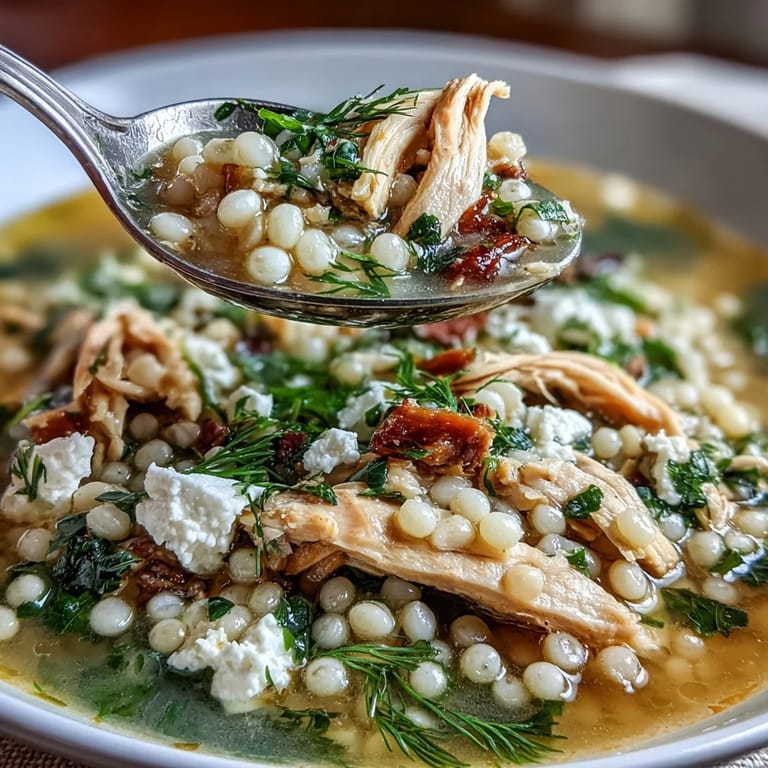
Save My daughter asked for seconds and thirds of this soup, which never happens unless it's her birthday cake. She told me it tasted like what a warm hug would taste like if hugs were edible, and somehow she'd said exactly what I'd been trying to put into words.
Why Pearl Couscous Changes Everything
The first time I made this soup, I used regular couscous out of stubbornness, thinking it was all the same. The result was mushy and waterlogged, like the soup had eaten the couscous instead of the other way around. Pearl couscous, though, those little round balls stay distinct and chewy even after simmering in broth, giving the soup actual texture and making it feel more substantial without being heavy. It's one of those small swaps that shouldn't matter but absolutely does.
The Power of Adding Lemon at the Right Moment
I learned this lesson when I made the soup for a dinner party and added all the lemon juice at the beginning like I would with other liquids. By the time we ate it hours later, the brightness had faded completely and everyone said it tasted flat, missing something they couldn't name. Now I add the zest early to infuse the broth, but save every drop of juice for the moment right before serving, and suddenly people taste something they didn't even know they were missing.
Customizing Without Losing the Heart
This soup is forgiving enough that you can play with it, and that's part of why it became my go-to for busy weeks. Some nights I throw in baby spinach or kale in the final few minutes, watching the leaves wilt and turn emerald green, which somehow makes the whole thing feel healthier and spring-like. Other times I use bone-in thighs instead of breasts because the meat stays juicier and the broth develops this deeper, richer flavor that tastes like someone's been taking care of it all day. Just remember that the core magic, the thing that makes people want the recipe, is the balance of chicken, lemon, feta, and that bright herbaceous oregano note.
- Spinach or kale wilts in about 3 minutes, so don't add it until the very end or it'll disappear into nothing.
- Bone-in thighs need about 5 minutes longer to cook through, so adjust your timing accordingly.
- Crusty bread or warm pita is not optional, it's how you're supposed to eat this soup.
 Save
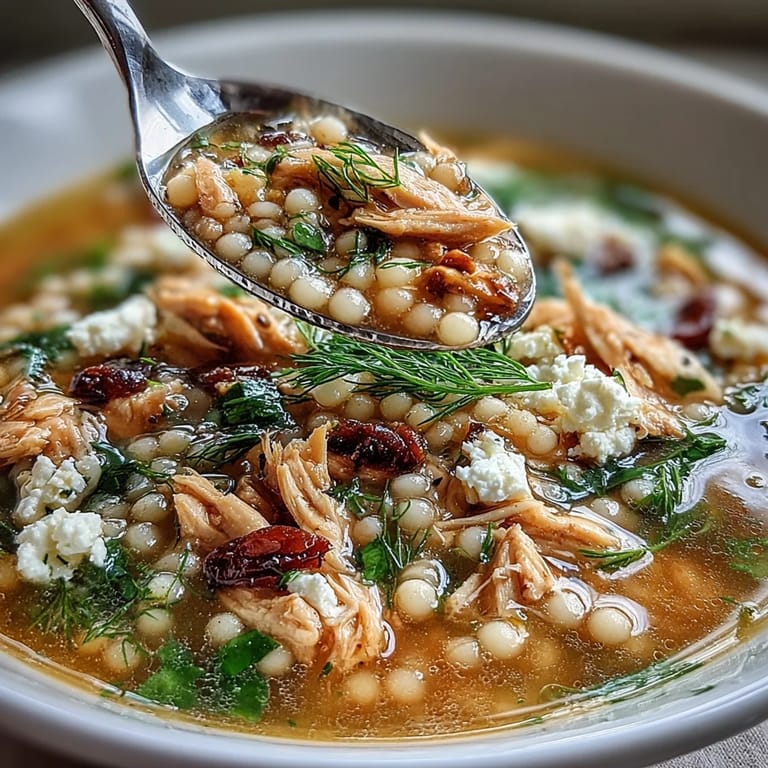
Save This soup has become the thing I make when someone needs feeding or when life feels too complicated to cook something fancy. It reminds me that sometimes the most comforting things are the simplest ones, as long as they're made with intention and a little bit of care.
Recipe Questions & Answers
- → Can I use bone-in chicken for this dish?
Yes, bone-in chicken thighs or breasts can be used to enrich the broth and add more flavor during simmering.
- → Is pearl couscous essential or can I substitute it?
You can substitute pearl couscous with Israeli couscous or small pasta like orzo for a similar texture.
- → How can I add more greens to this preparation?
Baby spinach or kale can be stirred in during the last 5 minutes of cooking for added color and nutrition.
- → What’s the best way to shred the cooked chicken?
Allow the chicken to cool slightly, then use two forks to pull it apart into bite-sized pieces for easy stirring.
- → Can I prepare this dish in advance?
Yes, it reheats well and flavors deepen overnight. Add crumbled feta and fresh herbs just before serving.