 Save
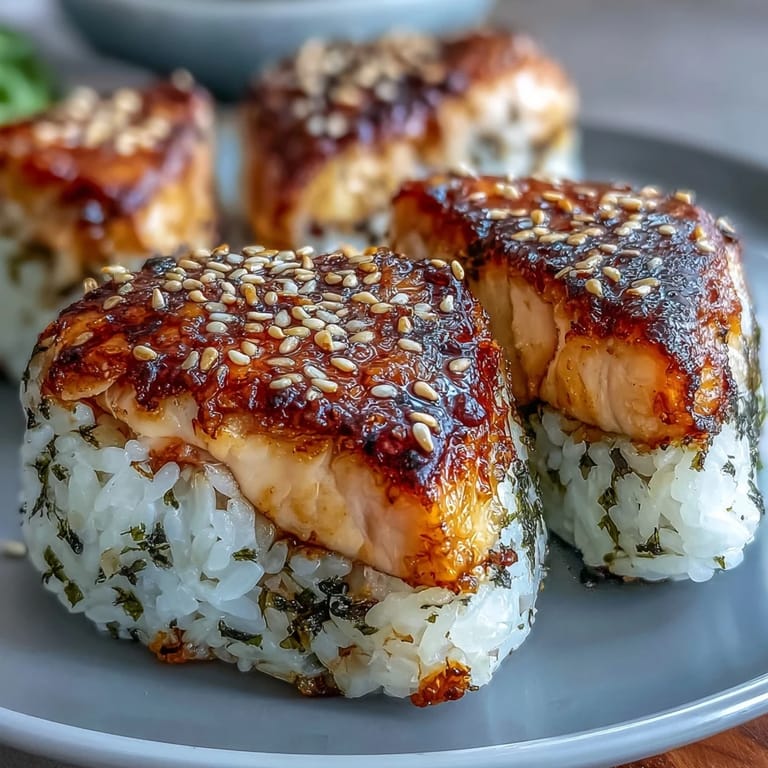
Save The sizzle of salmon on a hot grill always reminds me that dinner doesn't have to be complicated to feel a little special. I stumbled into making grilled salmon onigiri one quiet weekend when I had leftover fish and a bag of short-grain rice begging to be used. The first aroma that hit me was toasty rice mixed with that deep, savory scent of soy and sesame—utter comfort. Molding the warm rice in my hands, I was surprised at how quickly the shapes came together, imperfectly perfect and promising a good snack. There’s a certain hush in the kitchen with this recipe—the kind that says you’re making something just for yourself or someone you like a lot.
On a drizzly Tuesday, I made these for a friend who was visiting from Tokyo, hoping she’d feel a bit of home in my small kitchen. We swapped stories over each bite—her about konbini lunches, me about learning the fine line between sticky and gluey rice. Watching her eyes light up at the first taste, it felt like I’d gotten it just right, even if my triangles weren’t perfectly sharp-edged. There’s something about handing someone warm onigiri that makes even the rain feel cozy. The kitchen smelled of seaweed and grilled fish long after, and we lingered at the table until the teapot ran dry.
Ingredients
- Salmon fillet (200 g): Fresh, skinless salmon flakes easily after grilling and gives a rich, clean taste; pat it dry thoroughly before seasoning for the best sear.
- Soy sauce (1 tsp): Adds savory depth to the salmon; use a Japanese soy sauce for a subtle, rounded flavor.
- Mirin (1 tsp): A splash of this sweet rice wine rounds out the edges of the marinade and keeps the fish juicy as it cooks.
- Toasted sesame oil (1/2 tsp): Just a hint enhances aroma, so don’t overdo it or the flavor will overwhelm the rice.
- Salt and black pepper: Go easy—a pinch is all you need to balance the salmon’s richness.
- Japanese short-grain rice (2 cups): The essential base, yields stickiness that holds the onigiri together; rinse repeatedly until the water runs clear for the best texture.
- Water (2 1/4 cups): Precise measurement ensures perfectly tender rice; too much and it’ll be mushy, too little and it falls apart.
- Rice vinegar (1 tbsp, optional): Just a dash lifts and subtly seasons the rice.
- Nori sheets (8 small, halved): Protects fingers from sticky rice and adds an ocean-y contrast—slice with a sharp knife for neat strips.
- Toasted white sesame seeds (1 tbsp, optional): Sprinkle to add crunch and a slightly nutty finish.
- Water and salt (for shaping): Wet, salted hands keep the rice from sticking and give the onigiri a savory touch—don’t skip this step even if it feels odd at first.
Tired of Takeout? 🥡
Get 10 meals you can make faster than delivery arrives. Seriously.
One email. No spam. Unsubscribe anytime.
Instructions
- Wash and cook the rice:
- Scoop rice into a bowl and rinse under cold water, swirling with your hand, until the water clears—patience pays off here for fluffy grains. Cook the drained rice and measured water in a rice cooker or pot, then let it rest covered for ten minutes once done; stir in salt and rice vinegar if using.
- Prepare and grill the salmon:
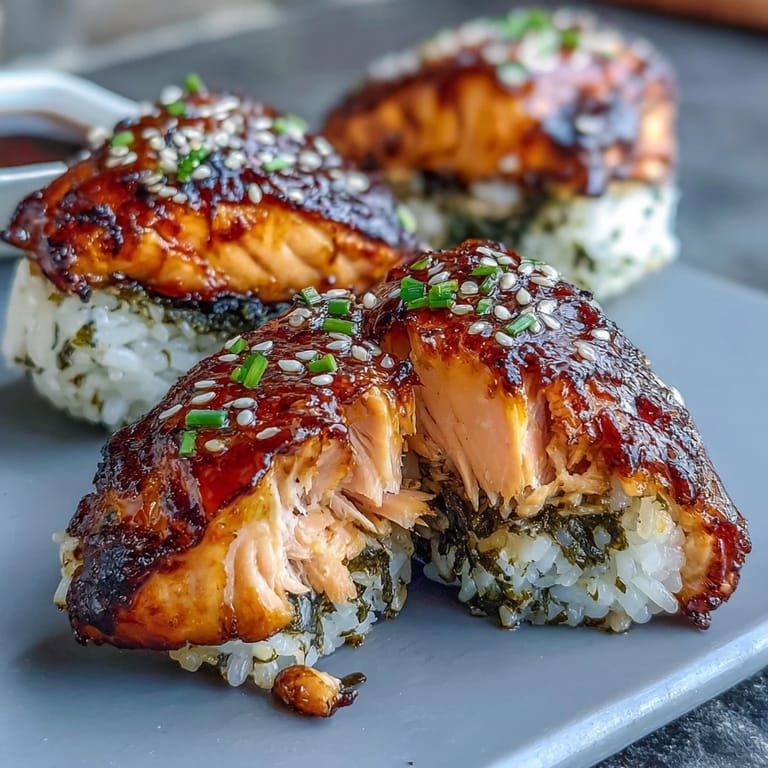
- Mix soy sauce, mirin, sesame oil, salt, and pepper in a small bowl and brush onto your salmon. Grill or bake until just cooked through and starting to flake easily; let cool slightly, then break apart with a fork into large, juicy pieces.
- Shape the onigiri:
- Fill one bowl with clean water and another with a little salt; dip your hands, rub with salt, and scoop a warm handful of rice. Flatten in your palm, add a small spoonful of salmon, then cup your hands to mold the rice snugly around it, shaping into a triangle or oval; gentle but firm is the trick.
- Crisp the rice balls:
- Heat a grill pan or skillet lightly brushed with oil over medium. Place onigiri in the pan and cook each side for 2–3 minutes until golden and crisp; brush with soy sauce if you like extra flavor before flipping.
- Finish and serve:
- Once crisped, wrap each onigiri with a strip of nori and sprinkle with sesame seeds. Serve while still warm or enjoy at room temperature with your favorite cup of green tea.
 Save
Save The first time I packed these onigiri for a lunchtime picnic, I didn’t expect how quickly they’d vanish into grateful hands. Somehow, even on a breezy park bench, the sound of the crispy exterior broke up the usual chatter, and suddenly all focus was on those savory little triangles—the sign of a snack well made.
No More Sticky Fingers
If you’ve ever peeled sticky rice off your hands, you know the struggle. I learned to keep a small bowl of water and a pinch pot of salt at arm's reach, dipping between every onigiri—no more cursing or clumped rice. This little ritual makes shaping almost meditative. Plus, the light salting does wonders for the finished taste. It’s the small prep tricks that steadily turn messy kitchen moments into smooth ones.
Salmon Leftovers Superstar
Honestly, onigiri is my favorite way to revive leftover salmon in the fridge. A microwave reheat can zap fish dry, but gently flaking it into fresh rice breathes new life into the fillet. The sharp crunch of grilled rice hides any telltale signs of yesterday’s dinner. With the nori wrapper, each bite feels brand new. Give leftovers a second chance and you’ll swear they were made for this recipe.
Make-Ahead and Packable Happiness
With early mornings, I often shape and grill a batch for the week and wrap them tightly to take on the go—onigiri keeps well for hours, especially if wrapped with nori just before eating. It’s comforting to rummage through your bag and find a homemade treat waiting. Just remember to let them cool before sealing, or the steam will soften the crisp exterior.
- Shape with slightly damp hands for tidy, quick work.
- Keep salmon flakes chunky so the filling stays juicy.
- Wrap nori last minute to keep it crisp.
 Save
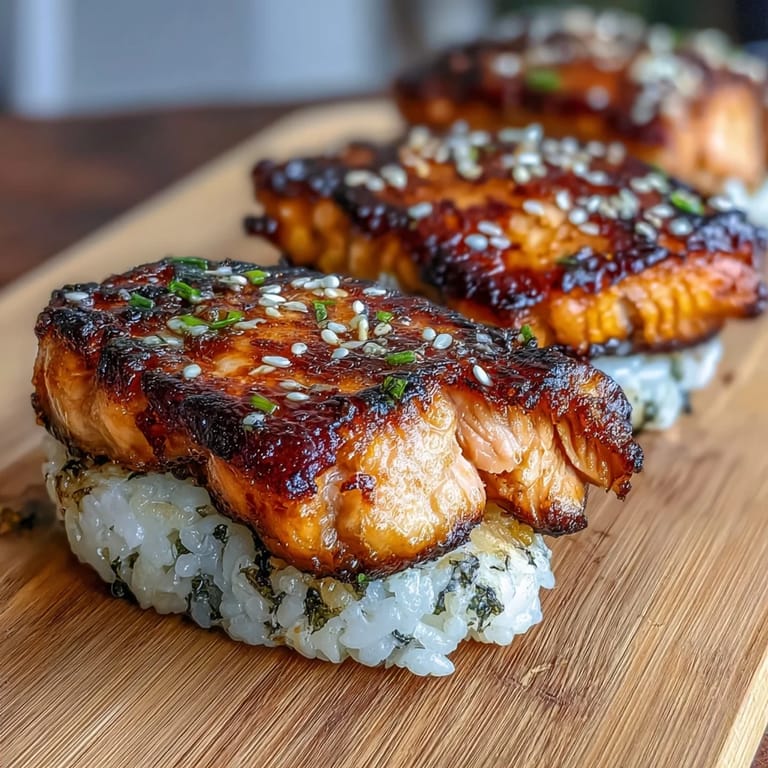
Save If you’re craving something that’s as calming to make as it is delicious to eat, grilled salmon onigiri are the hands-on comfort food you’ll want in your week. Share them, savor them solo, or pack up for an adventure—they truly don’t disappoint.
Recipe Questions & Answers
- → What rice works best for onigiri?
Use Japanese short-grain rice for its stickiness and plump grains; it binds easily when shaped and yields the classic texture.
- → How do I prevent rice from sticking to my hands?
Keep a small bowl of water nearby and wet your palms before shaping. Rub a pinch of salt into your hands to season and reduce sticking.
- → Can I use canned salmon instead of fresh?
Yes — drained canned salmon works well for convenience. Fresh grilled salmon provides a brighter flavor, but canned is a fine substitute for quick assembly.
- → How do I get a crisp exterior without drying the rice?
Use a lightly oiled nonstick skillet over medium heat and sear just 2–3 minutes per side until golden. Brush a thin layer of soy before flipping for color without overdrying.
- → What are good flavor additions for the filling?
Try a touch of wasabi, chopped scallion, toasted sesame, or a small amount of pickled plum (umeboshi) to add brightness and contrast to the salmon.
- → How should leftovers be stored and reheated?
Store wrapped onigiri in an airtight container in the fridge up to 48 hours. Reheat gently in a skillet or toaster oven to restore the crisp exterior; avoid microwaving too long or the rice will become gummy.