 Save
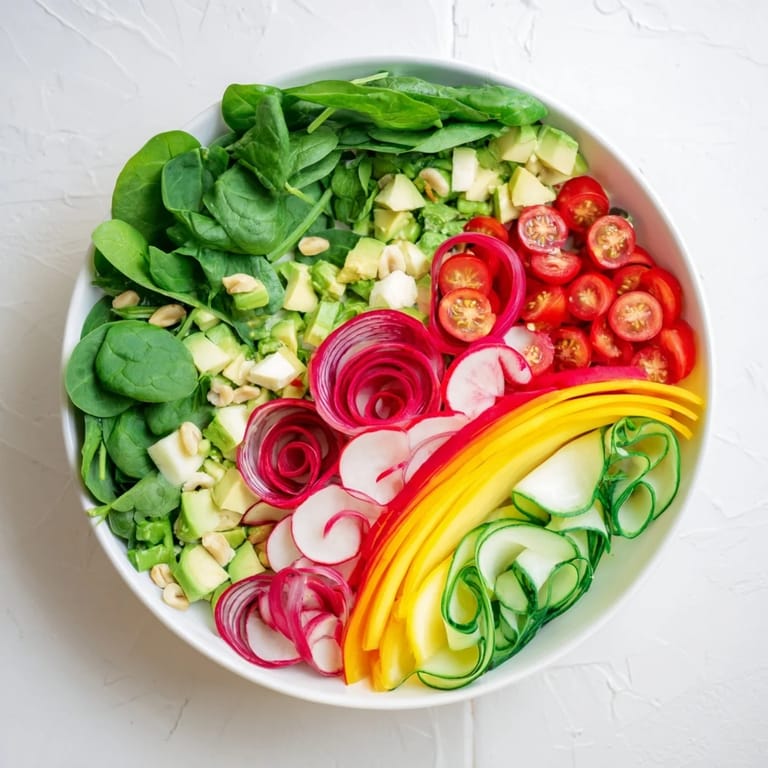
Save I discovered the Fibonacci Fan Salad while sketching spirals on a napkin during lunch, suddenly realizing that nature's most elegant pattern could actually make a salad more beautiful and somehow taste better too. There's something about arranging ingredients in expanding arcs that forces you to slow down, to really see each component instead of just tossing greens into a bowl. That first time, my dinner guests nearly forgot to eat because they were too busy photographing the plate. Now whenever I need something that feels both effortless and impressive, I reach for this one.
My mom watched me arrange this salad for a spring potluck and said it looked too nice to eat, then she changed her mind after the first forkful and came back for seconds before anyone else had even sat down. That's when I realized this wasn't just a pretty plate, it was proof that visual arrangement actually changes how your palate experiences food.
Ingredients
- Baby spinach leaves: The foundation of your spiral, mild and tender enough to never compete with what comes next.
- Arugula: Peppery backbone that prevents the salad from tasting one-note, creates the second arc beautifully.
- Cherry tomatoes: Halve them so they catch light and create visual rhythm as you fan them outward.
- Cucumber: Thin slicing gives you more pieces to work with, making the spiral feel fuller without heaviness.
- Radishes: Their snap is essential; they're what makes people go back for more because there's something surprising in every bite.
- Red onion: Finely sliced so it's more accent than bite, just enough to remind your mouth you're eating something alive.
- Avocado: Choose one that yields slightly to pressure but isn't mushy, slice it just before assembling.
- Blueberries: An unexpected touch that adds sweetness and fills visual gaps in the outer rings.
- Toasted walnuts: Toast them yourself if possible; the smell alone tells you when they're ready, about three minutes in a dry skillet.
- Feta cheese: Crumble it with your fingers rather than a knife so pieces vary in size and catch light differently.
- Extra-virgin olive oil: Quality matters here since it's a starring player, not a background ingredient.
- Lemon juice: Fresh squeeze only; bottled tastes thin against these bright greens.
- Honey: A touch of gentle sweetness that softens the Dijon's sharpness.
- Dijon mustard: The secret emulsifier that keeps oil and acid together in harmony.
Tired of Takeout? 🥡
Get 10 meals you can make faster than delivery arrives. Seriously.
One email. No spam. Unsubscribe anytime.
Instructions
- Set your stage:
- Place your round platter on a clean, empty counter where you can step back and see the whole spiral developing. Good light makes all the difference, so do this near a window if you can.
- Begin the spiral with spinach:
- Arrange spinach leaves in a loose crescent at the center, overlapping them slightly like roof tiles. This innermost arc is your anchor; everything else radiates from here.
- Expand with arugula:
- Fan arugula leaves outward from the spinach edge, creating a second arc that's visibly larger. The peppery greens will create color contrast and set the spiral's rhythm.
- Layer tomatoes with intention:
- Arrange halved cherry tomatoes in the next arc, spacing them so light reflects off each one. The red against green is your salad's main visual story.
- Add cucumber in thin slices:
- Overlap cucumber rounds in the next ring, tilting each one slightly so they catch light. You're building a geometric pattern now, so consistency matters.
- Thin radish slices complete the base:
- Slice radishes paper-thin and layer them in the next arc. Their pale pink and white bring brightness to the outer regions.
- Accent with red onion:
- Create a thin, delicate ring of red onion near the outer edge. This is restraint, not abundance.
- Nestle avocado and blueberries:
- Tuck avocado slices and blueberries into any visual gaps or along the spiral line. They should look like they found their perfect spot, not scattered randomly.
- Crown with nuts and cheese:
- Sprinkle walnuts and crumbled feta over everything, letting some pieces settle into crevices. Step back and look; this is your finished picture.
- Make the dressing:
- Whisk oil, lemon juice, honey, and Dijon together in a small bowl, tasting as you go. The honey dissolves the moment the warm spoon touches it.
- Dress just before service:
- Drizzle evenly and let everyone see the spiral before it's tossed. That moment of visual appreciation is half the recipe.
 Save
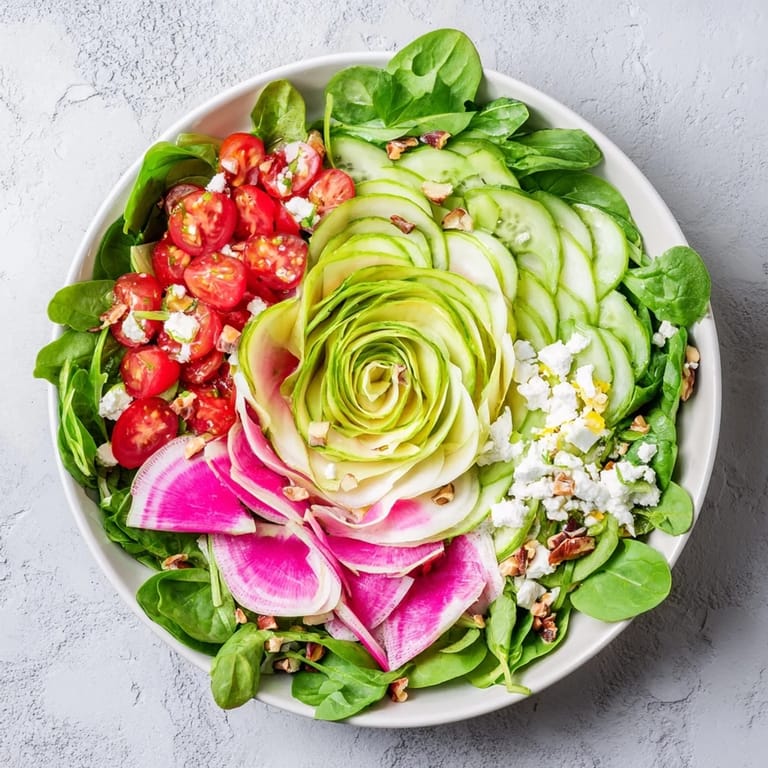
Save A friend once told me that eating with our eyes first is why we remember certain meals for years after the taste fades. This salad proved her right when someone asked me for the recipe three months later, saying they could still picture it on my table.
The Math Behind the Beauty
The Fibonacci spiral isn't just a nature thing or a math classroom curiosity, it's actually how our eyes naturally want to move across a plate. Using this pattern means you're not fighting human perception, you're working with it, which is why the arrangement feels so satisfying even if you can't name why. The spiral also solves a real kitchen problem: how do you balance flavors and textures when everything's visible at once? By expanding the portions slightly as you move outward, stronger flavors like the arugula and radishes are distributed so they enhance rather than overwhelm.
Why This Works for Every Occasion
Potlucks, date nights, rushed weeknight dinners, spring lunches, summer picnics—this salad never feels out of place because it adapts to your mood. Feeling protein-conscious? Add grilled chicken or chickpeas to any section. Want it heartier? Toss in some toasted seeds or nuts. The spiral structure means you can swap ingredients freely without breaking anything, which is freedom most salad recipes never give you.
Building Your Own Spiral
Once you've made this once, you'll start seeing spirals everywhere and wanting to rearrange them on your plate. The structure stays the same, but you can swap seasons: summer tomatoes and basil, fall roasted beets and walnuts, winter citrus and pomegranate seeds. The rules are simple: start small at the center, expand outward, keep similar colors from clashing, and let lighter ingredients catch the light. One last thought: use a platter with a wide, flat rim so the spiral has room to breathe and nothing falls off the edge when you're plating.
- Slice all vegetables just before assembly so nothing gets soggy.
- Chill your platter for five minutes before arranging if your kitchen is warm.
- Dress the salad only when everyone's seated and ready to eat.
 Save
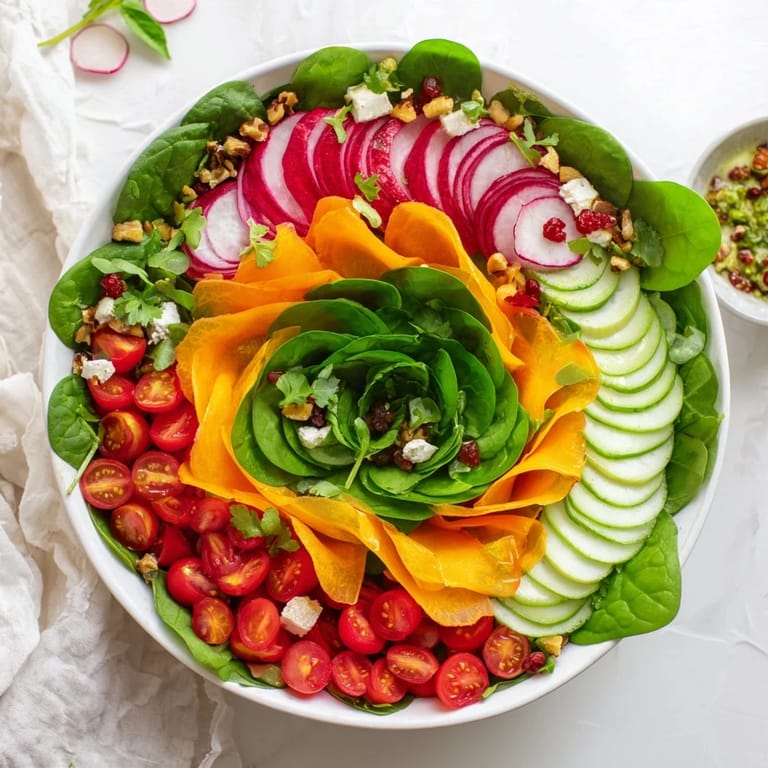
Save This salad reminds me that the most memorable meals often come from slowing down and paying attention to arrangement, not just flavor. It's permission to let your food be both nourishing and beautiful without apology.
Recipe Questions & Answers
- → What greens are used in this salad?
Baby spinach and arugula form the leafy base, providing fresh, crisp textures and peppery notes.
- → How is the salad arranged to achieve the golden spiral effect?
Ingredients are layered in expanding arcs starting with spinach and arugula, followed by cherry tomatoes, cucumber, radishes, and finishing touches like avocado and blueberries, mimicking the Fibonacci spiral.
- → What ingredients add crunch to the dish?
Thinly sliced radishes and toasted walnuts provide crisp and crunchy textures that contrast with softer elements.
- → What kind of dressing complements the salad?
A light dressing made with extra-virgin olive oil, lemon juice, honey, Dijon mustard, salt, and pepper enhances freshness and balances flavors.
- → Can this salad accommodate dietary restrictions?
It suits vegetarian and gluten-free preferences; nut allergies should be considered due to walnuts, and it contains dairy from feta cheese.
- → How should the salad be served for best presentation?
Arrange the ingredients just before serving on a large round platter to preserve freshness and showcase the spiral pattern effectively.