 Save
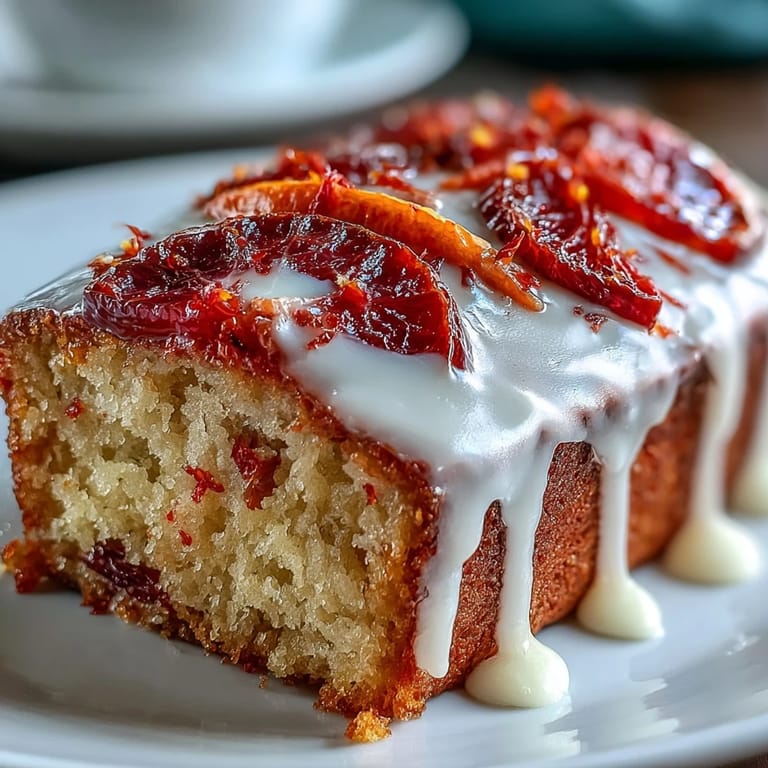
Save The kitchen smelled like winter citrus and warm butter when I pulled this cake from the oven on a gray February afternoon. I'd grabbed a bag of blood oranges on impulse at the farmers market, drawn to their deep crimson flesh, and suddenly wanted to bake something that tasted like sunshine. The yogurt makes the crumb impossibly tender, and that ruby-streaked icing caught the light in a way that made me pause before slicing. It's become my go-to when I need something beautiful without fuss.
I first made this for a friend recovering from a long week, and she texted me a photo of her second slice with just a heart emoji. There's something about the bright, jewel-toned icing that shifts the mood in a room. We ate it standing in her kitchen, still warm, with the winter light slanting through the window. She said it tasted like hope, which made me laugh, but I understood.
Ingredients
- All-purpose flour: The backbone of the cake; measure it by spooning into the cup and leveling off, never scooping directly, or you'll end up with a dense loaf.
- Baking powder: Make sure it's fresh, I once used old powder and the cake barely rose, a flat, sad reminder to check expiration dates.
- Salt: Just a pinch balances the sweetness and brings out the citrus brightness.
- Plain Greek yogurt: Use full-fat for the richest texture; low-fat works but sacrifices some of that tender crumb.
- Granulated sugar: Whisked with the yogurt, it dissolves into a silky base that holds everything together.
- Eggs: Room temperature eggs blend smoothly and create a lighter batter, so set them out while you gather everything else.
- Blood orange zest: This is where the magic lives, the oils in the zest carry more flavor than the juice alone.
- Freshly squeezed blood orange juice: The ruby color seeps into the batter like a watercolor, and the tartness keeps it from feeling too sweet.
- Vanilla extract: A warm undertone that deepens the citrus without competing.
- Coconut oil: Melted and cooled, it adds moisture and a subtle tropical note, though butter works beautifully if you prefer.
- Powdered sugar: Sift it for the icing or you'll end up with lumps, a lesson I learned after my first grainy drizzle.
Tired of Takeout? 🥡
Get 10 meals you can make faster than delivery arrives. Seriously.
One email. No spam. Unsubscribe anytime.
Instructions
- Prep Your Pan:
- Preheat the oven to 350°F and butter every corner of your loaf pan, then dust with flour or line it with parchment for easy release. I like to leave parchment wings hanging over the sides so I can lift the whole cake out in one piece.
- Combine the Dry Mix:
- Whisk the flour, baking powder, and salt in a bowl until evenly distributed. Set it aside and resist the urge to skip this step, it prevents flour pockets later.
- Whisk Yogurt and Sugar:
- In a large bowl, whisk the yogurt and sugar together until it looks smooth and slightly glossy. This takes about a minute of steady whisking, and you'll see the sugar start to dissolve.
- Add Eggs and Citrus:
- Crack in the eggs one at a time, whisking after each, then stir in the blood orange zest, juice, and vanilla. The batter will smell incredible at this point, bright and creamy.
- Fold in Flour:
- Gently fold the dry ingredients into the wet mixture using a spatula, turning the bowl as you go. Stop as soon as you no longer see dry streaks, overmixing makes the cake tough.
- Incorporate Coconut Oil:
- Drizzle in the melted coconut oil and fold until it's fully blended, working gently to keep the batter airy. The oil should be cool enough not to scramble the eggs.
- Pour and Smooth:
- Transfer the batter into your prepared pan and use the spatula to smooth the top into an even layer. A gentle tap on the counter releases any air bubbles.
- Bake Until Golden:
- Slide the pan into the oven and bake for 50 minutes, checking with a toothpick at the center. It should come out clean or with just a few moist crumbs clinging.
- Cool in Stages:
- Let the cake rest in the pan for 10 minutes, then turn it out onto a wire rack to cool completely. Rushing this step means the icing will melt and slide off.
- Whisk the Icing:
- In a small bowl, whisk the powdered sugar, blood orange juice, and zest until smooth and pourable. Add juice a teaspoon at a time if it's too thick.
- Drizzle and Set:
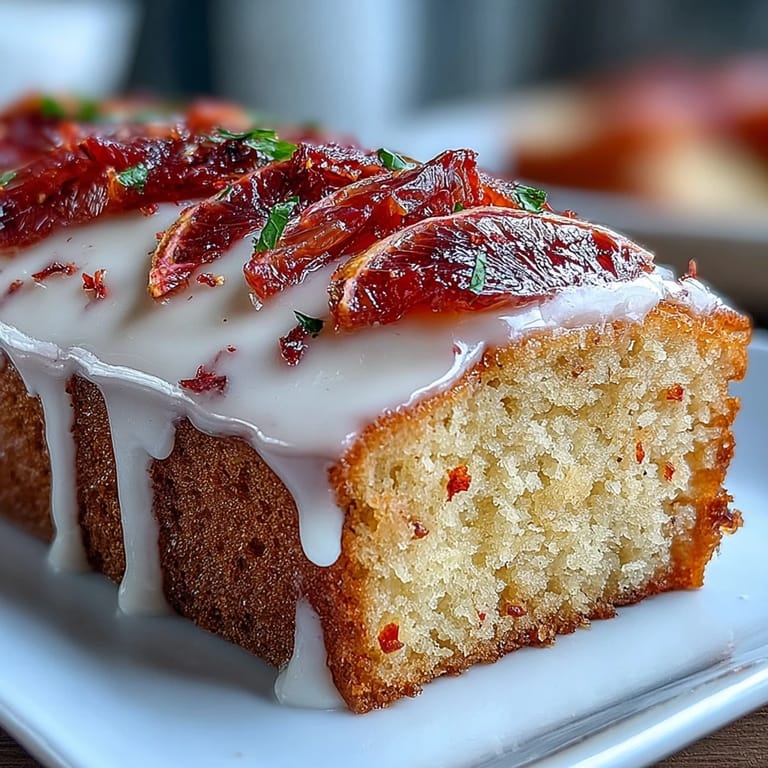
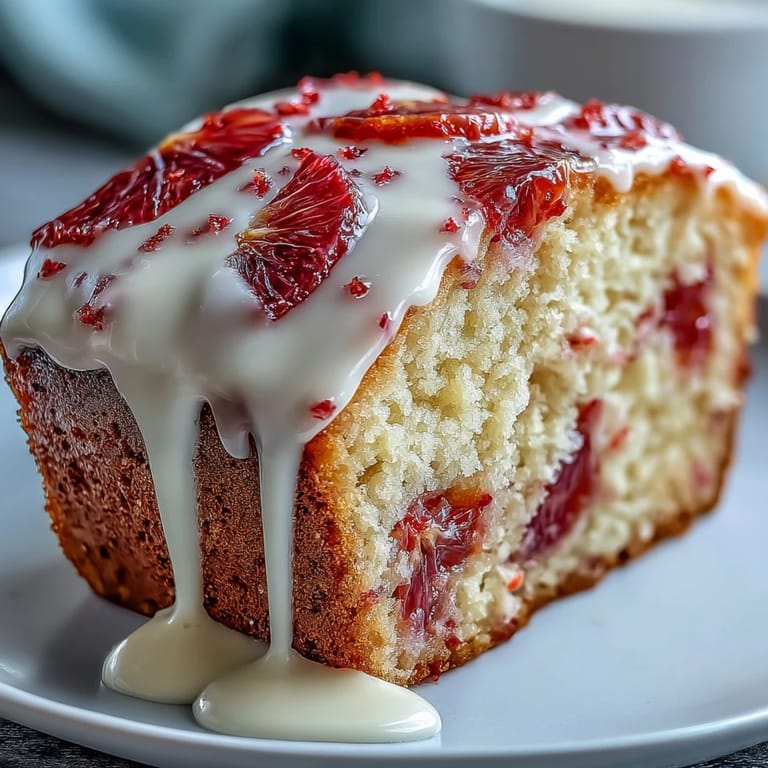
- Once the cake is cool, drizzle the icing over the top in slow zigzags, letting it drip down the sides. Let it set for at least 20 minutes before slicing so the icing firms up just enough.
 Save
Save I've served this cake at brunches, picnics, and quiet Sunday mornings when I just wanted something lovely on the counter. Once, a neighbor knocked on the door asking what smelled so good, and I sent her home with half the loaf. She returned the pan with a note that said, This tastes like happiness. I keep that note tucked in my recipe folder.
Choosing Your Citrus
Blood oranges are at their peak from December through April, and their ruby color makes this cake unforgettable. If you can't find them, regular navel oranges or even Meyer lemons work beautifully, though you'll lose that dramatic crimson hue. I've made it with a mix of orange and grapefruit zest, too, which added a sophisticated bitterness. The key is fresh juice and zest, bottled juice just doesn't carry the same brightness.
Storage and Freshness
This cake stays moist under a cake dome at room temperature for up to two days, thanks to the yogurt. If you refrigerate it, bring slices to room temperature before serving so the coconut oil softens and the flavors bloom. I've frozen individual slices wrapped in plastic and foil, then thawed them overnight for an easy treat. The icing may weep slightly after freezing, but a quick dab with a paper towel fixes it.
Serving Suggestions
I love this cake plain with coffee, but it shines alongside fresh raspberries or a dollop of lightly sweetened whipped cream. Once, I served it with a scoop of vanilla ice cream and the contrast between warm cake and cold cream was pure comfort. For a fancier presentation, garnish with candied blood orange slices or a few mint leaves.
- Toast a slice and spread it with mascarpone for an indulgent breakfast.
- Pair it with Earl Grey tea, the bergamot echoes the citrus beautifully.
- Dust the top with a little extra powdered sugar if the icing feels too sweet.
 Save
Save Every time I bake this, the kitchen fills with that unmistakable citrus warmth, and I'm reminded why I fell in love with it in the first place. It's a cake that feels like a gift, both to make and to share.
Recipe Questions & Answers
- → Can I use regular oranges instead of blood oranges?
Yes, navel oranges or cara cara oranges work beautifully as substitutes. The flavor will be slightly less tart and the stunning red color will be missing, but you'll still get a delicious citrus cake.
- → How do I know when the cake is fully baked?
Insert a toothpick into the center of the cake—if it comes out clean or with just a few moist crumbs, it's done. The top should be golden brown and spring back lightly when touched.
- → Can I make this cake ahead of time?
Absolutely! The cake actually tastes better on day two as the flavors meld. Store covered at room temperature for up to 2 days, adding the icing just before serving for the freshest appearance.
- → What's the purpose of Greek yogurt in this cake?
Greek yogurt adds moisture and tenderness while providing subtle tang that balances the sweet icing. Its thick texture creates a denser, more satisfying crumb than regular yogurt would.
- → Can I freeze this blood orange cake?
Yes! Wrap the cooled cake tightly in plastic wrap and foil, then freeze for up to 3 months. Thaw overnight at room temperature and add fresh icing before serving.
- → Why is my icing too thick or thin?
If the icing is too thick, add more blood orange juice one teaspoon at a time. If too thin, whisk in additional powdered sugar until you reach a thick, pourable consistency that slowly drips from a spoon.