 Save
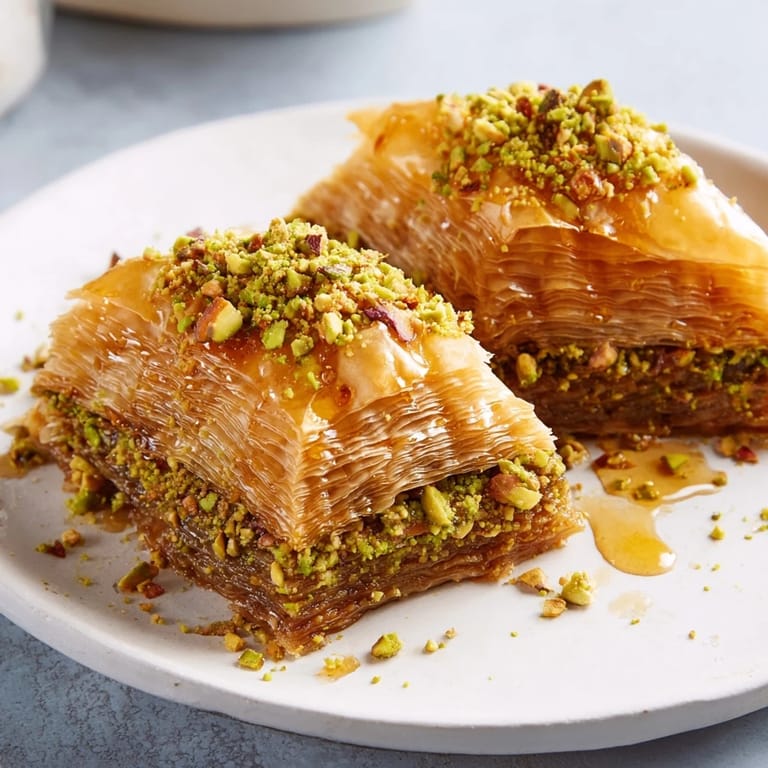
Save My neighbor's kitchen smelled like honey and toasted nuts the day she taught me to make proper baklava, and I've been chasing that exact aroma ever since. She'd lived in Istanbul for years and had this particular way of layering phyllo so thin it was nearly translucent, brushing each sheet with butter like she was painting something precious. The first time I tried it myself, I was terrified the pastry would tear, but she just laughed and said the magic isn't in perfection—it's in the heat, the timing, and knowing when to pour that hot syrup the moment it comes out of the oven. Now, whenever I make baklava, I taste both the hazelnut and pistachio and that quiet confidence she had in the kitchen.
I brought a tray of these to a dinner party once, nervous because baklava feels like someone else's cuisine, someone else's tradition. But halfway through the evening, someone bit into a piece and their whole face changed—that mix of sweetness and the warmth of cinnamon, the way the honey had soaked into the layers. Three people asked for the recipe that night, and I realized baklava isn't about where it comes from; it's about that moment when something familiar becomes treasured.
Ingredients
- Phyllo dough (16 sheets, thawed): This is the foundation of everything—let it come to room temperature slowly, or it'll crack and frustrate you, trust me on this one.
- Unsalted butter (150 g, melted): Use real butter; it's the difference between baklava that tastes like cardboard and baklava that tastes like a memory.
- Hazelnuts (100 g, finely chopped): Toast them lightly first if you can—it wakes up their flavor in a way that makes the whole dish better.
- Pistachios (100 g, finely chopped): The green ones are prettier, but use what you have; the flavor matters more than the appearance.
- Granulated sugar (100 g for filling, 100 g for syrup): It sweetens the filling and helps balance the richness of the butter and nuts.
- Ground cinnamon (1 tsp, optional but really shouldn't be): This is what makes people ask 'what is that amazing spice?' when they bite into a piece.
- Water (120 ml): It becomes the base of your syrup, carrying all that honey and sweetness into the layers.
- Honey (150 g): This is what makes baklava actually baklava—use decent honey because it's the final note everyone tastes.
- Lemon juice (1 tsp): A small squeeze that brightens everything and keeps the syrup from being one-dimensional sweet.
Tired of Takeout? 🥡
Get 10 meals you can make faster than delivery arrives. Seriously.
One email. No spam. Unsubscribe anytime.
Instructions
- Get everything ready:
- Preheat your oven to 180°C (350°F) and brush your 20x30 cm baking pan with melted butter so the bottom doesn't stick. Having everything measured and within arm's reach is half the battle—this is not a recipe where you want to be scrambling for ingredients.
- Build your phyllo foundation:
- Take 4 sheets of phyllo and lay them in the pan, brushing each one with butter before you add the next—work gently, this pastry tears if you breathe on it wrong, but it's more forgiving than you'd think. By the fourth sheet, you'll feel how thin and delicate it is, and that's exactly right.
- Layer in the first third of nuts:
- Mix your chopped hazelnuts, pistachios, sugar, and cinnamon in a bowl until it's evenly combined. Sprinkle one-third of this mixture evenly over your phyllo foundation—don't pile it in the middle, spread it out so every bite will have nuts in it.
- Build the middle section:
- Add 4 more sheets of phyllo, brushing butter between each one just like before. The rhythm becomes meditative after the first couple of layers—brush, lay, brush, lay.
- Add the second nut layer:
- Sprinkle another third of your nut mixture across the phyllo, again making sure it's distributed evenly.
- Create your final layers:
- Repeat with 4 more phyllo sheets, butter between each, then your remaining nut filling. Finish with the last 4 phyllo sheets, brushing every single one with butter including the very top—this is what makes it golden and crisp.
- Score before baking:
- Using a sharp knife, cut the baklava into diamonds or squares—cut all the way to the bottom but don't worry about making them perfect. This matters because it lets the heat reach all the layers and the syrup seep through.
- Bake until golden:
- Slide it into the oven for 35-40 minutes until the top is deep golden and you can see the pastry has crisped up. The kitchen will smell incredible—that's your cue that something good is happening.
- Make your syrup while it bakes:
- In a saucepan, combine water, honey, sugar, and lemon juice, bring it to a boil, then reduce the heat and let it simmer for about 10 minutes. You want it hot but not boiling away—this is the liquid that will soak into every layer.
- The crucial moment—pour immediately:
- The second your baklava comes out of the oven, pour that hot syrup evenly over the hot pastry. This is the magic—the contrast between hot pastry and hot syrup is what makes it sing.
- Let it cool and soak:
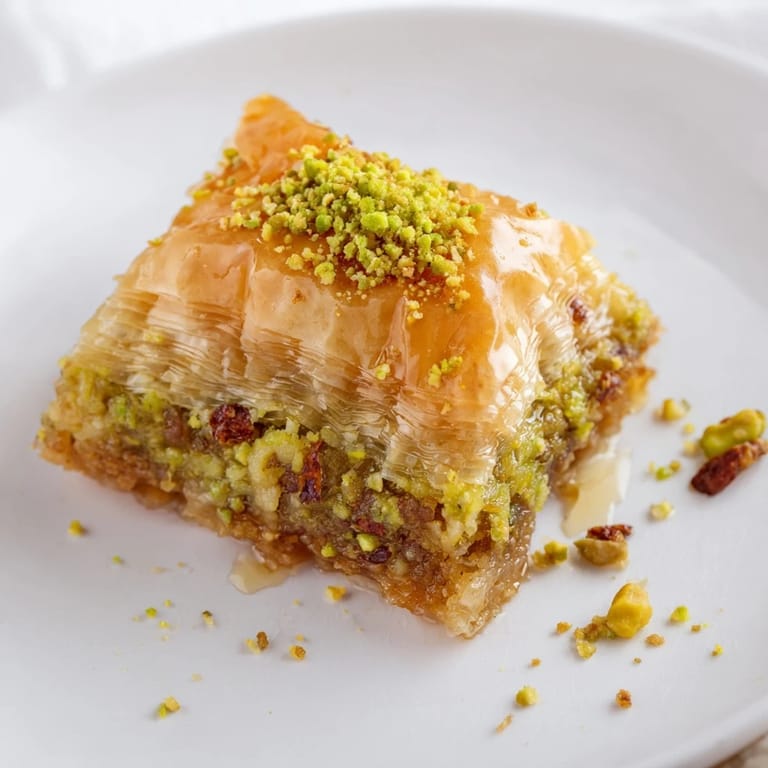
- Don't touch it, don't move it, just let it sit at room temperature until it's completely cool. The syrup will sink into every crevice, making each layer glossy and sweet.
 Save
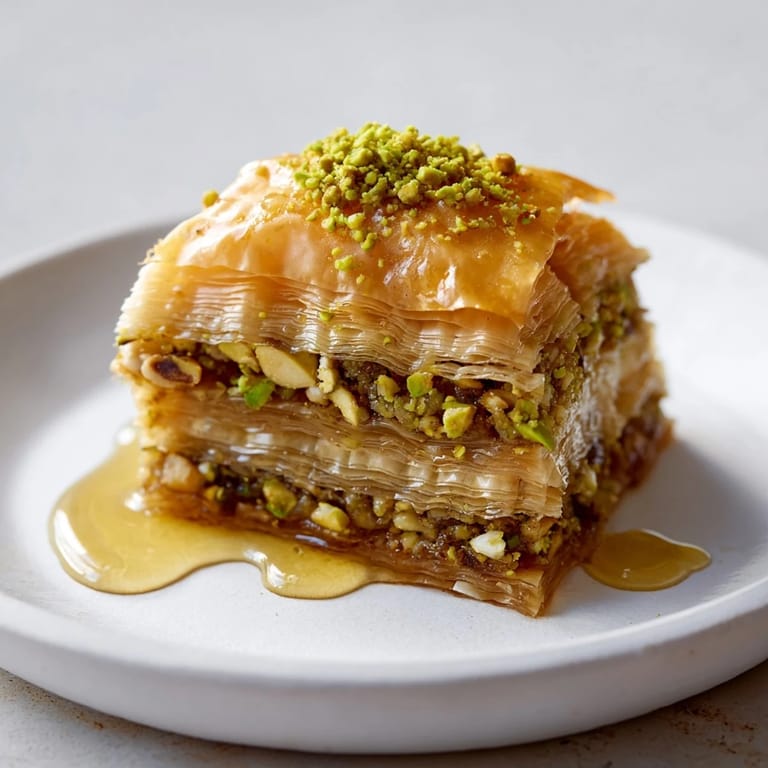
Save There's a moment, maybe an hour after you've poured the syrup, when you pick up a piece and it's still warm and the pastry is shatteringly crisp but yielding inside, the honey has soaked into the layers, and the hazelnuts and pistachios are toasted-soft. That's when you understand why this dessert has survived centuries and traveled across continents.
The Phyllo Secret
Phyllo dough isn't difficult if you understand what it wants—it's thin, it's delicate, and it responds to butter like skin responds to moisturizer. The key is not to rush it or to let it dry out while you're working. If you have phyllo sheets that are cracked or broken, don't throw them away; layer them anyway because once they're brushed with butter and baked, those little tears become part of the charm. I learned this the hard way by being a perfectionist about it, and then realizing that even my 'mistakes' turned into delicious, crispy pieces that tasted just as good as the pristine ones.
Making It Your Own
The beauty of baklava is that the skeleton of the recipe is ancient and reliable, but the filling is where you can be creative. I've made it with walnuts when hazelnuts weren't available, and it was just as lovely. Some people add a pinch of cardamom or clove to the nut mixture, which shifts the entire flavor in a direction that feels more exotic. Others use orange zest in their syrup or swap the honey for a mix of honey and rose water. The recipe is flexible enough to be you, even while honoring what came before.
Storing and Serving
Baklava keeps beautifully at room temperature in an airtight container for up to five days, and it might even taste better on day two when the syrup has had more time to settle into every layer. Serve it with Turkish coffee or strong black tea—the bitterness of the coffee cuts through the sweetness perfectly, making each piece feel less heavy and more balanced. Here's what's helpful to remember:
- If you want to slice baklava cleanly, chill it for 30 minutes first and use a sharp knife with a gentle sawing motion.
- You can make this up to three days ahead, which means it's perfect for parties when you want something impressive but don't want to be stressed.
- Each piece is small and rich, so a little goes a long way—these are meant to be lingered over, not devoured.
 Save
Save Every time I make baklava, I remember that kitchen in Istanbul and how my neighbor taught me that cooking isn't about being perfect—it's about understanding what you're making and why. This dessert is what joy tastes like when it's wrapped in phyllo and soaked in honey.
Recipe Questions & Answers
- → What type of nuts are used in this dessert?
Hazelnuts and pistachios are finely chopped and layered within the pastry to provide a rich, crunchy filling.
- → How is the honey syrup prepared?
The syrup is made by boiling water, honey, sugar, and lemon juice, then simmered to a sticky consistency before being poured over the baked layers.
- → Why is the pastry buttered between layers?
Brushing melted butter between the phyllo sheets ensures a crisp, flaky texture and a rich buttery flavor throughout.
- → Can I substitute other nuts for the ones listed?
Yes, walnuts can be used instead of hazelnuts if preferred, maintaining a similar texture and flavor profile.
- → What baking pan size is recommended?
A 20x30 cm (8x12 inch) pan is ideal to ensure even baking and proper layering of the pastry and nuts.
- → How do I achieve clean slices after baking?
Allow the dessert to cool completely and chill briefly to help the syrup set, making it easier to cut neat diamond or square pieces.