 Save
Save Last summer, my neighbor handed me a paper bag of heirloom tomatoes from her garden—colors I'd never seen before, streaked with green and purple like tiny jewels. I stood in my kitchen wondering what deserved them, then realized the answer: nothing. Just them, their natural sweetness, and something creamy to catch the juice. That's when this board came together, and it's been my favorite way to celebrate tomatoes ever since.
I made this for a dinner party where someone brought a bottle of cold rosé and no one wanted to sit down for a formal meal. We stood around the board for an hour, picking at tomatoes and passing bread, talking about gardens and farmers markets. That's when I knew this wasn't just a recipe—it was permission to keep things simple and let the ingredients speak.
Ingredients
- Heirloom tomatoes: Different colors taste subtly different, and mixing them gives you a symphony instead of a single note; cut them just before serving so they don't weep.
- Fresh burrata cheese: The creamy center is what makes this magical, so buy it as close to serving time as possible and keep it cool.
- Fresh basil leaves: Don't use dried basil here—it will taste like regret; bruise a few leaves in your hand first to wake up their oils.
- Extra-virgin olive oil: This is the backbone of the basil oil, so use something you actually enjoy tasting on its own.
- Garlic clove: One small clove is enough; too much and it overpowers the delicate basil.
- Flaky sea salt: The texture matters as much as the flavor, so don't skip this for regular salt.
- Freshly ground black pepper: Grind it right before serving to catch all those fragrant oils.
- Pine nuts, toasted: Toasting them yourself only takes a few minutes in a dry pan and makes them taste like they cost twice as much.
Tired of Takeout? 🥡
Get 10 meals you can make faster than delivery arrives. Seriously.
One email. No spam. Unsubscribe anytime.
Instructions
- Make the basil oil:
- Blend basil, olive oil, garlic, and salt until it's a vivid green and completely smooth. If you want it silky, press it through a fine sieve, but honestly the rustic version tastes just as good.
- Build your board:
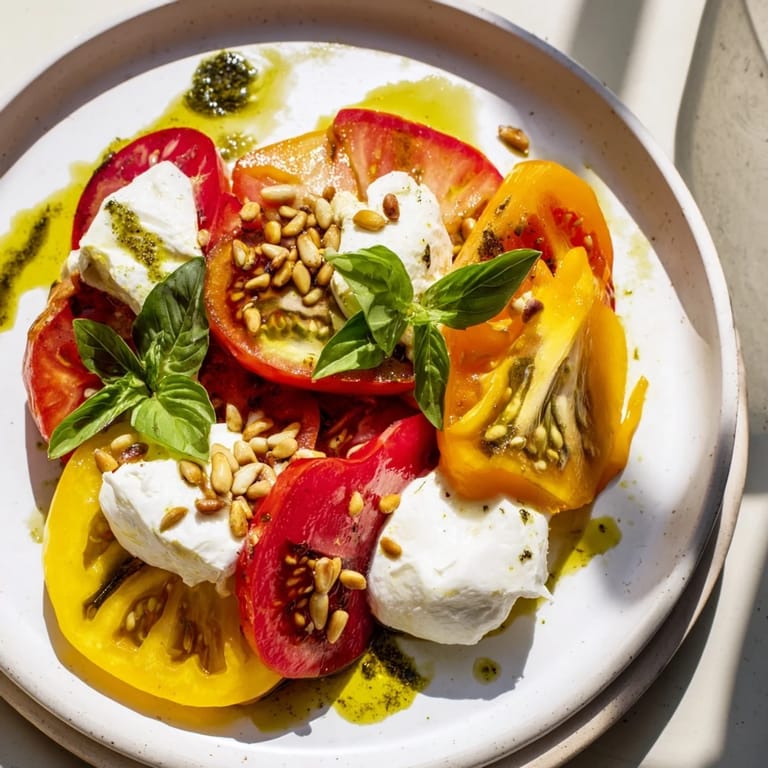
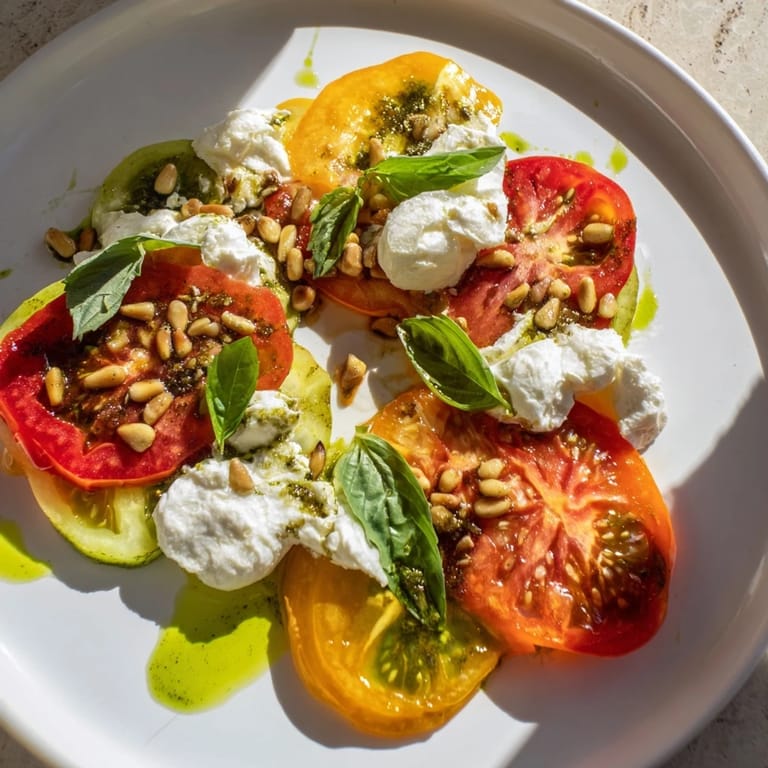
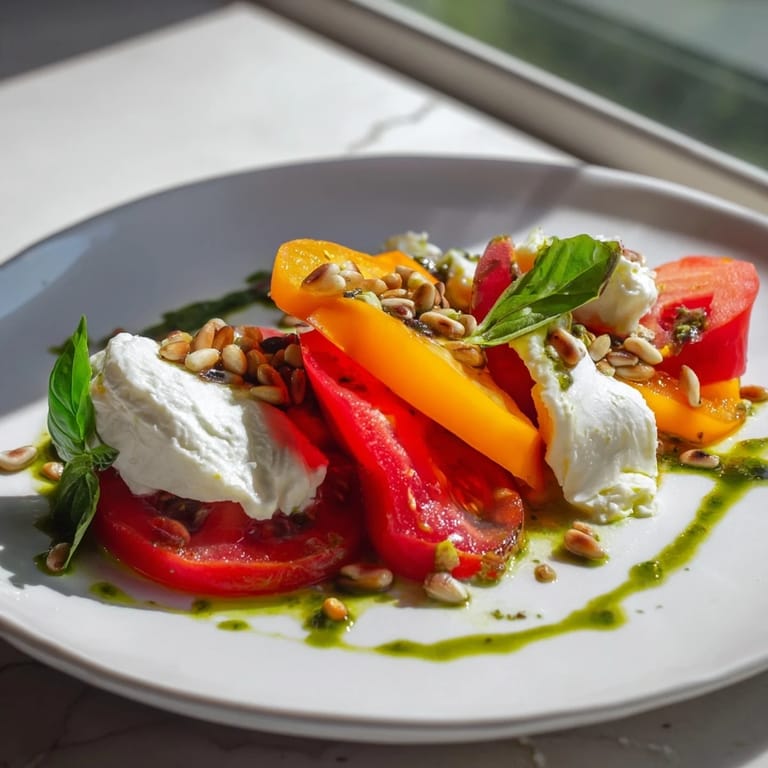
- Arrange tomatoes however makes you happy—overlapping them shows off their colors, but scattered clusters work too. This is your moment to be an artist, so don't overthink it.
- Add the burrata:
- Tear it into pieces (not too small) and tuck them into the spaces between tomatoes so they nestle in naturally.
- Finish it:
- Drizzle the basil oil everywhere, then scatter salt, pepper, pine nuts, and fresh basil leaves. Serve right away while everything is still cool and the oil still smells like a garden.
 Save
Save My daughter once asked why this salad board was her favorite thing I make, and I realized it's because it asks nothing of the ingredients except to be themselves. There's something beautiful about celebrating tomatoes when they're at their peak instead of trying to fix them with complicated techniques.
Timing and Temperature
The magic here is temperature contrast—cool tomatoes and cold burrata against the brightness of fresh basil oil. If you make everything ahead, the basil oil will darken and lose some of its glow, so blend it while your guests are arriving and the tomatoes are already arranged. The whole thing takes less time than it takes someone to open a bottle of wine, which is exactly the point.
Variations Worth Trying
Once you understand the formula—great tomatoes, something creamy, something green and fragrant—you can play with it endlessly. I've made it with stripes of burrata and fresh mozzarella for texture, added thin ribbons of red onion for sharpness, or scattered avocado slices when I want something richer. The board changes with the season and your mood, which is why I keep making it.
Serving and Storage
This board is best eaten fresh and together, which means serving it right away when everything is cool and the flavors are distinct. If you have leftovers (which you might not), store the basil oil separately and the tomatoes in a covered container, then re-toss them gently before eating, but honestly this recipe is meant to be finished the moment it's ready.
- Halve the recipe for two people using a small platter instead of a board.
- Pair it with crisp white wine or dry rosé to echo the freshness of the basil oil.
- Set it on a wooden board and let people gather around—it tastes better when it's shared.
 Save
Save This salad board taught me that the best cooking sometimes means stepping back and letting good ingredients be the stars. Keep it simple, keep it fresh, and watch people light up when they see something beautiful on the table.
Recipe Questions & Answers
- → Can I prepare the basil oil ahead of time?
Yes, the basil oil can be made up to 24 hours in advance. Store it in an airtight container in the refrigerator. Let it come to room temperature and give it a gentle stir before drizzling over the salad board.
- → What are the best heirloom tomato varieties for this dish?
Look for a colorful mix including Cherokee Purple, Brandywine, Yellow Pear, and Green Zebra varieties. The combination of colors and sizes creates visual appeal. Choose ripe tomatoes that yield slightly to gentle pressure for best flavor.
- → Is there a substitute for burrata cheese?
Absolutely. Fresh mozzarella, ricotta salata, or crumbled feta work wonderfully. For a vegan option, use cashew cream or store-bought vegan cheese. Each will add its own texture and flavor dimension to the board.
- → How should I slice the heirloom tomatoes?
Use a sharp serrated knife and slice tomatoes into quarter-inch thick rounds or halve smaller varieties. Arrange them in overlapping layers to showcase their unique colors and patterns. Slice just before serving to maintain freshness.
- → What can I add to customize the salad board?
Consider adding thinly sliced red onions, ripe avocado, pitted olives, capers, or fresh mozzarella pearls. Microgreens or arugula add color and peppery notes. Experiment with different herbs like oregano or mint for Mediterranean flair.
- → What wine pairs best with this dish?
Crisp Sauvignon Blanc and dry Rosé are ideal pairings. The acidity complements the ripe tomatoes and fresh basil while cutting through the richness of burrata. A light Pinot Grigio or Italian Vermentino also works beautifully.