 Save
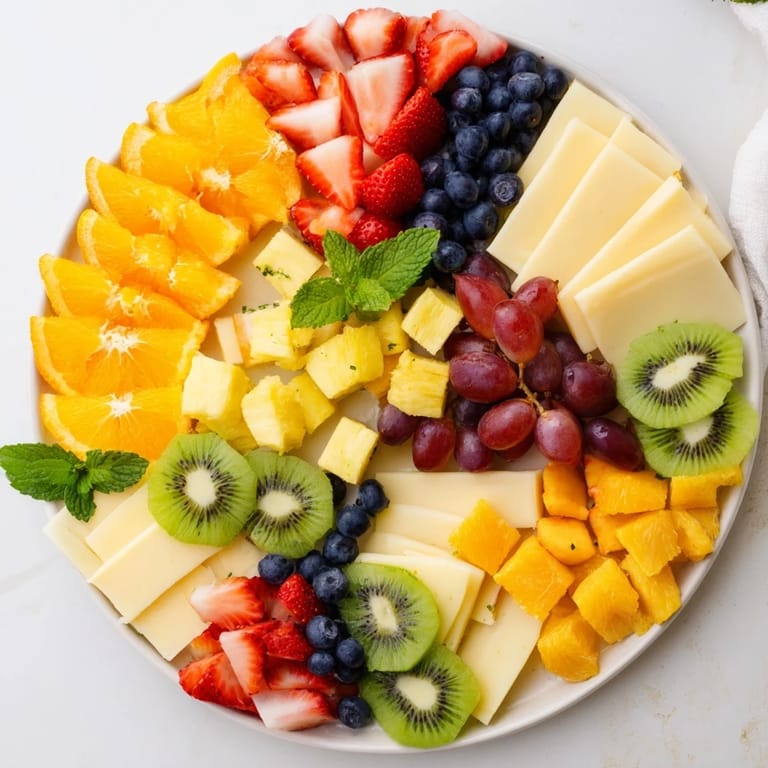
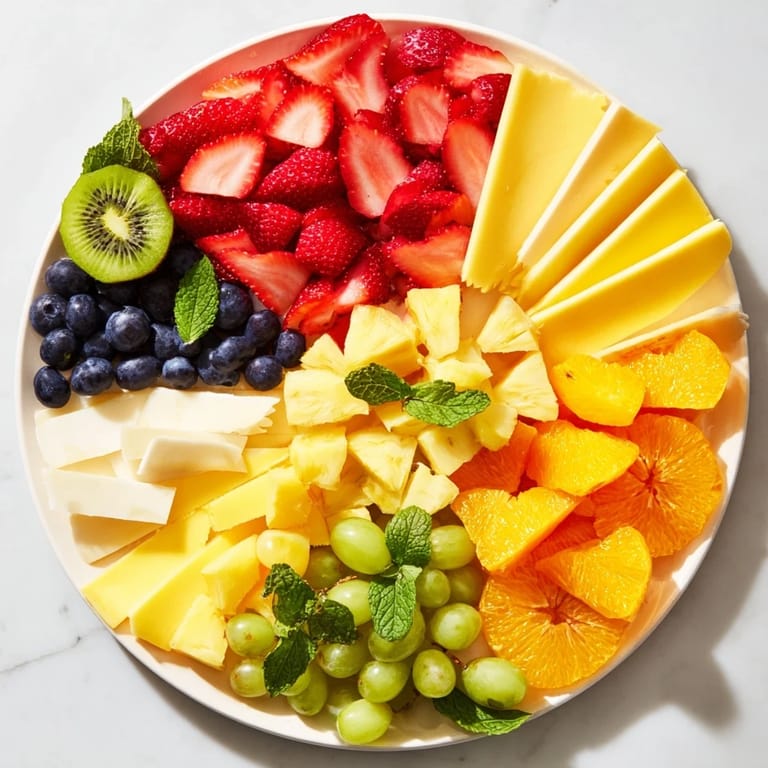
Save There's something magical about watching a platter come together that makes everyone pause mid-conversation. I discovered this kaleidoscope arrangement completely by accident when I was fussing over a cheese board for a dinner party, frustrated that nothing looked quite intentional enough. Then it hit me—what if I treated the whole thing like a puzzle, repeating colors and shapes in perfect circles until the chaos became something almost hypnotic? The moment I stepped back and saw that first completed ring of alternating strawberries and cheddar, I knew I'd stumbled onto something special.
I remember bringing this to a potluck where someone had already set out three beige casseroles, and the second I placed it down, you could hear the energy shift in the room. Within minutes, people were circling it like they'd discovered buried treasure, taking photos before they even grabbed a napkin. That's when I realized this wasn't just about making fruit and cheese look nice—it was about creating a moment where everyone felt like they were at something genuinely beautiful.
Ingredients
- Seedless red grapes: These stay firm and glossy, creating those perfect jewel-like points in your pattern—don't use the soft ones or they'll bruise from handling.
- Fresh strawberries: Halve them just before assembly so the cut side faces out and shows that gorgeous pink interior.
- Kiwi wedges: The bright green is absolutely necessary for color balance; slice them thin enough that they're flexible but thick enough to hold their shape.
- Pineapple: Cut small and ensure they're completely dry or the platter will weep liquid and ruin your pattern.
- Blueberries: Your secret weapon for filling gaps and adding unexpected pops of color throughout.
- Orange segments: Peel away the bitter white pith completely, or it'll overpower the delicate sweetness.
- Aged cheddar: The sharp tang cuts through the fruit's sweetness and those golden triangles add warmth to the design.
- Manchego: This one's slightly nutty and pale, creating gorgeous contrast against darker fruits without being too mild.
- Brie: Use firm brie, not the overly soft kind, so your wedges hold their shape and don't smear across the board.
- Goat cheese: Slice it into thin rounds before you start; it's stickier than other cheeses so handling it last saves you from fingerprints everywhere.
- Fresh mint: Toss it on at the very last moment so it stays vibrant green and fragrant.
Tired of Takeout? 🥡
Get 10 meals you can make faster than delivery arrives. Seriously.
One email. No spam. Unsubscribe anytime.
Instructions
- Wash and prep your fruits:
- Rinse everything thoroughly and pat completely dry—any moisture will make pieces slip around and destroy your careful pattern. Peel the kiwis, orange, and pineapple while thinking about how each color is going to sit next to another.
- Cut everything to match:
- Make your fruit pieces roughly the same size as your cheese wedges so the pattern feels intentional and balanced. Consistency is what makes this look designed rather than thrown together.
- Choose your platter:
- A round board is non-negotiable here—it's the difference between a kaleidoscope and just scattered food. Something in the 12 to 14 inch range gives you enough space to create actual rings.
- Start at the edge and work inward:
- Place your first fruit wedge at the outer ring, then immediately follow with a cheese wedge, then another fruit, then another cheese. The repetition is what creates the magic, so don't skip this rhythm.
- Build concentric circles if you have space:
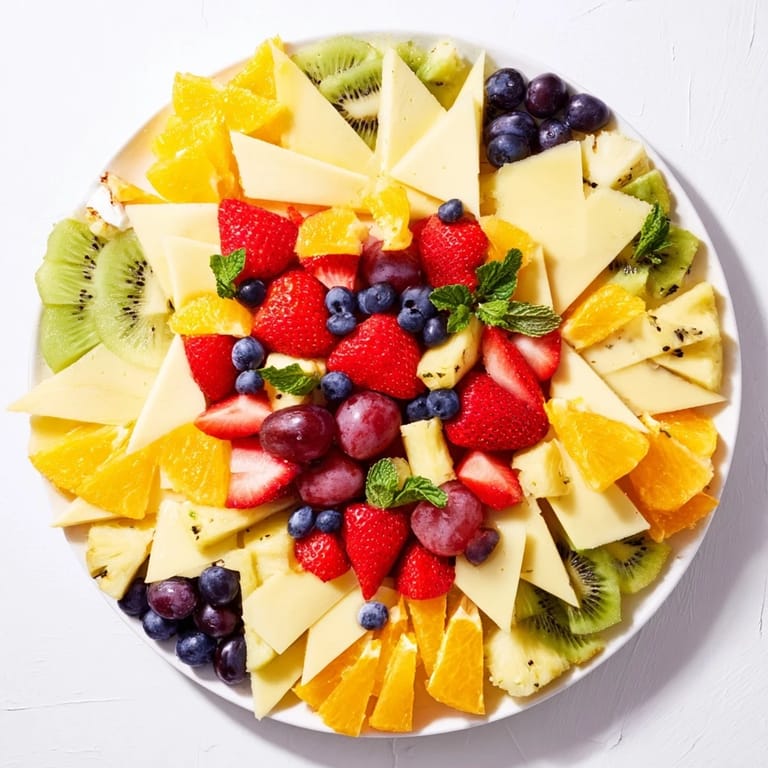
- Once you complete the outer ring, move inward and repeat the pattern. Each layer should echo the one before it, making the whole thing feel like a mandala you actually ate.
- Fill the gaps strategically:
- Blueberries and extra grapes are your best friends here—tuck them into spaces where colors need balance or where two pieces didn't quite meet perfectly. This is where the platter goes from good to genuinely stunning.
- Garnish and serve:
- Scatter mint leaves across the top just before people arrive, or keep them separate and let guests add them as they eat. The aroma matters almost as much as the look.
 Save
Save What really got me was when my sister asked if I'd learned to do this professionally, and I laughed because the only profession involved was stubbornness and a willingness to rearrange grapes for twenty minutes. But that's the thing about this platter—it rewards patience and attention in a way that feels almost meditative, and then you get to watch people's faces light up.
Making It Look Effortless
The secret is thinking about your platter like a painting where every color needs a counterpoint. Deep purple blueberries next to pale Manchego, bright strawberries next to golden cheddar, green kiwi against white goat cheese. When you're arranging, squint at it from across the room—if certain colors blur together or disappear, adjust. The moment you can see the whole pattern at a glance, you're done.
Seasonal Swaps and Flavor Play
I've made this with autumn's persimmons and pomegranate arils, spring's fresh raspberries and strawberries, and summer's stone fruits sliced paper-thin. The principle stays the same: varied textures and a color wheel that actually works. For savory moments, I've tucked in pitted olives or candied nuts into the gaps, which sounds odd but somehow makes the whole thing feel less sweet and more like something you'd serve with cocktails.
Pairings and Presentation
This deserves to be served on something beautiful—a ceramic board, a marble slab, or even a large wooden platter with some grain and character. The container is part of the presentation, so don't use anything scratched or tired-looking. Serve it alongside sparkling wine or a dry rosé that won't compete with the cheese, or offer it at the beginning of a meal where it can set the tone for everything that follows.
- Set out small plates and napkins nearby so people don't feel awkward eating directly off the board.
- Have small forks available for anyone who wants to use them, though most people will pick everything up with their hands because it feels more festive.
- Keep the whole arrangement in a cool place until serving, and if you're transporting it, cover it loosely with plastic wrap rather than foil.
 Save
Save What started as a frustrated attempt to make a boring cheese board beautiful has become the thing I'm most proud to bring anywhere. There's something about feeding people with your hands that makes you all feel a little closer.
Recipe Questions & Answers
- → How do I achieve the kaleidoscope effect on the platter?
Alternately place wedges of fruit and cheese in concentric circles, matching colors and shapes to create a vibrant symmetrical pattern.
- → Can I customize the types of fruits and cheeses used?
Yes, seasonal fruits or favorite cheeses can be swapped in to suit your taste and available ingredients without affecting the overall presentation.
- → What is the best way to prepare the fruits and cheeses?
Wash and cut fruits into uniform wedges or segments and slice cheeses into wedges or rounds to maintain harmony in shapes and sizes.
- → How should I store the platter before serving?
Cover and refrigerate the platter if not serving immediately to preserve freshness, but bring to room temperature shortly before serving for best flavor.
- → What garnishes complement this colorful platter?
Fresh mint leaves add color and aroma, while optional additions like olives or roasted nuts provide a savory contrast to the sweet fruits and creamy cheeses.
- → Is this platter suitable for vegetarian or gluten-free diets?
Yes, the combination of fruits and cheeses used here is naturally gluten-free and suitable for vegetarians, but check cheese labels for animal rennet if strict vegetarianism is a concern.