 Save
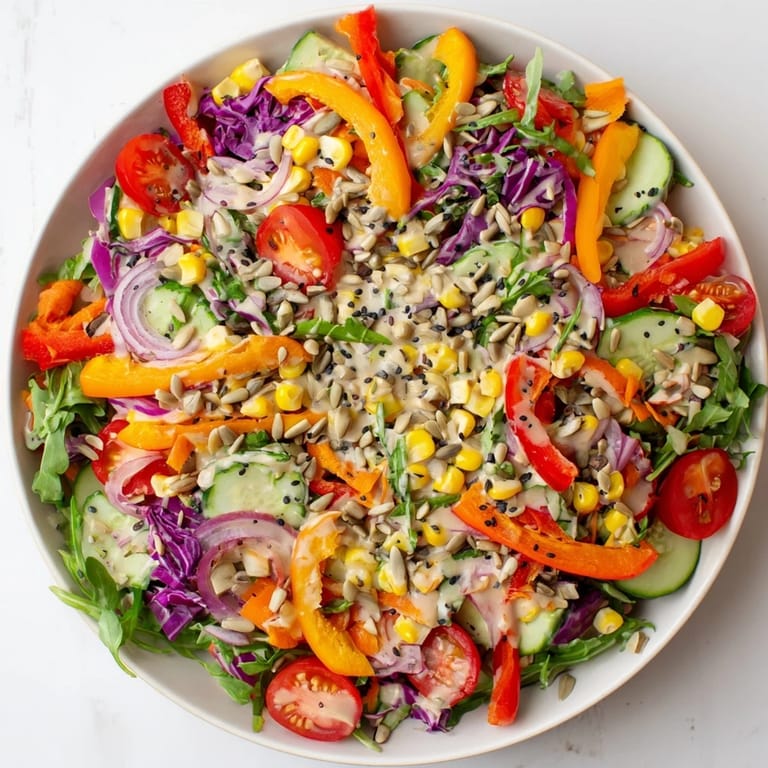
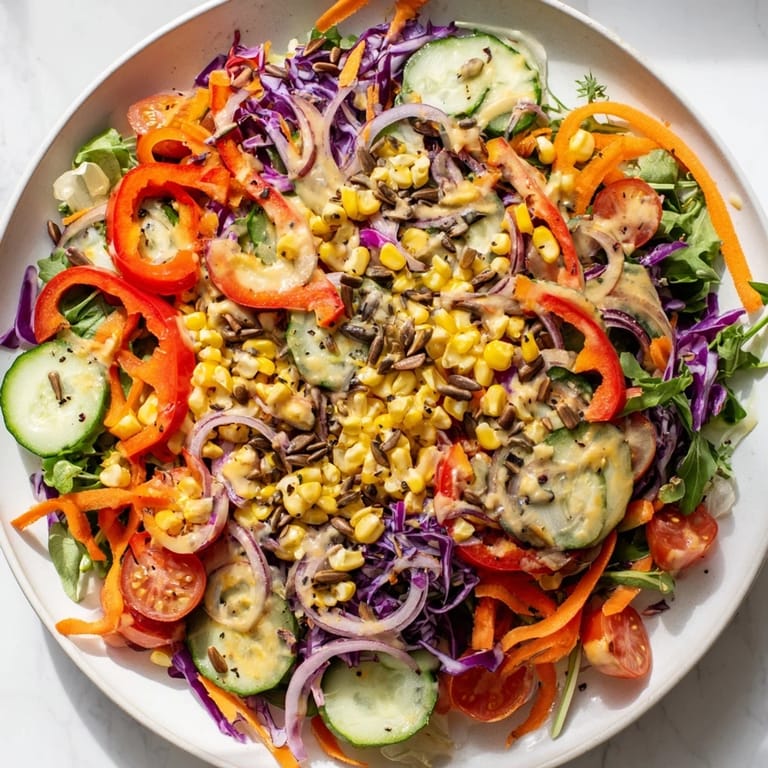
Save I discovered this salad on a sweltering afternoon when my farmer's market haul looked too beautiful to cook down. The bell peppers practically glowed in their reds and yellows, and I found myself arranging them on the cutting board like I was painting something rather than prepping dinner. That's when it hit me—why not let the vegetables speak for themselves with a silky tahini dressing that would tie all those colors together without weighing anything down?
I made this for a potluck at my neighbor's place in late July, and I remember being nervous because, let's face it, showing up with a salad isn't always a crowd-pleaser. But something shifted when I watched people actually go back to it—not out of obligation, but because they genuinely wanted more. One person asked if the dressing was cashew-based, and when I said tahini, they looked genuinely surprised that something that creamy could be made from sesame seeds.
Ingredients
- Red and yellow bell peppers: The color stars of the show—slice them thin enough that they stay crisp but not so thin they disappear into the greens.
- Carrot: Julienne it if you have the patience, or slice it however you want; the shape doesn't matter as much as the sweet crunch it brings.
- Purple cabbage: This adds earthiness and holds its texture beautifully, so shred it fresh and don't prep it too far ahead.
- Cucumber: Use English cucumbers if you can find them—they have fewer seeds and feel less watery in the bowl.
- Cherry tomatoes: Halving them keeps them from overwhelming the other delicate vegetables and makes them easier to eat with a fork.
- Sweet corn: Frozen corn works perfectly well here; thaw it and drain it thoroughly so you're not adding unwanted moisture.
- Mixed salad greens: Pick whatever you like, but use them as your base and don't tear them too small—they should feel substantial.
- Tahini: This is the soul of the dressing; buy the kind that's just ground sesame seeds with nothing else, and make sure it's fresh because old tahini tastes bitter.
- Lemon juice: Squeeze it yourself if possible; bottled juice tastes thin by comparison and won't brighten the dressing the same way.
- Maple syrup or honey: This balances the tahini's earthiness and makes the dressing taste like it knows what it's doing.
- Olive oil: A good one matters here since there's nowhere to hide, so use something you'd actually want to drizzle on bread.
- Garlic: One small clove is plenty—this isn't a garlic salad, just a whisper of it in the background.
- Sunflower seeds: Toast them yourself if you have time; the aroma alone is worth it, and they'll stay crunchier than store-bought.
- Fresh herbs: Cilantro and mint work best, though parsley is your reliable backup if you want something familiar.
Tired of Takeout? 🥡
Get 10 meals you can make faster than delivery arrives. Seriously.
One email. No spam. Unsubscribe anytime.
Instructions
- Prep the vegetables like you mean it:
- Get everything cut and ready before you touch the dressing—this is one of those recipes where mise en place actually matters. Lay out your cutting board and move through each vegetable with a rhythm, and by the time you're done, you'll have this gorgeous rainbow of ingredients ready to go.
- Wake up the tahini:
- In a small bowl, whisk together the tahini with lemon juice and maple syrup, and watch it transform from a thick paste into something that wants to become a dressing. Add the garlic, salt, and pepper, then slowly drizzle in water while whisking until you get to that magic point where it's pourable but still has body.
- Bring everything together:
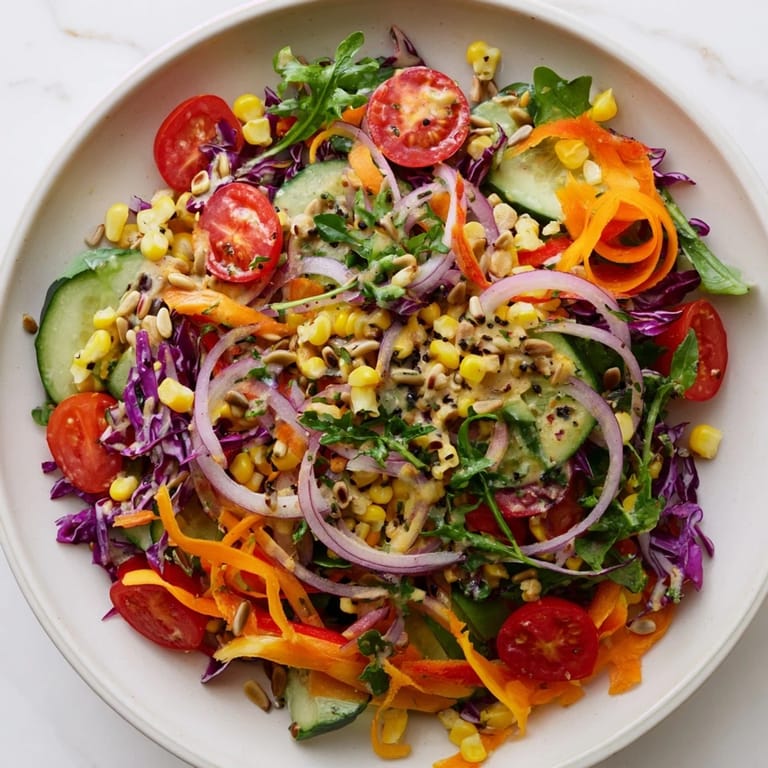
- Pour the dressing over your vegetables and toss gently—not aggressively—so everything gets coated without bruising the greens or breaking down the delicate pieces. You want each vegetable to stay proud and distinct, not turned into mush.
- Add the finishing touches:
- Scatter the toasted sunflower seeds and fresh herbs across the top right before serving, and taste it once more to see if it needs another pinch of salt or squeeze of lemon.
- Serve or chill as the moment demands:
- This salad is good warm and even better after sitting in the fridge for 10 to 15 minutes, when the vegetables firm up and the flavors marry a little more intimately.
 Save
Save There was a moment at that potluck when I caught someone eating this salad with actual focus, not just pushing food around their plate. It reminded me that sometimes the best meals are the ones that don't need much fussing, just good ingredients treated with respect and a dressing that makes sense.
Why This Salad Works Year-Round
The beauty of a rainbow salad is that you're never locked into one season's vegetables. In summer, pile on tomatoes and cucumber until they're almost falling off the bowl. Come fall, swap in roasted beets or add some thinly shaved Brussels sprouts. Winter calls for more sturdy vegetables like shredded kale mixed into your greens, and spring is your moment to throw in fresh peas or thin asparagus if you're feeling ambitious. The tahini dressing stays constant and reliable, which means you can pivot the salad depending on what looks good at the market.
Making This Salad Your Own
The vegetables I've listed are just suggestions, not commandments. If you don't like purple cabbage, use green. If radishes look appealing, slice them thin and add crunch. Some people add avocado right before eating (never ahead of time), others throw in cooked chickpeas or crumbled tofu for protein. I've seen versions with pomegranate seeds scattered on top, which adds a burst of tartness that plays beautifully against the creamy dressing. The point is to trust your instincts and build a salad that actually excites you to eat.
The Dressing and Everything After
The tahini dressing is honestly so good that you'll find yourself making it for other things—drizzle it over roasted vegetables, use it as a dip for pita bread, or spoon it over grain bowls. It keeps in the fridge for about five days, though you might need to loosen it with a little water again before using. The salad itself is best eaten the day you make it, but if you have leftovers, the dressing will have soaked into the greens by the next day, creating almost a different dish that tastes more like a slaw.
- Make the dressing in the morning and store it in a jar so you can shake it back together right before eating.
- If your tahini is too thick straight from the jar, warm it in a bowl of hot water for a minute or two before whisking—it'll loosen right up.
- Taste the dressing on a piece of cucumber before pouring it over everything; it's easier to adjust now than after it's coating all your vegetables.
 Save
Save This salad has taught me that vegetables don't need to hide behind heavy creams or complicated preparations to be craveable. Sometimes the simplest approach, when done with attention and love, ends up being the most satisfying.
Recipe Questions & Answers
- → What vegetables are used in this salad?
The salad includes red and yellow bell peppers, carrots, purple cabbage, cucumber, cherry tomatoes, sweet corn, red onion, and mixed greens like arugula and spinach.
- → How is the tahini dressing made?
The dressing blends tahini, fresh lemon juice, maple syrup or honey, olive oil, minced garlic, salt, black pepper, and water for thickness.
- → Can I customize the salad ingredients?
Yes, you can swap vegetables based on season or preference, and add protein like chickpeas or grilled tofu for extra nutrition.
- → Are there any allergen considerations?
Yes, the dressing contains sesame (tahini). Use maple syrup instead of honey for a vegan option, and check for nut cross-contamination in ingredients.
- → What tips improve the salad's texture?
Chilling the salad for 10–15 minutes before serving enhances crispness, and adding toasted sunflower seeds adds a pleasant crunch.