 Save
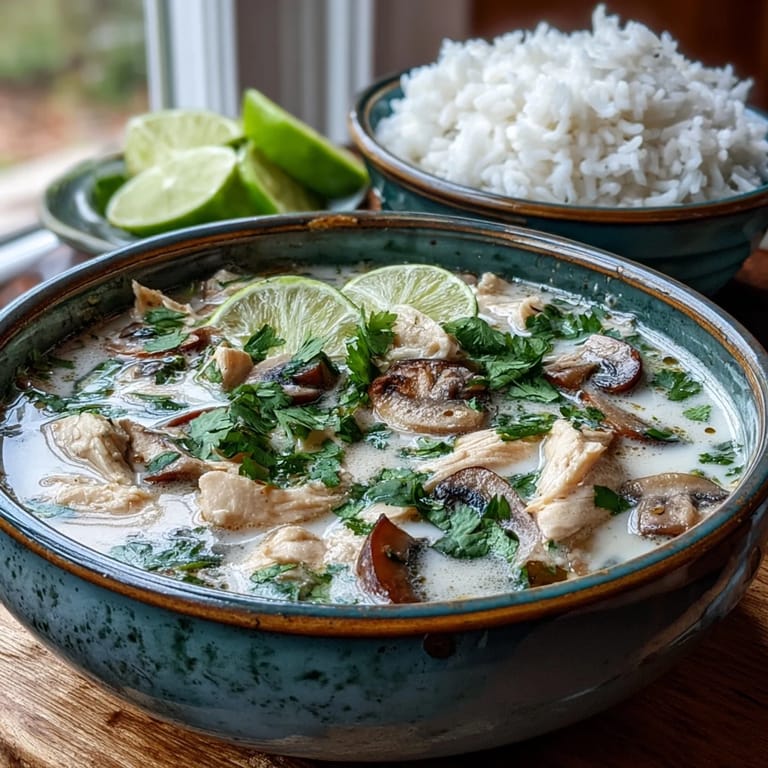
Save The steam rising from my pot of Tom Kha soup has a way of transporting me straight to the bustling markets of Thailand. I first encountered this magical elixir during a rainy afternoon at a small restaurant tucked away in Bangkok, where the owner insisted I learn the delicate balance of flavors. Back home, after several attempts to recreate that moment, I finally captured that perfect harmony between the richness of coconut cream and the bright, aromatic herbs that make this soup so distinctive.
Last winter when my sister was feeling under the weather, I brought over a thermos of this Tom Kha soup. The look on her face as she took her first sip was priceless, eyes widening as the complex flavors hit. She immediately sat up straighter, color returning to her cheeks, and declared it was better than any medicine. Now its our tradition whenever someone needs a little comfort with their healing.
Ingredients
- Coconut Cream: The velvety foundation that gives this soup its luxurious mouthfeel, always opt for full-fat as the lighter versions dont create the same richness.
- Galangal: This knobby relative of ginger provides the signature flavor that makes Tom Kha truly authentic, though fresh ginger can work in a pinch if you cant source it.
- Lemongrass: Bruising it before adding releases the essential oils that perfume the broth, a step I learned after many disappointingly bland attempts.
- Kaffir Lime Leaves: These glossy leaves contribute a citrusy complexity that regular lime juice alone cant achieve, worth seeking out at Asian markets or online.
- Fish Sauce: The secret umami backbone that brings everything together, dont be put off by the aroma when cooking as it mellows beautifully in the final dish.
Tired of Takeout? 🥡
Get 10 meals you can make faster than delivery arrives. Seriously.
One email. No spam. Unsubscribe anytime.
Instructions
- Create Your Aromatic Base:
- Combine coconut cream and chicken stock in a large saucepan, then add your bruised lemongrass, sliced galangal, torn lime leaves, sliced shallots, smashed garlic, and chilies. The kitchen will begin filling with a fragrant mist that signals good things are happening.
- Infuse The Flavors:
- Let everything simmer gently for about 10 minutes, allowing the herbs to release their essential oils into the broth. Youll notice the liquid taking on a slightly golden hue as it becomes infused with goodness.
- Add The Protein And Mushrooms:
- Slide in your thinly sliced chicken and mushrooms, giving everything a gentle stir to ensure even cooking. The protein should poach slowly in the fragrant broth, becoming tender without toughening.
- Remove The Inedibles:
- Fish out the lemongrass stalks, galangal slices, and lime leaves, which have done their aromatic duty. These ingredients are too tough to eat comfortably but have imparted their essential flavors to your soup.
- Balance The Final Flavors:
- Now comes the crucial moment of adding fish sauce, lime juice, and a touch of sugar to achieve that perfect sour-salty-sweet harmony. Trust your taste buds to guide you in making any final adjustments.
- Serve With Flourish:
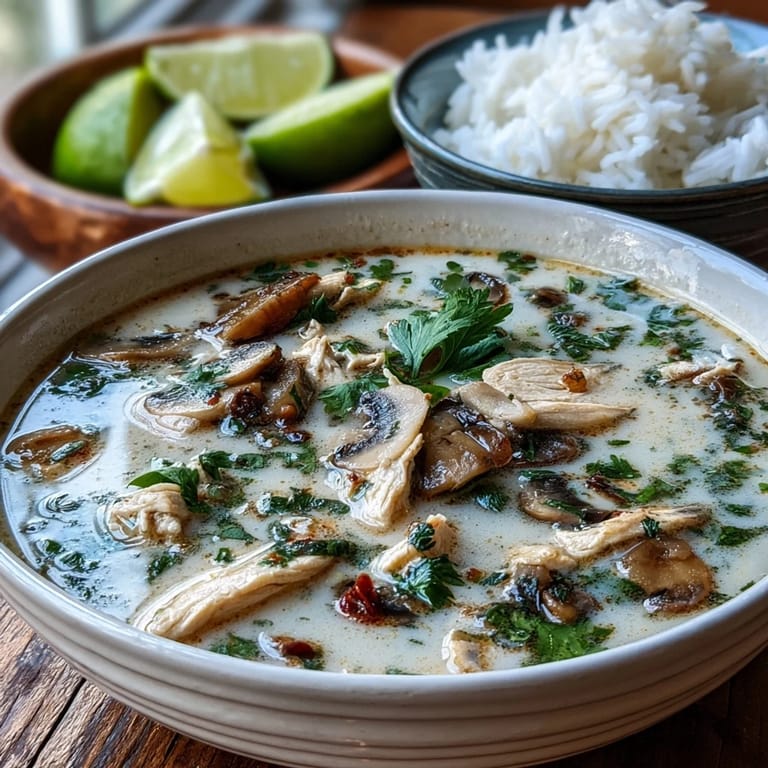
- Ladle the steaming soup into bowls, making sure each serving gets a fair share of chicken and mushrooms. A generous sprinkle of fresh cilantro leaves and lime wedges on the side completes this bowl of comfort.
 Save
Save 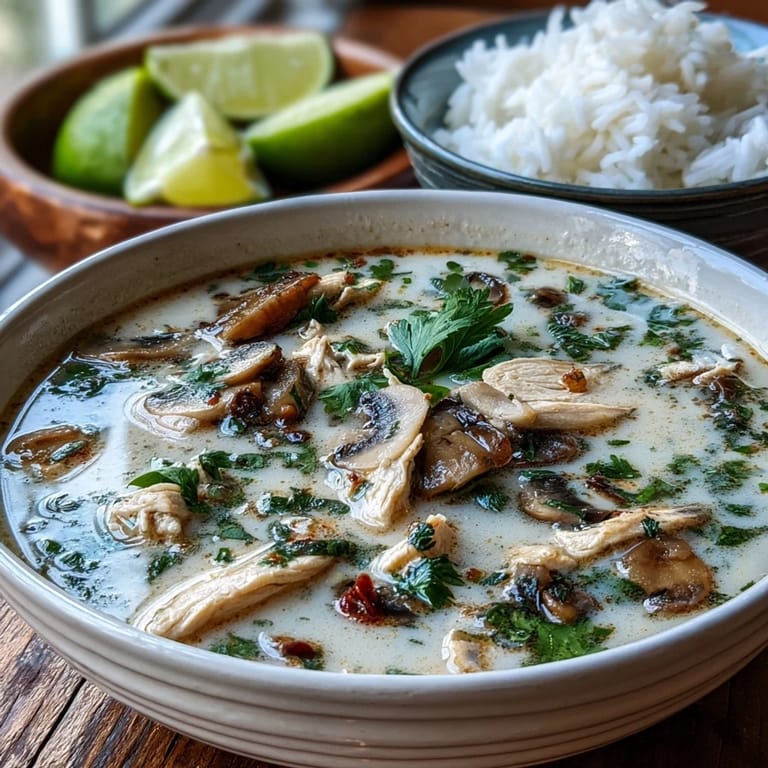 Save
Save The first time I served this Tom Kha at a dinner party, conversation around the table completely stopped as everyone took their first spoonful. The quiet was broken only by appreciative murmurs and requests for the recipe. One friend who claimed to dislike coconut ended up having three bowls, scraping the bottom with her spoon to capture every last drop. That evening, this soup transformed from a recipe into a bridge between cultures and people at my table.
Finding Authentic Ingredients
After many disappointing attempts using substitutions, I discovered that the soul of Tom Kha truly lies in its authentic ingredients. My breakthrough came when I befriended the owner of a small Asian market who guided me through the fragrant herbs section, showing me how to select firm galangal and properly aromatic lime leaves. Now I make a monthly pilgrimage to stock up, storing extra lime leaves and lemongrass in the freezer to ensure Im never without the essentials for an impromptu pot of comfort.
Vegetarian Adaptations
Converting this soup to a vegetarian delight requires just a few thoughtful tweaks rather than a complete overhaul. I once prepared it for my plant-based cousin using firm tofu cubes marinated briefly in a mixture of soy sauce, lime, and a touch of toasted sesame oil before adding them to the broth. Mushroom stock provides a robust base with surprising depth, while a splash of good quality soy sauce or coconut aminos stands in admirably for fish sauce. The resulting soup was so satisfying that several meat-eating guests asked for the vegetarian version recipe, believing it had even more complex layers of flavor.
Serving Suggestions
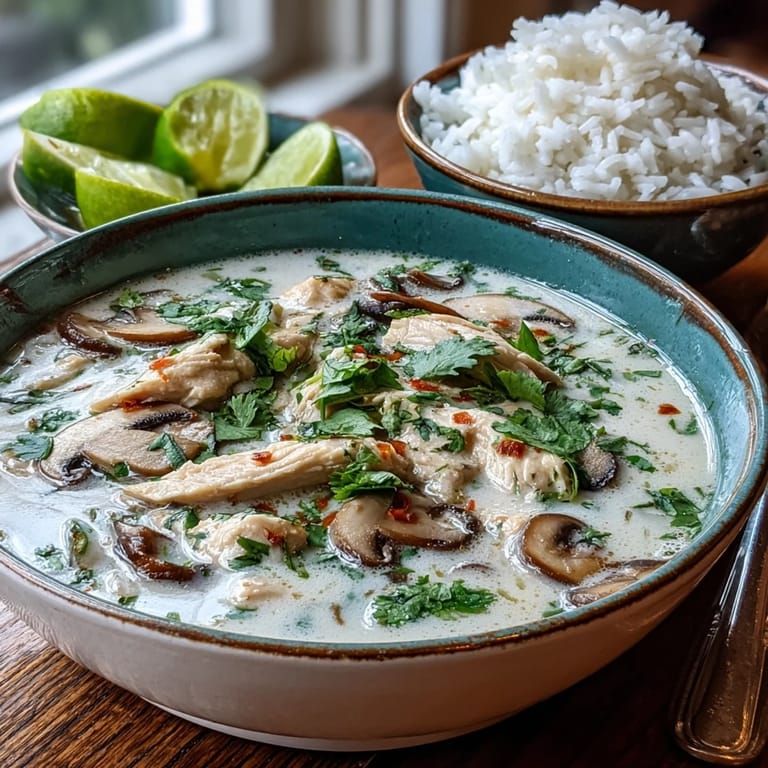
Tom Kha soup can stand proudly on its own as a complete meal, but I love creating a fuller experience around it. When I have extra time, I serve small bowls as a starter before a main course of Thai-inspired grilled fish or a simple vegetable stir-fry with jasmine rice. For casual gatherings, I set up a small condiment station allowing guests to customize their bowls.
- A side of steamed jasmine rice turns this soup into a more substantial meal, perfect for hungry guests or cold evenings.
- Crispy fried shallots sprinkled on top add a welcome textural contrast to the silky soup.
- Keep extra lime wedges, chili flakes, and fish sauce on the table so everyone can adjust to their personal taste preferences.
 Save
Save 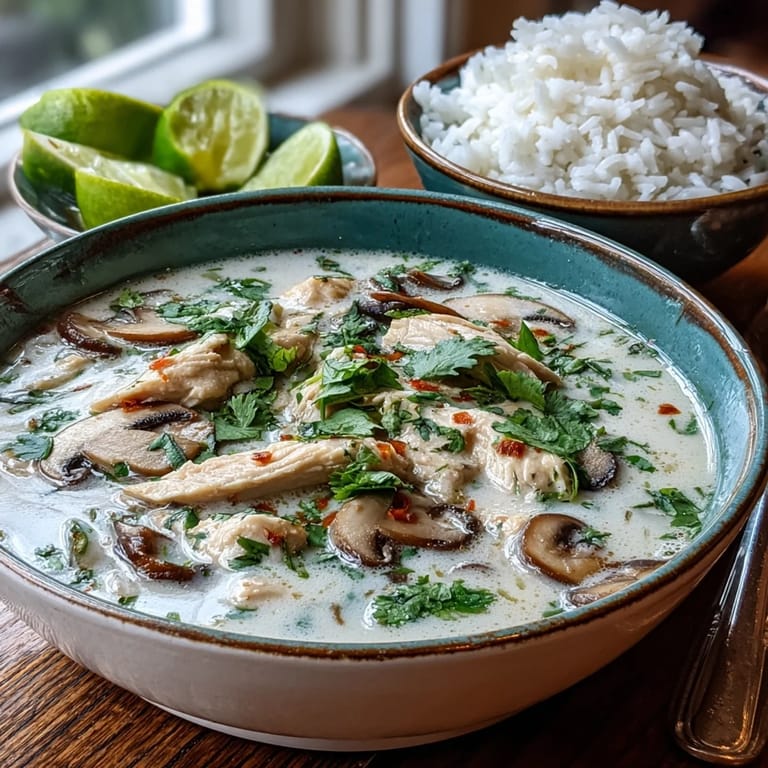 Save
Save This Tom Kha soup has become my culinary ambassador, introducing friends to the wonders of Thai flavors when words fail to describe their complexity. Each spoonful tells a story of balance and harmony, reminding us that cooking is both an art and a connection to places we may never visit but can taste in our own kitchens.
Recipe Questions & Answers
- → What makes Tom Kha different from other Thai soups?
Tom Kha distinguishes itself through the generous use of coconut cream, creating a rich, velvety texture unlike the clear broth of Tom Yum. The combination of galangal, lemongrass, and kaffir lime leaves provides signature aromatic depth, while the coconut base balances the sour and savory elements for a milder, creamier experience.
- → Can I make this soup vegetarian?
Absolutely. Replace chicken with firm tofu cubes and substitute fish sauce with soy sauce or a vegetarian fish sauce alternative. The tofu will absorb the aromatic flavors beautifully while maintaining texture. Add tofu during the last 5 minutes of simmering to prevent breaking apart.
- → What can I use if I can't find galangal?
Fresh ginger makes the best substitute, though it has a slightly different flavor profile. Use a bit more ginger than galangal since it's milder. While galangal has piney, citrusy notes, ginger provides warmth and spice. You can also find dried galangal slices in Asian markets—rehydrate them before using.
- → How do I adjust the spice level?
Control the heat by adjusting the number of Thai chilies. Start with one chili for mild heat, adding more gradually to taste. Remember that removing the seeds reduces spiciness, while leaving them intact increases it. The heat level can always be adjusted at serving time with fresh chili slices or chili oil.
- → Can I freeze Tom Kha soup?
Freezing is possible but may affect the coconut cream's texture, causing slight separation upon thawing. For best results, cool completely before freezing in airtight containers. When reheating, whisk gently to recombine or blend briefly. The soup will maintain its flavor profile for up to 2 months in the freezer.
- → What should I serve with Tom Kha?
Fragrant jasmine rice is the traditional accompaniment, soaking up the creamy broth. You can also serve with sticky rice or rice noodles. A fresh Thai salad with crisp vegetables provides textural contrast, while spring rolls make an excellent starter. Keep sides light to let the soup remain the star.