 Save
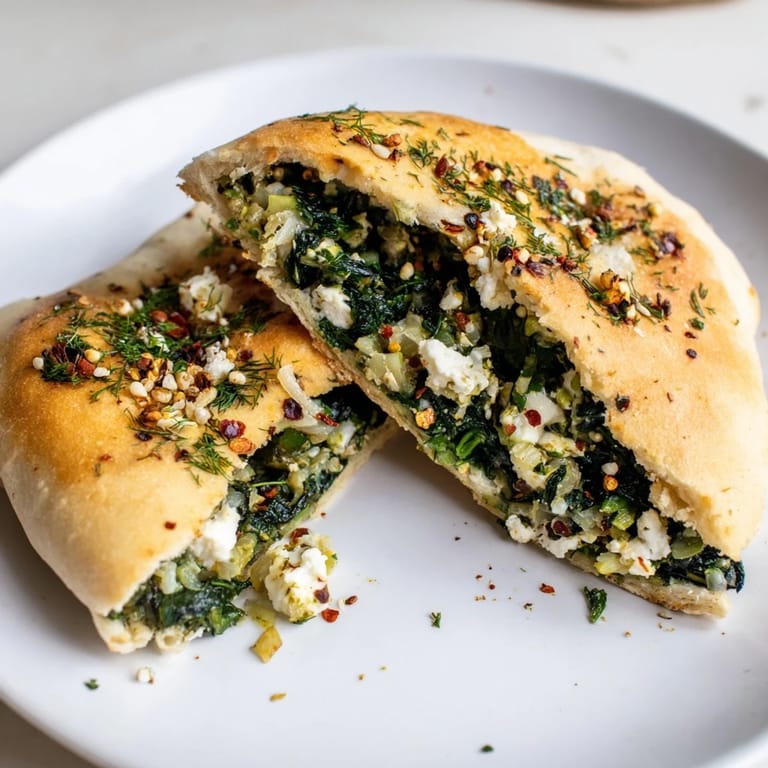
Save The first time I made these Turkish spinach and feta flatbreads, I was standing in a tiny kitchen in Istanbul, watching my friend's mother work the dough with such ease that it almost looked like meditation. She didn't measure anything, just felt the dough between her palms, added a splash more water when it seemed right, and somehow it was perfect. Years later, I recreated her technique at home, and that moment of watching her hands work the flour suddenly made sense—these flatbreads are about intuition and warmth, not precision.
I remember bringing a batch of these to a potluck and watching them disappear before I'd even finished setting down the plate. Someone asked if they were from a bakery, and I realized in that moment that homemade flatbread has a kind of magic that store-bought versions just don't capture—maybe it's the warmth, maybe it's knowing someone made them with their hands.
Ingredients
- All-purpose flour (2 cups): The foundation of your dough; don't skip the kneading step or your flatbreads will be tough and won't puff properly.
- Warm water (2/3 cup): Temperature matters here—too hot and you'll kill the texture, too cold and the dough becomes stubborn; lukewarm is your sweet spot.
- Olive oil (2 tablespoons for dough, 1 for filling): Good olive oil adds richness, but any quality oil works; I've used both and honestly can't tell the difference in the final result.
- Salt (1 teaspoon): This goes into the dough, not just the filling, so don't skip it or your flatbreads will taste flat.
- Fresh spinach (8 oz): Chopped fresh spinach is best, but honestly, frozen works just as well if you squeeze out every drop of water—that's the secret.
- Feta cheese (5 oz): Crumble it by hand for better texture; pre-crumbled cheese can get dusty and won't distribute as nicely.
- Fresh dill and parsley (2 tablespoons each): These herbs are what elevate this from good to memorable; fresh is worth the trip to the produce section.
- Onion and garlic (1 small onion, 2 cloves): Sauté them until soft to mellow their bite and build a flavor base that makes people ask what your secret is.
- Black pepper and red pepper flakes (1/4 teaspoon each): The pepper flakes are optional but add a gentle heat that lingers pleasantly on your tongue.
Tired of Takeout? 🥡
Get 10 meals you can make faster than delivery arrives. Seriously.
One email. No spam. Unsubscribe anytime.
Instructions
- Mix and knead the dough:
- Combine flour and salt in a bowl, then add oil and warm water. Mix until shaggy, then knead for about 5 minutes—you're looking for smooth dough that springs back when you poke it. This is where your arms get a workout, but it's worth it.
- Let the dough rest:
- Cover it and walk away for 20 minutes while you work on the filling. The dough will relax and become easier to stretch, which makes rolling out the ovals way less frustrating.
- Cook down the spinach:
- Heat oil in a skillet and sauté the onion until it softens, then add garlic and spinach. You want all the moisture to cook off—any leftover liquid will make your flatbread soggy, so don't rush this step.
- Season the filling:
- Mix the cooled spinach with feta, fresh herbs, and spices. Taste it as you go; the feta is already salty, so be gentle with the salt.
- Shape the flatbreads:
- Divide dough into 4 pieces and roll each into a thin oval. Put filling on one half, leaving a border, then fold and pinch the edges sealed—think of it like making a savory half-moon that won't burst open.
- Pan-fry until golden:
- A dry skillet over medium heat is all you need. Cook each side for 3 to 4 minutes until the bread puffs slightly and turns golden brown. You'll smell when it's done.
 Save
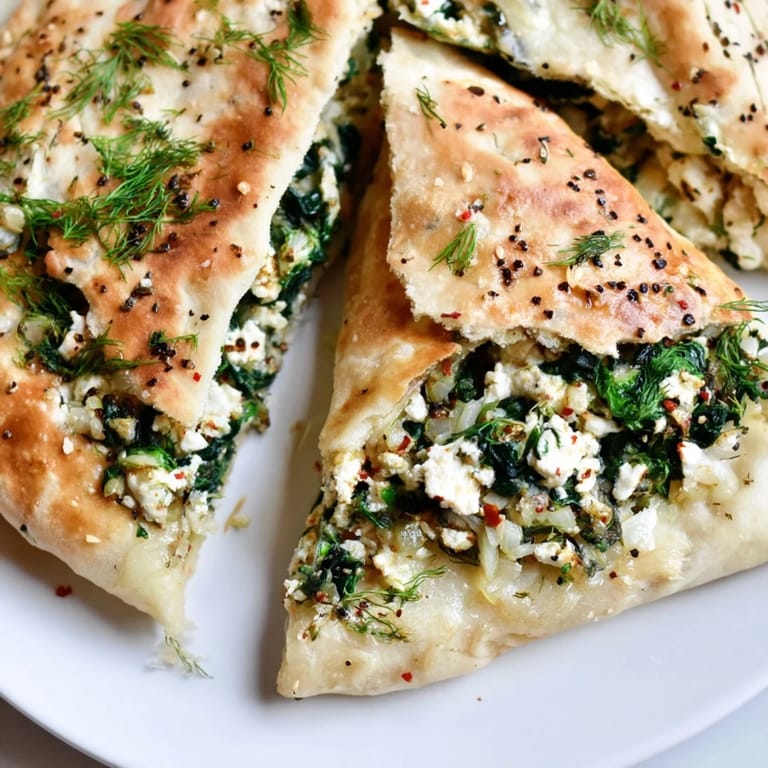
Save The best moment came when my daughter asked to help make these, and suddenly my kitchen was full of flour dust and her laughter as she tried folding the dough in half. She didn't do it perfectly, but watching her take ownership of something I'd shown her made me realize these flatbreads aren't really about the food—they're an excuse to stand next to someone you care about.
The Beauty of Simple Dough
There's something grounding about working with a basic dough—just flour, water, salt, and oil. No fancy ingredients, no techniques that require culinary school. The magic happens in your hands and in the time you give it to rest. I've learned that rushing dough never ends well; it's one of those rare things in cooking where patience actually gets rewarded with better texture and flavor.
Why Fresh Herbs Make All the Difference
I made these once with dried herbs because I was out of fresh, and they tasted fine but felt somehow muted, like watching a movie with the volume turned down. Fresh dill and parsley bring brightness that dried versions can't replicate, and since they go in uncooked, you taste every bit of that freshness. Now I keep fresh herbs on hand specifically because of this recipe.
Serving and Storage Wisdom
These flatbreads are best eaten warm, straight from the skillet—that's when the texture is at its peak and the cheese is still melted. They'll keep for a day or two wrapped up, and honestly, even cold or reheated, they're still delicious, though you lose some of that magical softness.
- Brush them with melted butter right after cooking if you want richness, or serve alongside yogurt for cooling contrast.
- A fresh tomato salad makes the perfect partner, cutting through the richness of the cheese.
- These also freeze beautifully raw—layer them between parchment, freeze, then fry from frozen, adding a minute or so to the cooking time.
 Save
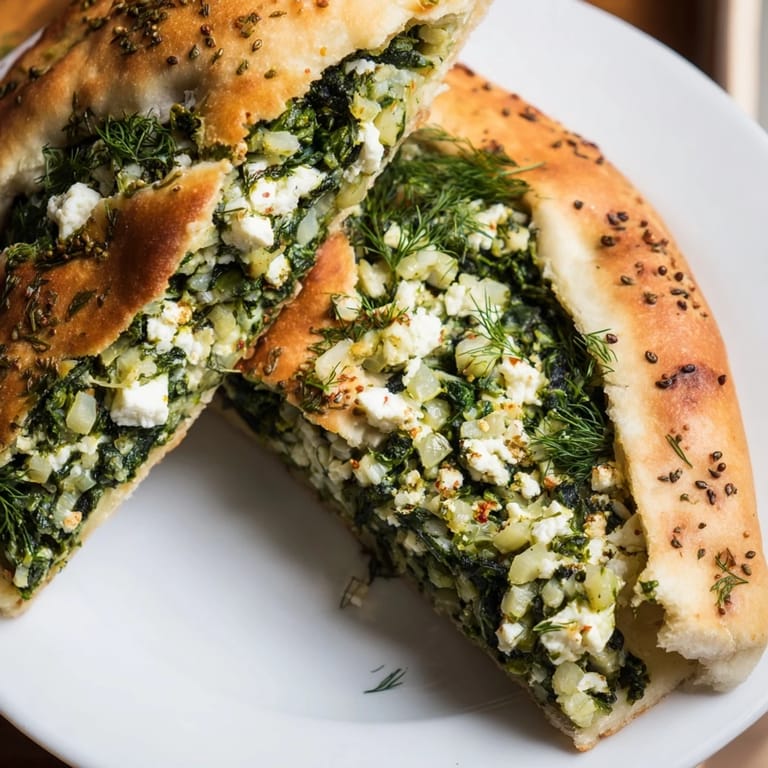
Save These flatbreads have become my go-to when I want to feel like I've made something special without spending hours in the kitchen. There's real comfort in knowing that simple ingredients, handled with care, can become something that makes people happy.
Recipe Questions & Answers
- → What type of spinach is best for this flatbread?
Fresh spinach is ideal, but baby spinach or well-drained thawed frozen spinach also works well without losing flavor or texture.
- → Can I substitute feta with another cheese?
While feta provides a distinctive tang, crumbly goat cheese or ricotta can be used as milder alternatives for the filling.
- → How do I know when the flatbread is cooked?
Cook each side until golden brown and the flatbread feels firm yet tender, usually about 3–4 minutes per side.
- → Can I prepare the dough ahead of time?
Yes, dough can be made in advance and refrigerated for a day, but bring to room temperature before shaping.
- → What herbs work best in this filling?
Fresh dill and parsley complement the spinach and feta beautifully, adding brightness and subtle freshness to the filling.