 Save
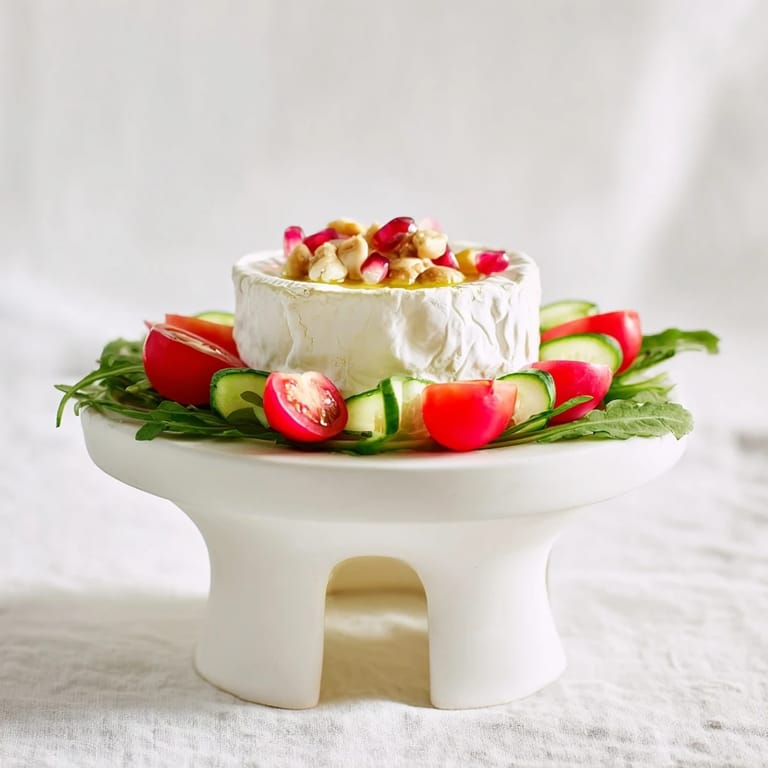
Save I discovered this salad while watching a chef arrange ingredients with mathematical precision on a marble counter, and I became absolutely mesmerized by how she guided everything toward a single, glowing wheel of cheese at the center. It struck me that food could be architecture, that a salad could make people pause before eating it. That evening, I went home and tried to recreate that moment of visual drama, and somehow, arranging vegetables like they were pointing toward something important made the whole experience feel less like dinner prep and more like creating art.
I made this for friends who were skeptical about vegetarian entertaining, and watching them lean in to admire it before tasting anything proved something I'd always suspected: we eat with our eyes first, and sometimes the presentation does half the work of making people feel special.
Ingredients
- Fresh baby arugula: Use leaves that are tender and unblemished; older arugula tastes peppery, which can overwhelm the delicate balance of this dish.
- Cherry tomatoes: Halve them cleanly, and if they're watery, pat them dry so the arrangement stays crisp and doesn't weep onto the board.
- Cucumber: Slice thin enough to catch light but thick enough to hold its shape; a mandoline makes this effortless if you're careful with your fingers.
- Watermelon radish: The interior is naturally pink and white, so the slices become part of the visual story; look for one that's firm and unblemished.
- Pomegranate seeds: These are jewels in this arrangement; buy them pre-seeded if you're short on time, and scatter them last so they don't roll around during assembly.
- Toasted walnuts: Toast them yourself for five minutes in a dry pan if you can; the difference between raw and warm nuts is surprising and worth the small effort.
- Extra-virgin olive oil: This is tasted directly, so quality matters; a fruity, peppery one complements the white balsamic beautifully.
- White balsamic vinegar: It's milder and clearer than dark balsamic, so it won't muddy your dressing or hide the flavors of individual ingredients.
- Honey: A touch of sweetness balances the vinegar and the peppery arugula; use good honey, even local if you can find it.
- Dijon mustard: Just a smidge acts as an emulsifier and adds subtle depth without announcing itself.
- Artisanal cheese wheel: The soul of this dish; choose one that's creamy and slightly funky, like a Saint-Marcellin or young Brie, something that invites people to cut into it and spread it on vegetables.
Tired of Takeout? 🥡
Get 10 meals you can make faster than delivery arrives. Seriously.
One email. No spam. Unsubscribe anytime.
Instructions
- Set the stage:
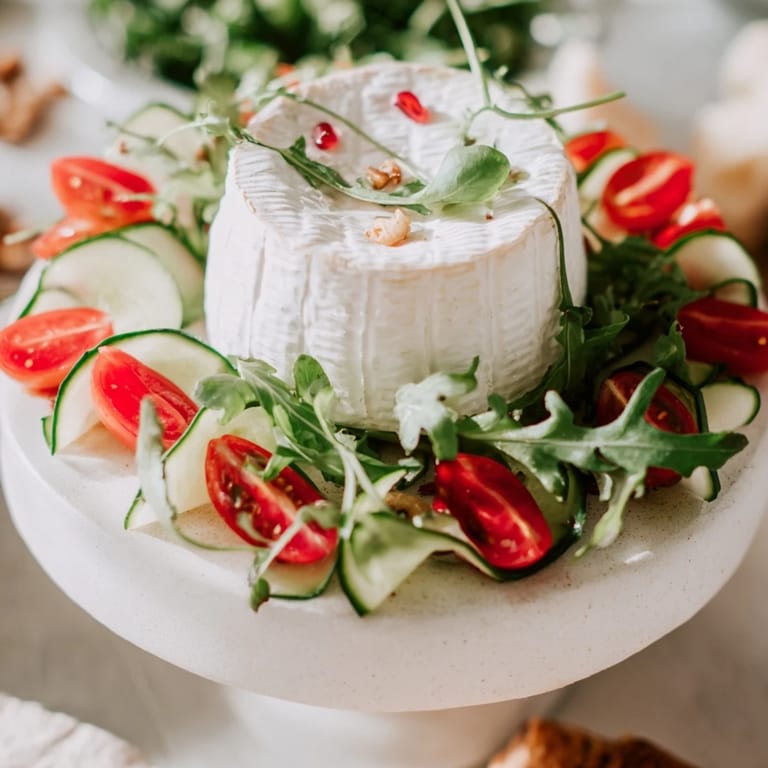
- Place your cheese wheel on a small pedestal or plate positioned at one corner of your large board or platter, angling it slightly forward so it feels like the obvious destination, not an afterthought. Think of it as the sun and everything else as orbiting around it.
- Create the arugula lines:
- Arrange the arugula in a sweeping arc that radiates outward from the cheese, letting the leaves overlap slightly so they create depth and movement. The effect should feel like gentle fingers pointing inward, not rigid rows.
- Layer with intention:
- Place cherry tomato halves in a careful line, then cucumber slices just beyond or overlapping slightly, then watermelon radish slices, all angled gently toward the cheese. Each element should feel like it's leading the eye home.
- Scatter the jewels:
- Drop pomegranate seeds and toasted walnuts across the arrangement in a way that feels natural, not frantic; they should enhance the geometric pattern, not fight it. Let some seeds nestle between vegetables as if they've found their resting place.
- Build the dressing:
- Whisk olive oil, white balsamic, honey, and Dijon mustard together in a small bowl until the honey dissolves and the mixture turns silky. Taste it and adjust salt and pepper until it feels bright but balanced, something that amplifies rather than drowns.
- Finish with restraint:
- Drizzle the dressing lightly across the vegetables in thin streams, consciously avoiding the cheese so it stays creamy and clean. The dressing pools slightly on the board, inviting people to drag vegetables through it as they eat.
- Present and invite:
- Bring the board to the table and let the moment breathe for a second; people will naturally reach for the cheese first and then pull vegetables toward it, mixing as they go. Serve immediately while everything is fresh and the cheese is still at its most voluptuous.
 Save
Save I remember serving this to my mother-in-law, who is not easily impressed, and she actually set down her phone to look at the board before eating anything, which for her was like offering applause. That moment taught me that sometimes the arrangement matters as much as the ingredients.
Cheese Matters Most
The cheese wheel is the co-star here, not a supporting player, so choose one that reflects your tastes and the season. In spring, I reach for a fresh, herbaceous Humboldt Fog with its distinctive ash line running through the center. In autumn, a ripe Camembert feels right, almost buttery and forgiving. The beauty is that different cheeses create entirely different conversations at the table; a tangy blue cheese transforms the whole experience into something bold and challenging, while a creamy Saint-Marcellin turns it into something luxurious and indulgent. Visit a good cheese counter and ask the person behind it what's at its peak right now; they always know, and they love talking about it.
Variations and Additions
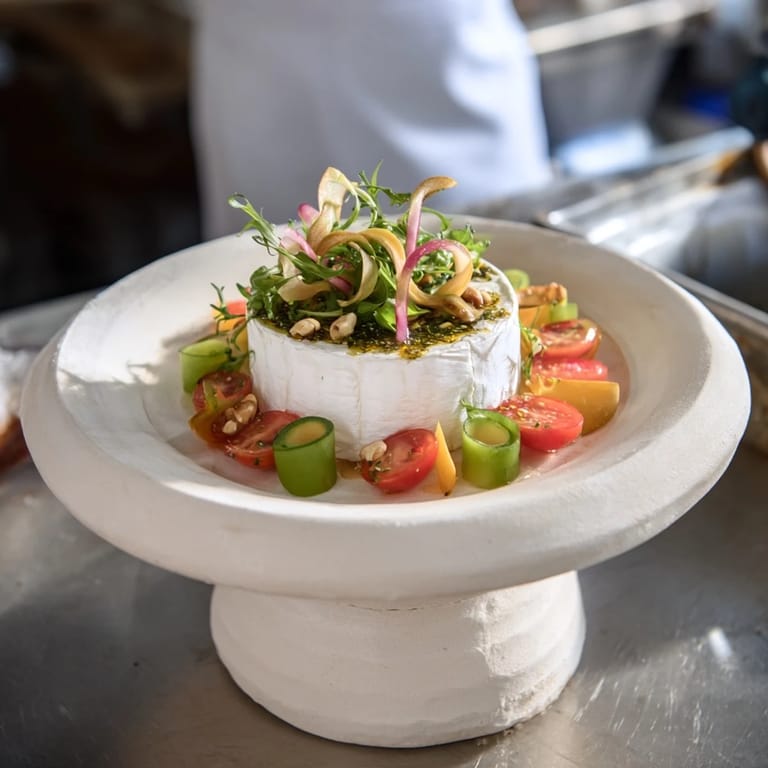
This salad is a template, not a rulebook, and you can customize it based on what's in season, what you're craving, or who you're feeding. I've added paper-thin prosciutto draped between vegetables for a non-vegetarian version, and the salt and richness of the ham create a beautiful counterpoint to the bright vegetables. Thinly sliced smoked salmon works too, especially in winter when vegetables feel less vibrant. For a visual flourish, edible flowers like pansies, violets, or nasturtiums scattered across the board transform it from elegant to ethereal, though this is purely optional and mostly for impact.
Pairing and Service
This salad tastes best alongside a wine that's crisp and won't fight for attention: a chilled Sauvignon Blanc with its grassy, citrus notes echoes the brightness of the arugula, or a dry rosé provides a gentle, slightly sweet counterpoint to the salty cheese. Serve it as a first course before something rich, or as a light main course for lunch when you want people to linger without feeling overstuffed. The beauty is that it's elegant enough for a dinner party but casual enough for a weeknight when you want to feel like you've made an effort without actually spending time at the stove.
- Make the dressing up to four hours ahead and store it at room temperature; it actually gets more cohesive as it sits.
- Prep all vegetables and store them in separate containers so assembly takes only five minutes.
- The moment of arrangement is the fun part, so don't rush it; this is when cooking becomes play.
 Save
Save This salad taught me that the most memorable meals aren't always the most complicated; sometimes they're the ones where someone took time to arrange things with care, where every element was chosen thoughtfully, and where the table fell quiet for a moment before the eating began. That's worth doing.
Recipe Questions & Answers
- → What type of cheese works best as the centerpiece?
Soft, artisanal cheeses like Saint-Marcellin, Brie, Camembert, or local soft-ripened varieties complement the fresh ingredients beautifully.
- → Can I add protein to this dish?
Yes, thinly sliced prosciutto or smoked salmon can be layered in for a non-vegetarian option that pairs well with the salad's flavors.
- → How should the dressing be applied?
Whisk the olive oil, white balsamic vinegar, honey, Dijon mustard, salt, and pepper, then drizzle lightly over the arranged salad, avoiding the cheese wheel to maintain its texture.
- → What nuts are included and why?
Toasted walnuts provide a crunchy texture and a rich, nutty flavor that balances the fresh produce and creamy cheese.
- → Are there serving suggestions to enhance presentation?
Garnishing with edible flowers adds color and visual appeal, while serving on a large platter with a small pedestal for the cheese highlights the artistic arrangement.