 Save
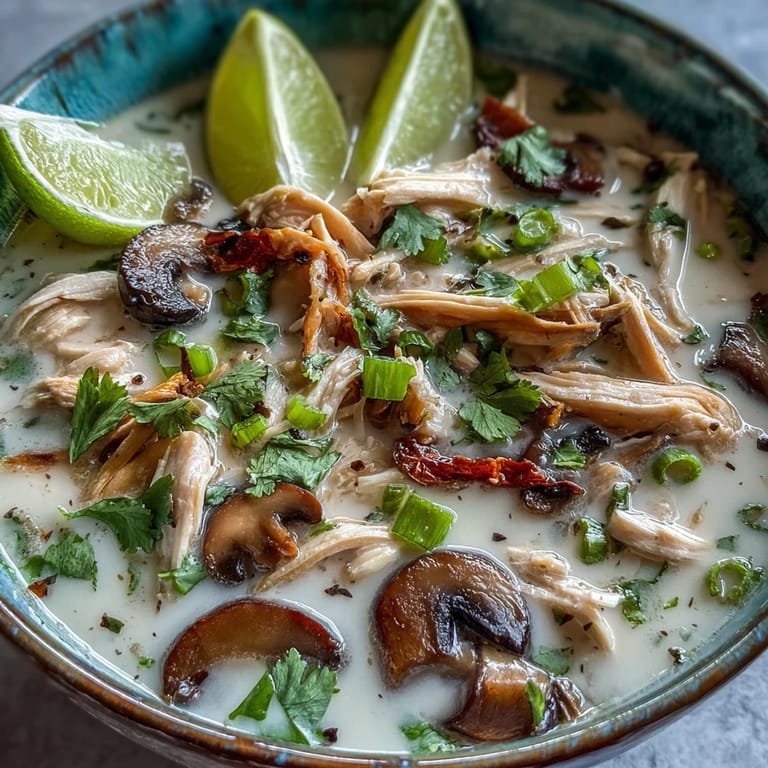
Save The first time I made Tom Kha Gai was during a rainstorm that trapped me indoors for an entire weekend. The windows fogged as the fragrant lemongrass and galangal steamed through my tiny apartment, transforming my kitchen into a slice of Thailand. I'd been intimidated by Thai cuisine, convinced I could never capture those complex flavors, but the first spoonful of that creamy, aromatic broth nearly brought tears to my eyes. Something about the balance—tangy, spicy, creamy—felt like discovering a secret language of flavor.
Last winter, my friend Maya caught a terrible cold that nothing seemed to help. I brought over a container of this Tom Kha Gai, still warm from the stove, and watched her face brighten with the first taste. Between sniffles, she claimed the spicy-sour broth cleared her sinuses better than any medicine. We sat huddled over steaming bowls at her kitchen table, and I swear she looked healthier with every spoonful.
Ingredients
- Galangal: This knobby root might look like ginger but tastes completely different with its piney, citrusy notes that form the backbone of authentic Tom Kha.
- Lemongrass: I've learned to really bruise it thoroughly with the back of my knife to release its essential oils into the broth.
- Makrut Lime Leaves: These glossy, hourglass-shaped leaves have an intense citrus aroma that no substitute can match.
- Coconut Milk: Please use full-fat here, as the richness creates that silky mouthfeel that makes this soup so comforting.
- Fish Sauce: A splash transforms the broth with deep umami flavor, but the fishiness disappears in the final dish.
Tired of Takeout? 🥡
Get 10 meals you can make faster than delivery arrives. Seriously.
One email. No spam. Unsubscribe anytime.
Instructions
- Infuse the Broth:
- Start by bringing your chicken broth to a gentle simmer, then add those fragrant lemongrass pieces, galangal slices, torn lime leaves, and crushed chilies. The kitchen will fill with an incredible aroma as these ingredients release their essence into the broth.
- Cook the Protein:
- Add your thinly sliced chicken and shallots to the aromatic broth. Watch as the chicken gently transforms from translucent to perfectly tender and opaque.
- Create the Signature Creaminess:
- This is where magic happens - pour in that rich coconut milk and add your mushrooms. Keep the heat low here, as boiling will make the coconut milk separate and lose that silky texture we're after.
- Balance the Flavors:
- Add fish sauce for saltiness, palm sugar for subtle sweetness, and fresh lime juice for that distinctive sour note. Taste and adjust until you find that perfect harmony that makes Thai food so addictive.
- Garnish with Fresh Elements:
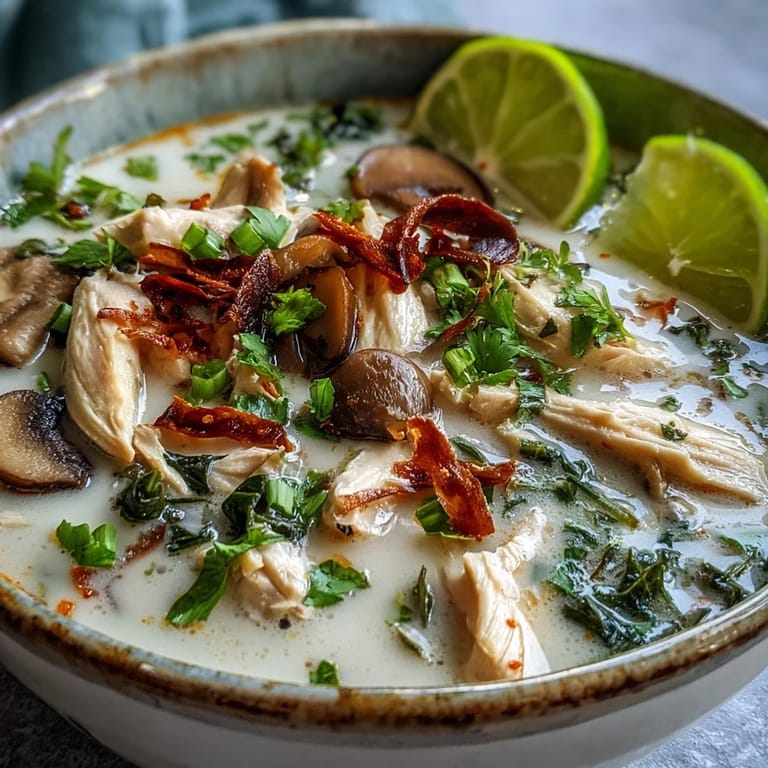
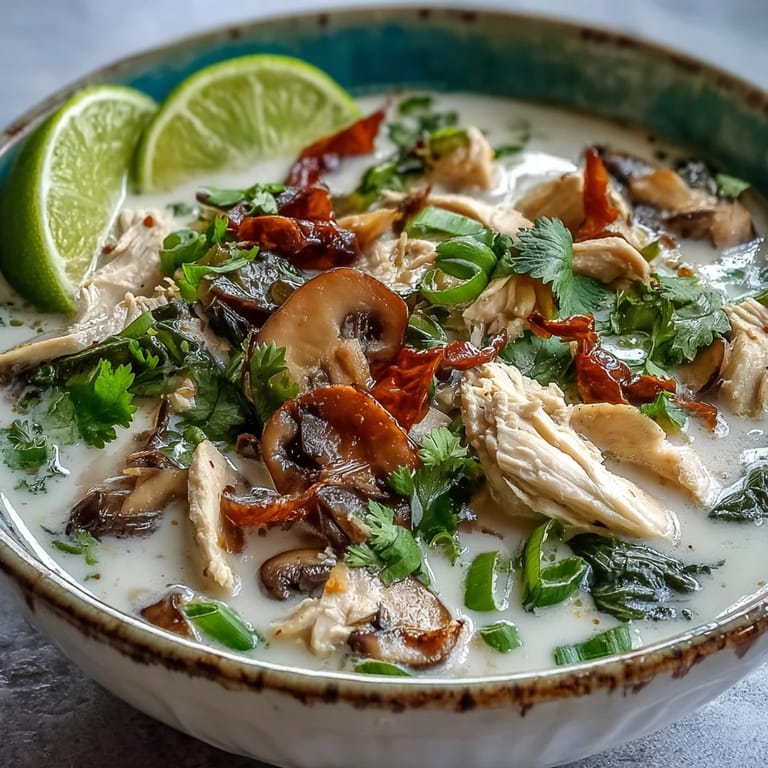
- Ladle your gorgeous soup into bowls and scatter fresh cilantro and green onions over the top. The bright herbs provide the perfect counterpoint to the rich, creamy broth.
 Save
Save  Save
Save My colleague Raj had never tried Thai food before joining our team dinner at a local restaurant. After watching him struggle with the unfamiliar menu, I suggested Tom Kha Gai as a gentle introduction. The look of surprise that spread across his face with that first spoonful is something I still treasure. A week later, he texted asking if I could teach him how to make it himself. That Saturday afternoon in my kitchen, chopping and simmering together, bridged our cultural differences better than months of office small talk.
Finding Authentic Ingredients
I still remember wandering through my first Asian market, completely overwhelmed by unfamiliar packages and produce. The elderly shop owner noticed my confusion and led me directly to the galangal and makrut lime leaves, explaining that these two ingredients were non-negotiable for proper Tom Kha. She showed me how to select fresh galangal by looking for firm, unwrinkled skin and a fragrant aroma when scratched lightly with a fingernail. Now I have a standing monthly appointment with that same market, where the owner always asks how my last batch of soup turned out.
Serving Traditions
In Thailand, Tom Kha isnt typically eaten alone but served alongside other dishes as part of a larger shared meal. My Thai neighbor laughed when I told her I was eating massive bowls of it by itself. She invited me over to show me the traditional way - small portions of the soup accompanied by jasmine rice, a spicy salad, and stir-fried vegetables. The contrast between the creamy soup and the other textures and flavors created a much more balanced experience. Now I always prepare a simple cucumber salad with lime juice and a few chili flakes when serving this soup to guests.
Making It Your Own
One rainy Sunday, I was craving Tom Kha but discovered Id run out of chicken. Rather than brave the downpour, I scrounged through my freezer and found some shrimp and a bag of mixed seafood. The resulting Tom Kha Talay (seafood version) was so delicious that it became a regular variation in my recipe rotation. Over the years, Ive learned that this soup is remarkably adaptable while still maintaining its soul.
- For vegetarians, firm tofu cubes work beautifully, and mushrooms can be doubled for more substance.
- If youre avoiding fish sauce, try coconut aminos with a tiny pinch of salt for a similar umami effect.
- When serving spice-sensitive guests, I keep the chilies whole and remove them before serving, then offer fresh sliced chilies on the side.
 Save
Save 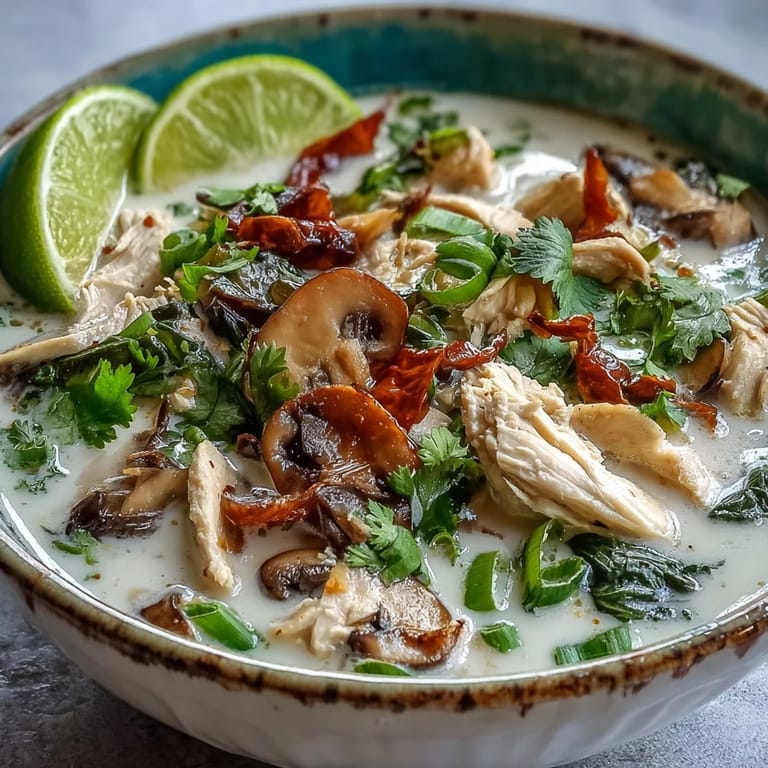 Save
Save This soup has become my culinary love language, the dish I make when words arent enough. Whether for celebrating good news or comforting through hard times, a steaming bowl of Tom Kha Gai somehow always says exactly what needs to be said.
Recipe Questions & Answers
- → What makes Tom Kha Gai different from other Thai soups?
Tom Kha Gai stands out for its creamy coconut milk base, unlike the clear broth of Tom Yum. The combination of galangal, lemongrass, and makrut lime leaves creates layers of citrusy, floral aroma that's distinctly Thai. The balance of rich coconut with tangy lime and savory fish sauce delivers complex flavors in every spoonful.
- → Can I substitute galangal with regular ginger?
While ginger works in a pinch, galangal has a unique piney, citrusy flavor that's essential to authentic Tom Kha Gai. Look for fresh or frozen galangal at Asian markets—it makes a noticeable difference. If unavailable, use young ginger and add extra lemongrass to compensate for the missing floral notes.
- → Why shouldn't I boil coconut milk vigorously?
High heat causes coconut milk to separate and become grainy. Simmer gently just until bubbles appear around the edges. This preserves the silky, creamy texture that makes Tom Kha Gai so luxurious. Stir occasionally to prevent scorching on the bottom of the pot.
- → How do I balance the flavors perfectly?
Taste and adjust seasonings after the soup simmers. Add more fish sauce for saltiness, lime juice for sourness, or palm sugar for sweetness. The magic lies in hitting all three notes equally. Start with the recommended amounts, then fine-tune to your preference—Thai cooking is highly personal and adaptable.
- → What's the best way to serve Tom Kha Gai?
Ladle steaming hot into bowls and garnish generously with fresh cilantro and sliced green onions. Serve with extra lime wedges on the side so diners can add more acidity to taste. Steamed jasmine rice makes the perfect accompaniment, soaking up the flavorful broth. For a complete meal, pair with a crisp green salad or stir-fried vegetables.
- → Can I make this vegetarian?
Absolutely. Swap chicken broth for vegetable broth and replace chicken thighs with firm tofu cubes. Use soy sauce or tamari instead of fish sauce, and add extra mushrooms or vegetables for substance. The aromatic base remains the same, so you'll still capture that authentic Thai essence in a plant-based version.