 Save
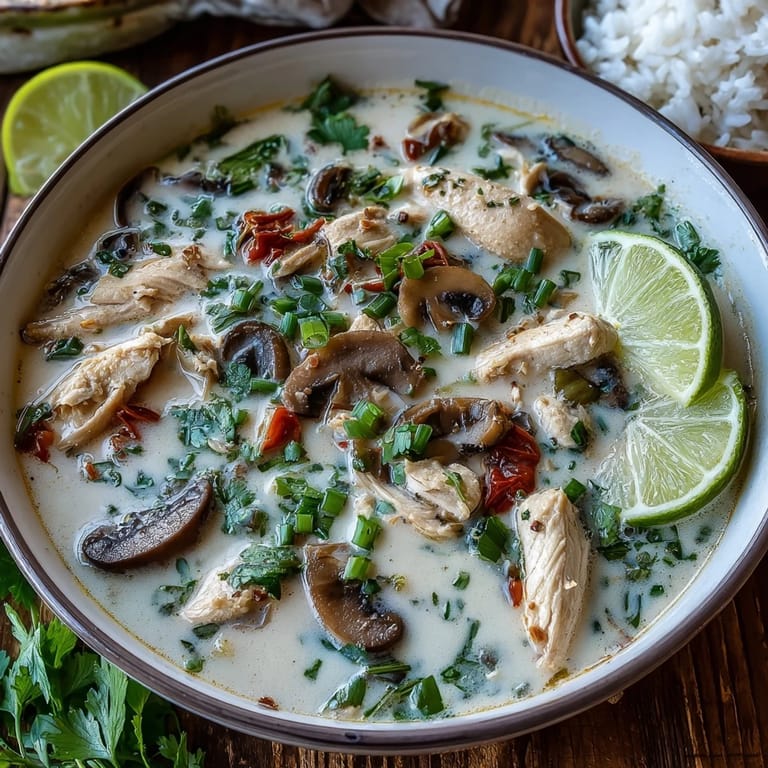
Save The scent of lemongrass and lime fills my kitchen whenever I make Tom Kha Gai, transporting me to that tiny street food stall in Bangkok where I first tasted it. Through the steam rising from the pot, I can almost see the elderly woman who showed me how to bruise the lemongrass properly, laughing at my clumsy attempts. Years later, this soup has become my remedy for everything from winter colds to homesickness, with its perfect balance of sour, salty, and creamy flavors.
Last December, when my sister was visiting during a particularly harsh snowstorm, I made this soup on a whim using ingredients I had stashed in the freezer. We sat by the window watching snowflakes dance outside while steam fogged up our glasses with each spoonful. She became so enamored with the flavors that she called me three times the following week for instructions, determined to recreate it for her skeptical husband who claimed to hate coconut anything.
Ingredients
- Lemongrass: The woody, citrusy backbone of this soup that needs to be properly bruised with the back of your knife to release its essential oils.
- Galangal: Not just a ginger substitute, its floral peppery notes are irreplaceable, though I learned that keeping slices in the freezer preserves their potency.
- Coconut Milk: Full-fat is non-negotiable here as I discovered the light version creates a watery disappointment instead of the velvety broth we want.
- Fish Sauce: The funky umami secret weapon that might smell alarming in the bottle but transforms magically in the finished soup.
- Thai Bird's Eye Chilies: These tiny peppers pack serious heat, so I always split them slightly rather than chopping them for a gentler infusion.
Tired of Takeout? 🥡
Get 10 meals you can make faster than delivery arrives. Seriously.
One email. No spam. Unsubscribe anytime.
Instructions
- Infuse Your Broth:
- Bring chicken stock to a gentle bubble and add all those gorgeous aromatics - the lemongrass, lime leaves, galangal, chilies, garlic and shallots. You'll know it's working when your kitchen begins to smell like a Thai restaurant.
- Poach the Chicken:
- Slide those thin chicken slices into the fragrant broth and lower the heat immediately. The gentle simmer ensures the chicken stays tender rather than tough.
- Introduce the Creaminess:
- Pour in that luxurious coconut milk with a gentle hand, stirring slowly to create swirls rather than breaking the fat emulsion. Add your mushrooms and tomatoes now, letting them soften but maintain their texture.
- Balance the Flavors:
- This is where magic happens as you add fish sauce for salt, lime juice for sour, and palm sugar for sweetness. Trust your taste buds and adjust until you find that perfect Thai harmony.
- Fish Out the Inedibles:
- Those aromatic pieces have done their job but aren't pleasant to bite into. A slotted spoon makes quick work of removing lemongrass stalks, lime leaves, and galangal pieces.
- Garnish with Abandon:
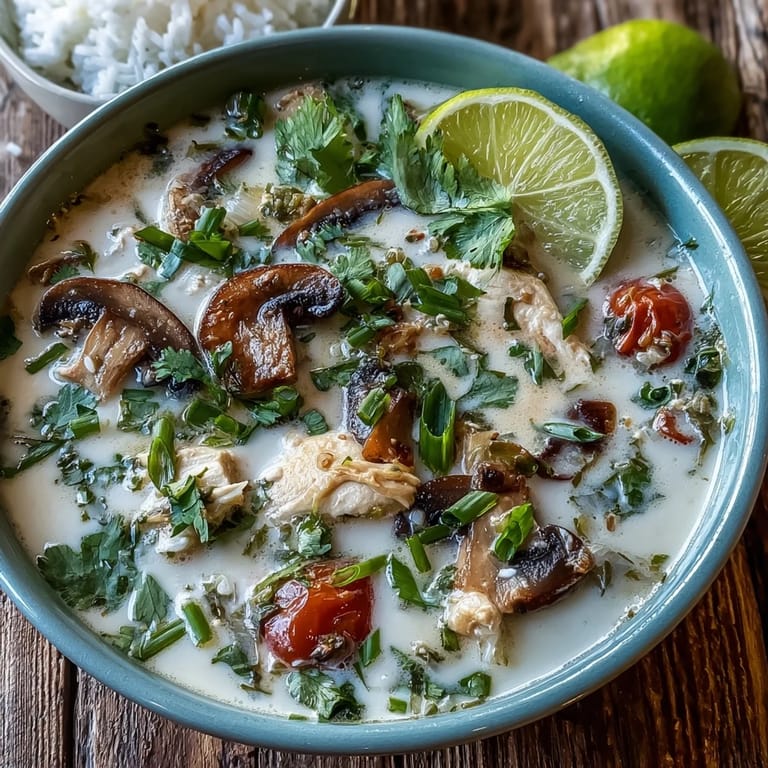
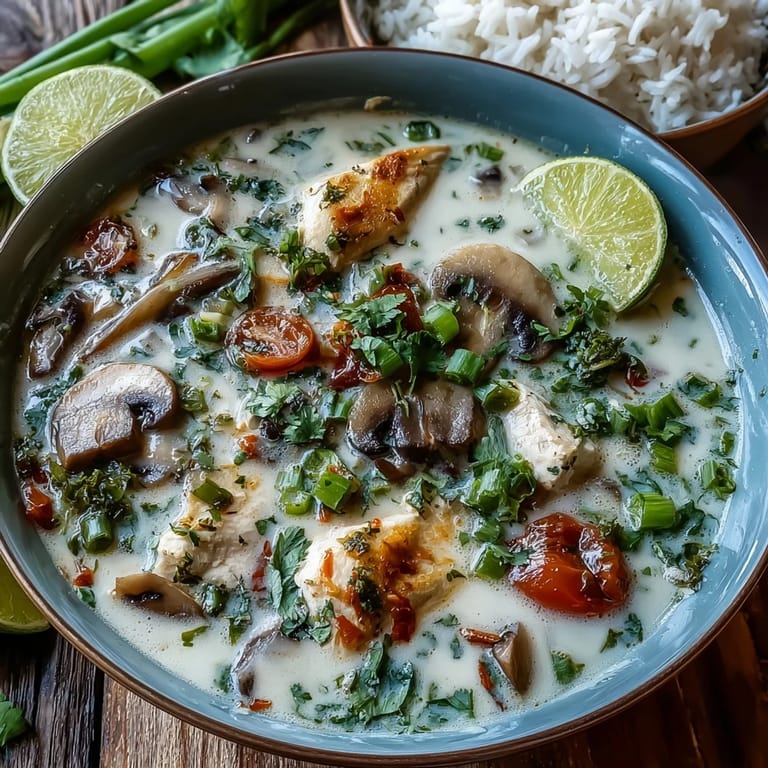
- Fresh herbs and an extra squeeze of lime juice brighten everything. The vibrant colors of cilantro, green onions and optional red chili make the soup as beautiful as it is delicious.
 Save
Save 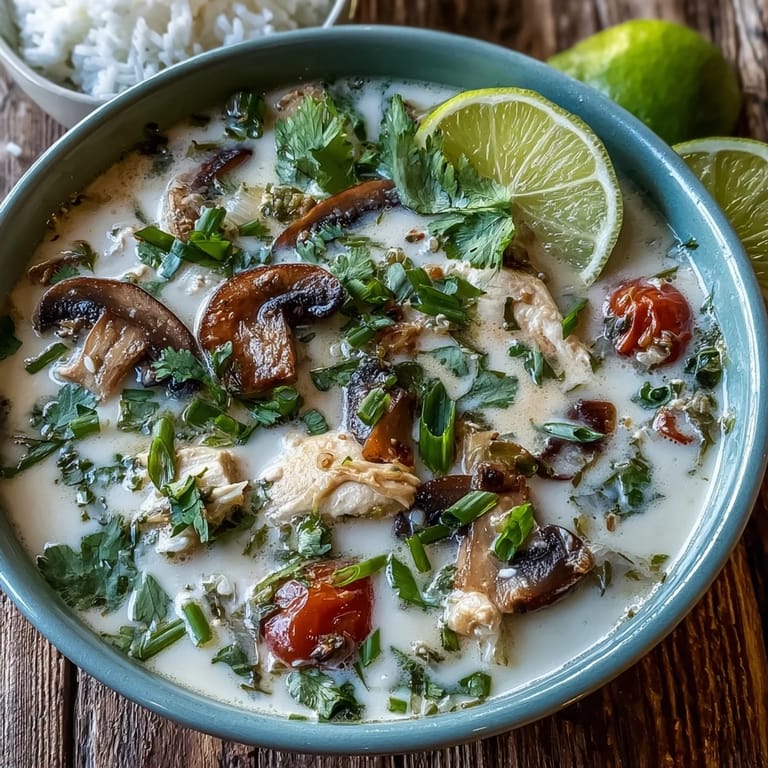 Save
Save The first time I served this soup to my Thai friend Suchada, I nervously watched her face for a reaction. After her first spoonful, she closed her eyes and was quiet for so long I thought Id offended her. Then she opened her eyes, smiled and said, This tastes like my grandmother, which I later understood was the highest compliment she could give. We finished the entire pot that evening, talking about family recipes and how certain flavors can bridge any distance.
Finding Authentic Ingredients
The hunt for galangal and kaffir lime leaves used to mean an hour-long trip to the Asian market across town until I discovered that many ingredients freeze beautifully. Now I buy in bulk every few months, portion everything into small bags, and have authentic flavors at my fingertips whenever the craving strikes. Fresh ingredients make an enormous difference - the one time I attempted this soup with dried lime leaves instead of fresh, the bright citrus notes were noticeably muted.
Making It Your Own
While traditionalists might argue about exact proportions, Ive found this recipe to be wonderfully adaptable to personal taste. Some evenings I crave more lime and less chili, other times I double the mushrooms and add spinach for extra vegetables. My vegetarian version with crispy tofu and a splash of soy sauce instead of fish sauce has converted several plant-based skeptics who thought theyd never enjoy Thai food again after giving up meat.
Serving Suggestions
Though perfectly satisfying on its own, this soup reaches new heights when paired thoughtfully with complementary dishes. A small bowl of jasmine rice served alongside soaks up that precious broth, while a crisp papaya salad provides textural contrast to the soups silkiness. For a truly indulgent experience, try making double the recipe.
- Serve in warmed bowls to keep the soup hot longer and enhance the aromatic experience.
- Keep garnishes separate and let everyone customize their bowl to suit their preference for heat and acidity.
- Save leftover soup in glass containers as plastic can absorb the strong flavors and become permanently infused with essence of lemongrass.
 Save
Save 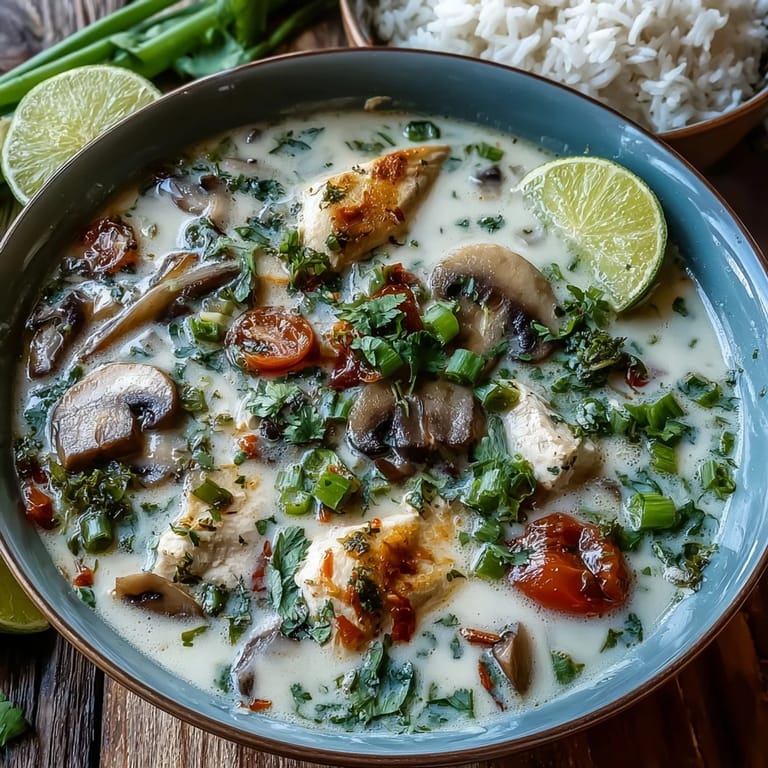 Save
Save This Tom Kha Gai has carried me through celebrations and consolations alike, proving that sometimes the most powerful comfort comes in a simple bowl of soup. May it bring the same warmth and joy to your table.
Recipe Questions & Answers
- → What makes Tom Kha Gai different from regular Thai soup?
Tom Kha Gai features coconut milk as its base, creating a rich and creamy texture unlike the clear broth of Tom Yum. The addition of galangal, kaffir lime leaves, and lemongrass gives it a distinctively aromatic and citrusy profile that sets it apart from other Thai soups.
- → Can I make Tom Kha Gai vegetarian?
Yes, substitute the chicken with firm tofu and replace chicken stock with vegetable broth. Instead of fish sauce, use soy sauce or tamari to maintain the salty umami element. The soup will still be delicious and creamy.
- → How spicy should Tom Kha Gai be?
Traditional Tom Kha Gai offers mild to medium heat. Start with 2-3 crushed bird's eye chilies and adjust according to your preference. Remember that the heat should enhance, not overpower, the delicate balance of coconut, lime, and aromatic flavors.
- → What can I use if I can't find galangal?
Fresh ginger makes an acceptable substitute for galangal, though the flavor will be slightly different. Use a bit more ginger than the galangal called for, and consider adding some lime zest to help compensate for the missing citrus notes that galangal naturally provides.
- → Should I remove the aromatics before serving?
It's traditional to remove large pieces of lemongrass, kaffir lime leaves, and galangal before serving as they're quite tough and fibrous. However, leaving the garlic, shallots, and chilies in the bowl adds extra flavor for those who enjoy eating them.