 Save
Save My kitchen filled with the most unexpected aroma one Sunday afternoon when my neighbor knocked on the door holding a container of her grandmother's black-eyed peas stew. She'd made extra and wanted to share, but what struck me wasn't just the smell of smoked sausage and thyme—it was watching her face light up as she described dropping those buttermilk dumplings right onto the simmering surface like little clouds landing on a savory sea. That single visit sparked an obsession, and after some kitchen experiments and a few too-dense dumpling disasters, I finally cracked the code.
I served this to my book club on a chilly October night, and it became the reason people actually stayed late instead of rushing home. Someone commented that it tasted like a warm hug in a bowl, and honestly, they weren't wrong—there's something about the combination of hearty beans, crispy-edged sausage, and those cloud-like dumplings that just makes people relax and linger at the table.
Ingredients
- Olive oil: Two tablespoons is your starting point for getting that sausage properly browned and building the flavor foundation for everything else.
- Smoked sausage: Look for 12 ounces of a quality smoked sausage—andouille or kielbasa work beautifully if you want to switch things up, and slicing it lets the edges crisp in the pan.
- Onion, garlic, celery, carrot, and bell pepper: This aromatic base is where the magic starts; don't skip the garlic because it adds complexity that transforms the broth.
- Low-sodium chicken broth: Four cups keeps you in control of the salt, and it lets the sausage and peas shine rather than overpowering them.
- Black-eyed peas: Two cans, drained and rinsed, save you from cooking dried peas for hours; they hold their shape beautifully while absorbing all that savory flavor.
- Dried thyme, smoked paprika, and cayenne: These three seasonings create layers of flavor—the thyme is earthy and classic, the paprika brings that smoky depth, and cayenne adds a gentle warmth if you choose to use it.
- Bay leaf and salt: The bay leaf infuses subtle complexity into the broth, and salt brings everything into focus at the end.
- All-purpose flour and yellow cornmeal: Together they create dumplings with structure and a tender crumb, while the cornmeal adds a slight sweetness and texture that plain flour dumplings just can't match.
- Baking powder and baking soda: These lift the dumplings so they become pillowy rather than dense—the combination is key.
- Unsalted butter and buttermilk: The butter adds richness while the buttermilk provides tang and helps activate the baking soda for maximum lift.
Tired of Takeout? 🥡
Get 10 meals you can make faster than delivery arrives. Seriously.
One email. No spam. Unsubscribe anytime.
Instructions
- Brown the sausage foundation:
- Heat your olive oil in a large Dutch oven over medium heat, then add those sausage slices and let them sit undisturbed for a minute or two so they develop a caramelized edge. You're looking for about five minutes total until they've released their oils and started to crisp slightly—this is where the deep flavor comes from.
- Build your aromatic base:
- Once the sausage has colored, add your diced onion, minced garlic, celery, carrot, and bell pepper to the pot and sauté everything together for five to seven minutes. The vegetables will soften and begin to stick slightly to the bottom, which is exactly what you want because those browned bits are flavor gold.
- Simmer the soul of the stew:
- Pour in that chicken broth and add the drained black-eyed peas along with your thyme, smoked paprika, black pepper, cayenne if you're using it, and the bay leaf. Bring it to a boil, then drop the heat low and let it simmer uncovered for twenty-five minutes while you prepare the dumpling batter—this time allows the flavors to meld and deepen.
- Mix the dumpling magic:
- While the stew simmers, whisk together flour, cornmeal, baking powder, baking soda, and salt in a medium bowl, then stir in your melted butter and buttermilk just until the batter comes together. The key here is restraint—overmixing develops gluten and makes tough dumplings, so stop as soon as you see no dry flour streaks.
- Taste and adjust:
- Remove that bay leaf from the stew and taste it carefully, adjusting salt and adding more cayenne if you want extra heat. This is your last chance to balance the flavors before the dumplings go in.
- Drop and cover the dumplings:
- Using a spoon or small scoop, drop tablespoon-sized portions of that dumpling batter directly onto the simmering surface of your stew, spacing them out so they have room to puff. Cover the pot immediately and reduce the heat to low, then let it cook undisturbed for twenty to twenty-five minutes—and this is crucial—do not peek under that lid because the steam is what makes them fluffy and cooked through.
- Serve with warmth:
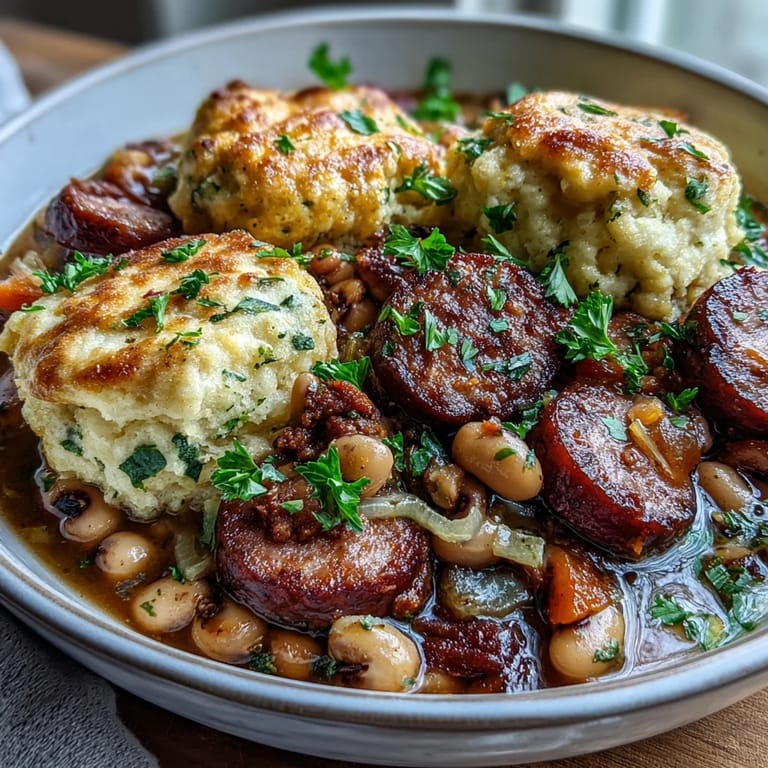
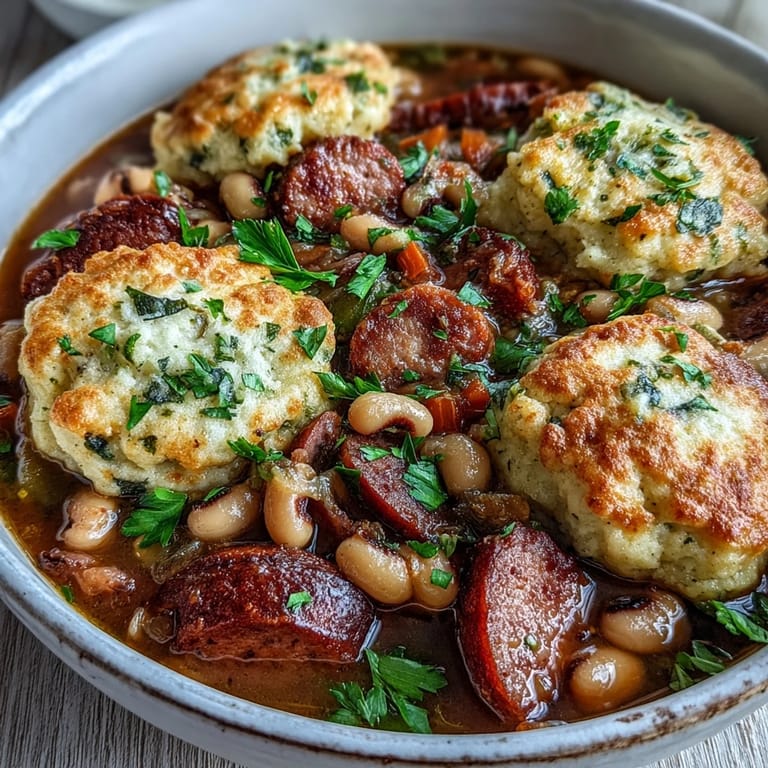
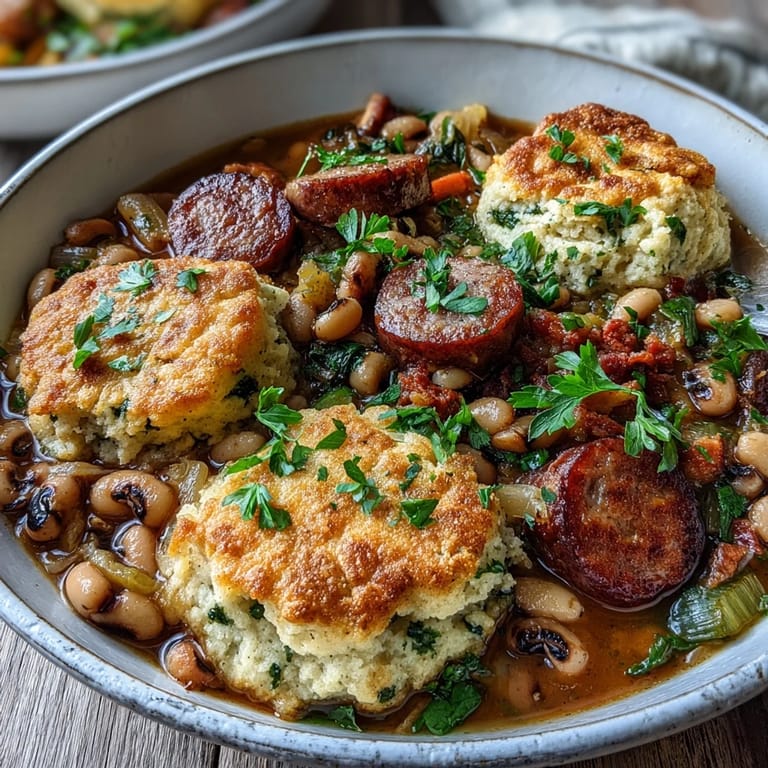
- When the time is up, carefully lift the lid away from you so the steam doesn't burn your face, and you'll see those dumplings have puffed up beautifully. Ladle the stew into bowls, making sure each serving gets some of those tender dumplings, broth, sausage, and beans.
 Save
Save There was a quiet moment last winter when my daughter, who usually picks at everything on her plate, asked for a second bowl of this stew and actually wanted to help me make it the next week. That shift from picky eater to willing kitchen helper happened because of dumplings and beans, and it reminded me that food really does bring people closer together in ways that feel almost magical.
Variations and Switches
This recipe is more forgiving than you might think, and the beauty of it is that it adapts to what you have on hand or what sounds good to you. I've made it vegetarian by skipping the sausage entirely and using vegetable broth instead, then bumping up the smoked paprika to compensate for that savory depth, and it becomes a completely different but equally satisfying dish. You could also swap the smoked sausage for andouille if you want more heat, or use kielbasa for a slightly different flavor profile that's still delicious.
The Science Behind the Dumplings
Understanding why these dumplings work the way they do helps you troubleshoot if something goes wrong, and it's actually pretty straightforward chemistry. The combination of baking powder and baking soda creates carbon dioxide gas in two different ways—the baking soda reacts with the acid in the buttermilk immediately, while the baking powder activates when it hits the heat—and this dual leavening system is what creates that impossibly fluffy interior. The cornmeal adds not just flavor but also absorbs some of the liquid from the dumpling mixture, keeping the texture tender rather than gluey.
Pairing and Serving Suggestions
This is the kind of main dish that stands on its own, but I've found that serving it with something light and crisp on the side makes the meal feel more complete without weighing you down. A simple green salad with a bright vinaigrette, some cornbread on the side, or even just a cold glass of Sauvignon Blanc cuts through the richness beautifully. If you're feeding a crowd, you can make this ahead and reheat it gently on the stovetop, stirring occasionally, and it tastes even better the next day when all the flavors have had time to marry.
- Serve immediately while the dumplings are still steaming and at their fluffiest.
- Fresh parsley scattered on top adds a pop of color and a fresh note that balances the richness.
- This keeps well in the refrigerator for three to four days and reheats beautifully on the stove with a splash of extra broth.
 Save
Save This stew has become my go-to recipe for when I want to feed people something that feels both impressive and deeply comforting, and every time I make it, I think of that initial moment when my neighbor shared her family's tradition with me. It's one of those dishes that reminds me why cooking for people matters—not because it's complicated, but because it connects us in simple, meaningful ways.
Recipe Questions & Answers
- → What makes the dumplings fluffy?
The combination of cornmeal, buttermilk, and chemical leaveners (baking powder and baking soda) creates light, fluffy dumplings. The key is not overmixing the batter and keeping the pot covered while they steam directly on the stew.
- → Can I use dried black-eyed peas instead of canned?
Yes, soak dried peas overnight and cook them separately until tender before adding to the stew. This will add about 2-3 hours to your preparation time but allows better control over salt content.
- → What type of sausage works best?
Smoked sausage varieties like andouille, kielbasa, or any smoked pork sausage provide the best flavor foundation. The smokiness infuses the broth and complements the earthy black-eyed peas perfectly.
- → Can I make this vegetarian?
Simply omit the sausage and substitute vegetable broth for chicken broth. Increase the smoked paprika to maintain depth of flavor, and consider adding diced potatoes or extra vegetables for substance.
- → Why shouldn't I lift the lid while dumplings cook?
Keeping the lid sealed traps the steam, which is essential for the dumplings to cook through and puff up properly. Lifting the lid releases heat and steam, resulting in dense, undercooked dumplings.
- → How do I store leftovers?
Refrigerate in an airtight container for up to 4 days. Note that the dumplings will absorb more liquid over time, so you may need to add extra broth when reheating on the stovetop.