 Save
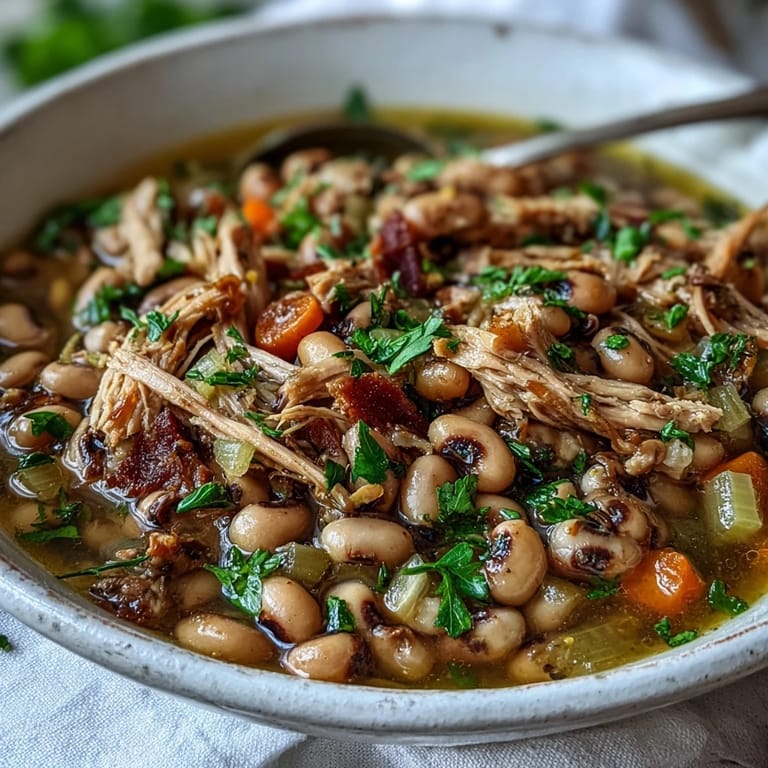
Save My grandmother used to say that black-eyed peas on New Year's Day weren't just tradition—they were an investment in luck for the months ahead. Years later, I found myself standing in my own kitchen on December thirty-first, wondering if I was ready to abandon the canned version I'd relied on for too long. That's when I discovered that smoked turkey could transform this humble legume dish into something genuinely craveable, something that didn't feel like an obligation but a choice I actually wanted to make.
I made this for a group of friends who'd never experienced black-eyed peas before, and watching their skepticism melt into genuine surprise was worth every minute. The kitchen smelled like patience—that slow, building aroma of turkey, garlic, and spices that only happens when you let things simmer properly. One friend asked for the recipe before he'd even finished his bowl, and I remember thinking that's when I knew this wasn't nostalgia talking, it was just genuinely good food.
Ingredients
- Dried black-eyed peas: Sorting them matters more than you'd think—a tiny pebble hiding in there can crack a tooth, so spend a minute looking them over before rinsing.
- Smoked turkey wings or drumsticks: The bone-in pieces contribute far more flavor than boneless turkey breast ever could, and shredding them back into the pot creates little pockets of savory texture.
- Onion, celery, and carrot: This aromatic base is your foundation, and chopping them roughly uniform sizes means they cook at the same pace instead of some pieces turning to mush.
- Garlic: Fresh minced garlic beats powder by miles—the flavor develops differently as it simmers in the broth.
- Low-sodium broth: Using low-sodium lets you control the salt level at the end, which is crucial because the smoked turkey already brings its own saltiness to the party.
- Smoked paprika and thyme: These are your flavor anchors, creating that characteristic Southern warmth without needing to rely on fat.
- Olive oil: Just enough to create a foundation for sautéing—you're not frying anything, just coaxing out those initial flavors.
Tired of Takeout? 🥡
Get 10 meals you can make faster than delivery arrives. Seriously.
One email. No spam. Unsubscribe anytime.
Instructions
- Sauté your aromatics:
- Heat the olive oil until it shimmers slightly, then add your chopped vegetables. You'll know they're ready when the onion turns translucent and the celery starts to soften—about five or six minutes of gentle cooking.
- Build your pot:
- Add the turkey, peas, broth, water, and all your seasonings at once. Stir everything together until the turkey is partially submerged and everything looks integrated.
- Bring it to life:
- Let the pot come to a boil, which usually takes about ten minutes. Once you see that rolling boil, reduce the heat to low immediately—you want a gentle simmer, not aggressive bubbling.
- The long simmer:
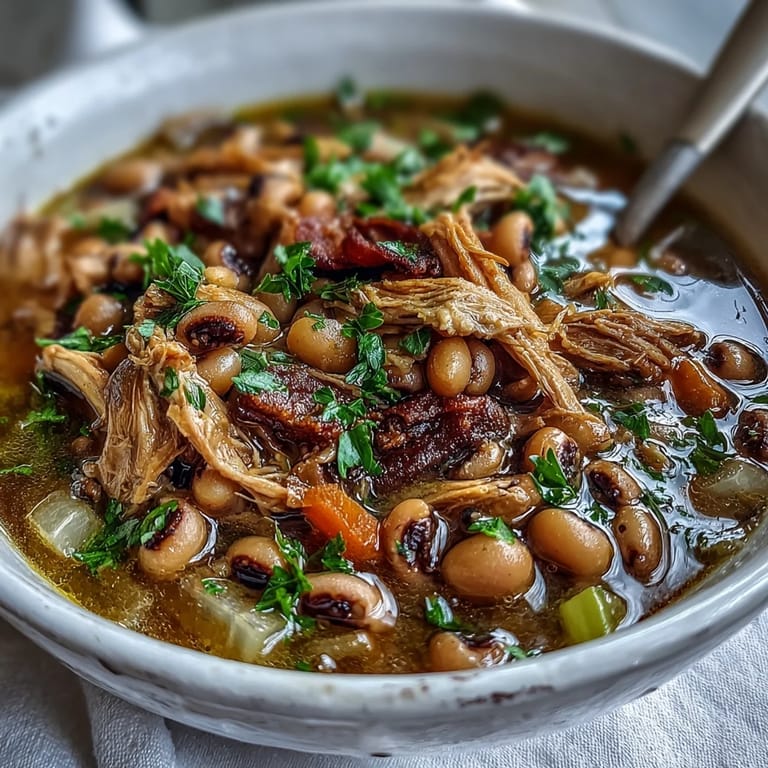
- This is where patience becomes your secret weapon. Sixty to seventy-five minutes of quiet simmering lets the peas become tender while the broth turns rich and deep. Skim off any foam that rises to the surface—it's just impurities cooking out.
- Shred and return:
- Once the peas are tender, carefully remove the turkey pieces and let them cool just enough to handle. Pull the meat from the bones, discard the skin, and shred it into bite-sized pieces that'll distribute throughout the pot.
- Season and serve:
- Taste your dish and adjust the salt—this is the moment where a teaspoon more can completely change how all the flavors land on your tongue. Remove that bay leaf and ladle into bowls.
 Save
Save There's a moment that happens every time I make this dish when someone returns for seconds and says something like, "I didn't expect to actually want this." That's when I remember why cooking matters—it's not about impressing people with complicated techniques, it's about proving that simple ingredients treated with attention become something worth sharing.
The Power of the Slow Simmer
This dish teaches you something important if you're willing to listen: the best flavors don't happen by accident or by rushing. When you bring everything to a boil and then immediately drop the heat to low, you're creating an environment where the peas gradually absorb all that smoky turkey essence and herbal warmth. The longer it sits there gently bubbling, the more unified the flavors become—less like separate ingredients in a pot and more like one cohesive thing that just happens to contain multiple components.
Why Smoked Turkey Changes Everything
Using smoked turkey instead of ham or bacon hocks is less about being health-conscious and more about discovering that smoke flavor can come through clearly without requiring heavy pork. The turkey actually lets the earthiness of the black-eyed peas shine through instead of getting buried under layers of fat. I've found that people who claim they don't like peas suddenly become believers when they realize the smoke and the legume are actually having a conversation instead of one drowning out the other.
Serving and Beyond
This dish gets even better on the second day when the flavors have had time to deepen and settle, so don't hesitate to make it ahead if you're hosting on New Year's Day. It reheats beautifully and actually tastes like you spent more time on it than you actually did. Some final touches that always work: a sprinkle of fresh parsley adds brightness, hot sauce lets people customize their own heat level, and serving it over steamed rice or alongside cornbread transforms it into a complete meal that feels intentional.
- If you want extra richness without dairy, add a splash of liquid smoke during the simmer—it deepens everything without changing the texture.
- Leftover peas work beautifully in soups or grain bowls throughout the week, so make extra if you can.
- The bay leaf should always be removed before serving, even though it's tempting to leave it—it genuinely tastes medicinal if someone bites into it.
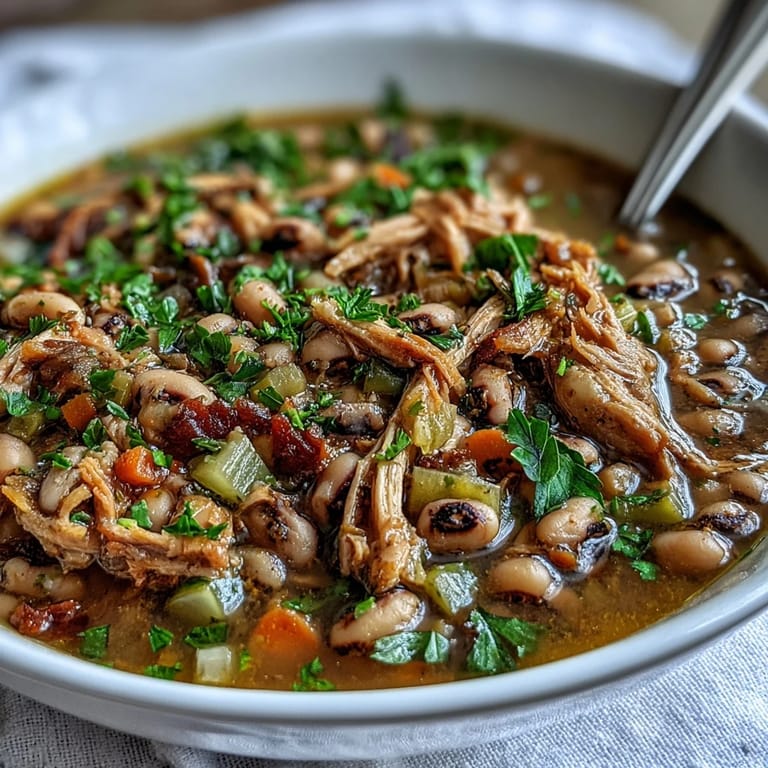 Save
Save This recipe sits at the intersection of tradition and practicality, honoring what came before while making space for your own kitchen style. That's the whole point, really—not following someone else's rules perfectly, but understanding why the rules exist so you can trust your own instincts.
Recipe Questions & Answers
- → Do I need to soak black-eyed peas before cooking?
No soaking is required for this dish. The dried peas cook directly in the broth and simmer long enough to become tender without pre-soaking.
- → Can I use fresh or canned black-eyed peas instead?
Yes, you can substitute with canned peas—reduce cooking time to 30-40 minutes since they're already tender. Fresh peas will also need less time, about 45 minutes.
- → What can I use instead of smoked turkey?
Smoked chicken wings, ham hocks, or smoked pork neck bones work well. For a vegetarian version, add extra smoked paprika and liquid smoke for depth.
- → How should I serve this dish?
Enjoy it as a standalone main dish or serve over steamed rice with cornbread on the side. A dash of hot sauce and fresh parsley make excellent finishing touches.
- → How long do leftovers keep?
Store in an airtight container in the refrigerator for up to 5 days. The flavors continue to develop, making it even better the next day.
- → Can I freeze this dish?
Yes, cool completely and freeze in portions for up to 3 months. Thaw overnight in the refrigerator before reheating gently on the stove.