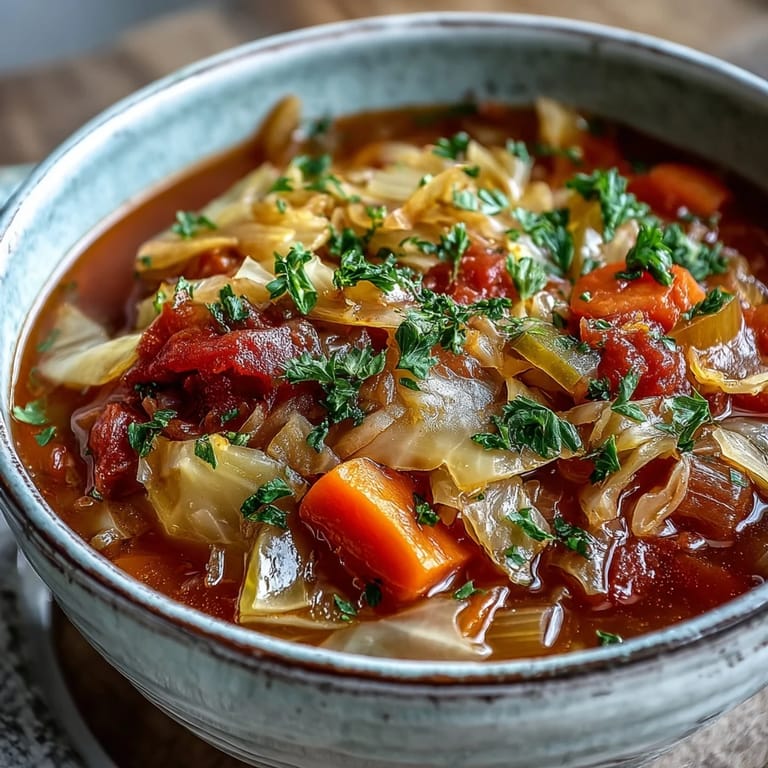
 Save
Save I used to think cabbage was boring until a cold November evening when I had nothing but half a cabbage, some wilted carrots, and a can of tomatoes in my pantry. What started as a last-minute dinner became one of those recipes I kept coming back to, the kind that fills the kitchen with warmth before you even take the first spoonful. The smell of simmering tomatoes and thyme is still tied to that night, wrapped in a blanket with a book, realizing simple ingredients could be this satisfying. Sometimes the best recipes happen when you stop overthinking and just let the pot do the work.
I made this for my sister once when she was getting over a cold, and she texted me later asking for the recipe like it was some secret formula. It wasnt fancy, just vegetables and broth, but there was something about the way the cabbage softened and soaked up all that savory tomato flavor. She said it tasted like care, which made me laugh, but I knew what she meant. Food has a way of saying things we dont always know how to put into words.
Ingredients
- Green cabbage: The star of the show, it turns silky and sweet as it cooks, absorbing all the broth like a sponge, so dont skimp on the simmer time.
- Carrots and celery: These add a gentle sweetness and texture that keeps every spoonful interesting, plus they make your kitchen smell amazing while they cook.
- Yellow onion: A good base for almost any soup, it adds depth without shouting, just quietly doing its job in the background.
- Garlic: Two cloves might not sound like much, but they bloom into something fragrant and essential once they hit the heat.
- Diced tomatoes: They bring acidity and body to the broth, turning what could be plain into something rich and a little tangy.
- Tomato paste: This little trick deepens the tomato flavor and gives the soup a heartier backbone, dont skip it even if it seems small.
- Vegetable broth: The liquid foundation, and using a good quality broth here really does make a difference in the final taste.
- Dried thyme and bay leaf: These herbs are quiet but powerful, adding an earthy warmth that ties everything together.
- Smoked paprika: Optional, but it adds a subtle smokiness that makes people ask what your secret ingredient is.
- Fresh parsley: A bright finish that makes the soup feel fresher and just a little more special when you serve it.
Tired of Takeout? 🥡
Get 10 meals you can make faster than delivery arrives. Seriously.
One email. No spam. Unsubscribe anytime.
Instructions
- Start with the aromatics:
- Heat your pot over medium heat with a splash of oil, then add the onion, carrot, and celery, stirring them around until they start to soften and smell sweet, about 5 minutes. This is where the flavor base begins, so let them take their time.
- Wake up the garlic:
- Toss in the minced garlic and stir for just a minute until it gets fragrant and golden. Dont let it brown or it will turn bitter.
- Wilt the cabbage:
- Add all that chopped cabbage and stir it well, letting it cook down for 3 to 4 minutes. It will look like a lot at first, but it shrinks fast and starts to soften beautifully.
- Bloom the tomato paste:
- Stir in the tomato paste and let it cook for a full minute, coating the vegetables. This step caramelizes the paste a bit and deepens the whole flavor of the soup.
- Build the broth:
- Pour in the diced tomatoes with their juice, the vegetable broth, thyme, bay leaf, smoked paprika if youre using it, and season with salt and pepper. Stir everything together so its well combined.
- Simmer until tender:
- Bring the pot to a boil, then lower the heat, cover it, and let it simmer gently for 25 to 30 minutes. The cabbage should be melt-in-your-mouth tender and the flavors all married together.
- Finish and serve:
- Pull out the bay leaf, taste the soup, and adjust the seasoning if it needs more salt or pepper. Ladle it into bowls and scatter fresh parsley on top if you have it.
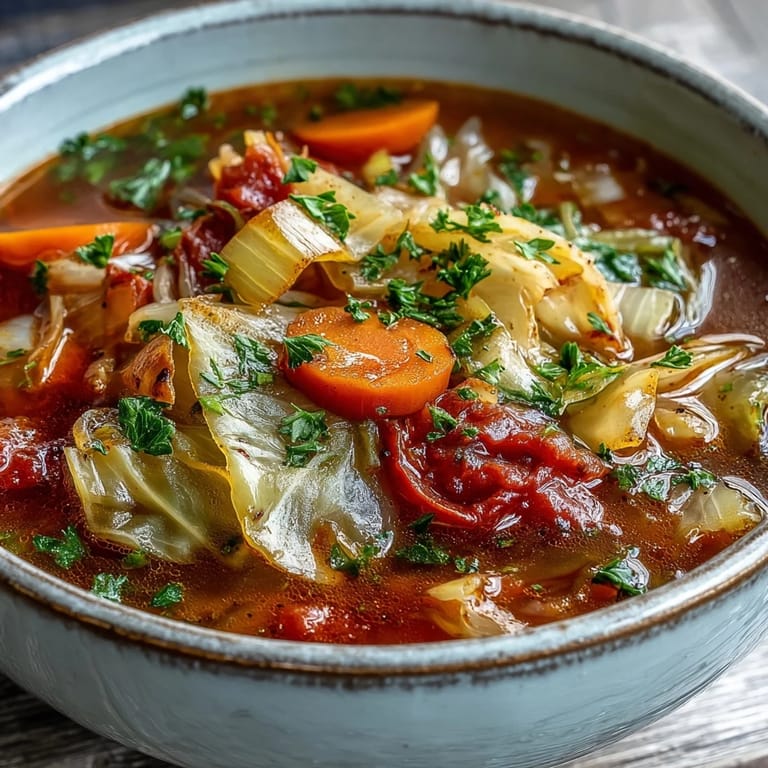 Save
Save There was a Sunday afternoon when I made a huge pot of this and brought it to a potluck, not sure if anyone would even try it because cabbage soup doesnt exactly sound glamorous. By the end of the night, the pot was empty and three people asked me to send them the recipe. It reminded me that comfort doesnt need to be complicated, it just needs to be real.
Making It Heartier
If you want this to be more of a meal than a starter, throw in some diced potatoes when you add the cabbage, or stir in a can of drained white beans near the end. Both options make it more filling without changing the spirit of the soup, and they soak up that tomato broth in the best way.
Storing and Reheating
This soup keeps beautifully in the fridge for up to five days, and honestly, it tastes even better on day two when everything has had time to meld. Reheat it gently on the stove, adding a splash of broth or water if it has thickened up, and it will taste just as good as the first time.
Serving Suggestions
I love pairing this with thick slices of rye bread or a crusty roll, something with a little chew to soak up the broth. A dollop of sour cream on top is not traditional for this version, but it adds a creamy richness if youre not keeping it dairy-free.
- Serve it with a side of pickles or sauerkraut for a tangy contrast that feels very Eastern European.
- A simple green salad with a sharp vinaigrette balances the warmth and heartiness of the soup.
- Leftovers make an excellent lunch the next day, packed in a thermos or reheated at home.
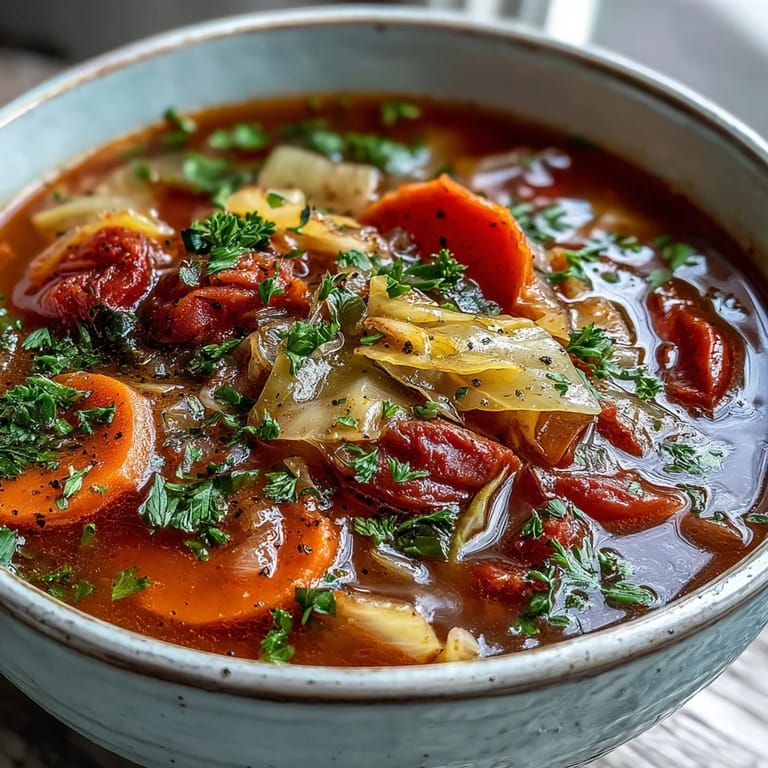 Save
Save This soup has a way of grounding you, reminding you that good food doesnt need to be fancy or complicated. I hope it becomes one of those recipes you turn to on cold nights when you just need something warm and easy.
Recipe Questions & Answers
- → Can I make this soup ahead of time?
Yes, this soup stores beautifully in the refrigerator for up to 5 days. The flavors actually deepen overnight. Simply reheat on the stovetop over medium heat until warmed through.
- → What type of cabbage works best?
Green cabbage is traditional and provides the best texture and mild flavor. Savoy cabbage also works well for a more delicate result. Avoid red cabbage as it will discolor the broth.
- → How can I make this soup more filling?
Add diced potatoes during step 5 for extra heartiness, or stir in cooked white beans, chickpeas, or lentils near the end. You can also add cooked grains like barley or rice.
- → Can I freeze leftover soup?
Absolutely. Let the soup cool completely, then transfer to airtight containers or freezer bags. It will keep for up to 3 months. Thaw overnight in the refrigerator before reheating.
- → What can I substitute for vegetable broth?
Use chicken broth if you're not vegetarian, or simply use water with extra seasoning. Bouillon cubes dissolved in water also work well—just adjust the salt accordingly.
- → Is smoked paprika necessary?
No, it's optional but adds wonderful depth and a subtle smoky flavor. You can use regular paprika, skip it entirely, or substitute with a pinch of cumin for a different flavor profile.