 Save
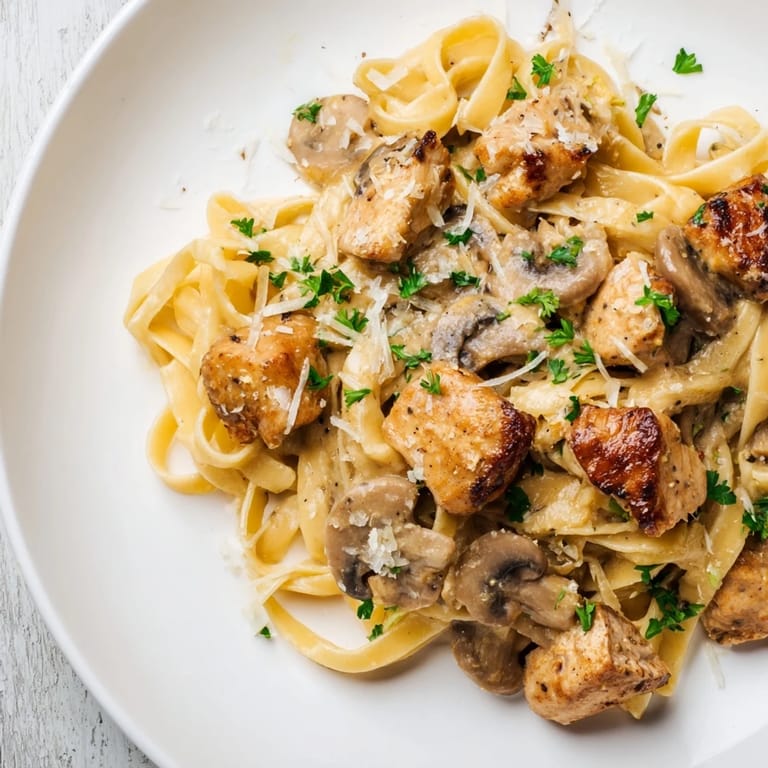
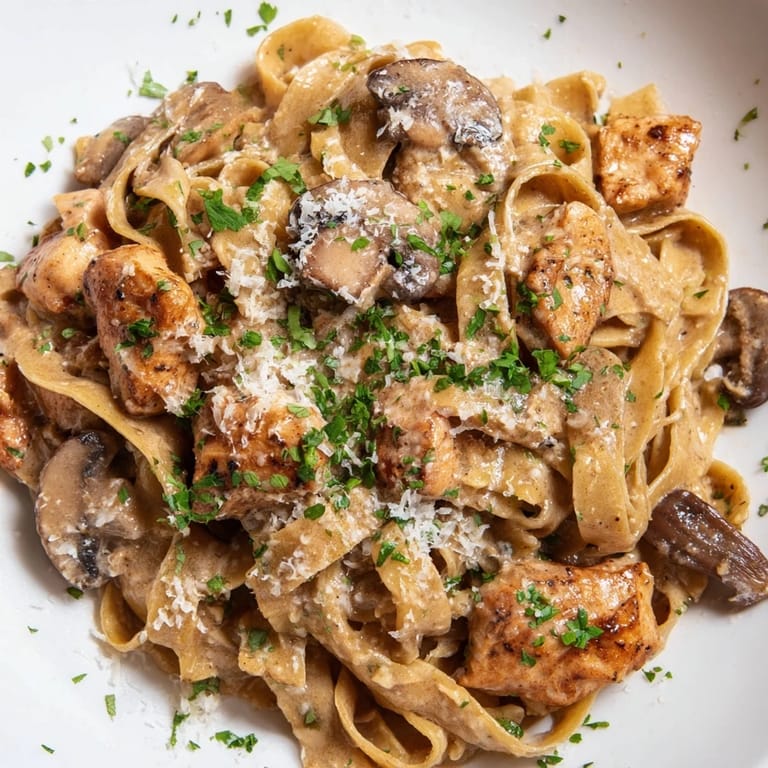
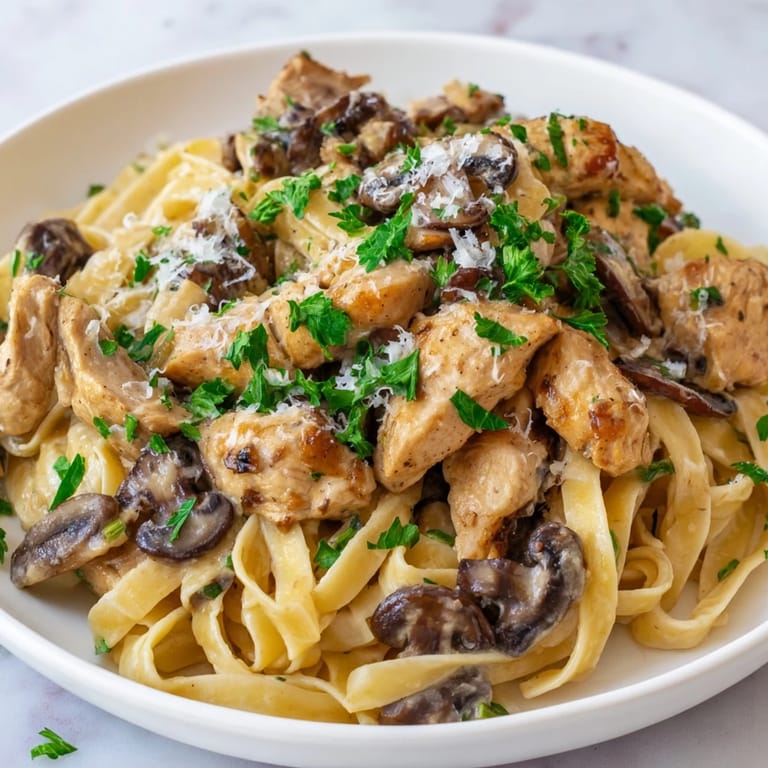
Save There's something about the smell of mushrooms hitting hot butter that makes me pause whatever I'm doing. Years ago, I was rushing through a weeknight dinner when a friend stopped by unannounced, and instead of ordering in, I grabbed chicken from the freezer and whatever vegetables I had on hand. That spontaneous bowl of creamy mushroom pasta became the dish I've made countless times since—not because it's fancy, but because it tastes like comfort feels.
I made this for my partner on a rainy Tuesday, and he went back for seconds without asking what was in it. That's when I realized it wasn't the ingredients that mattered—it was how the kitchen smelled while it cooked, warm and earthy and inviting. Now whenever someone asks what I'm making for dinner, this is the first thing I suggest.
Ingredients
- Chicken breasts: Pound them thin if you're impatient like me; they cook faster and absorb the sauce better than thick chunks.
- Cremini or white mushrooms: The earthiness is what this dish is built on, so don't skip them or swap for something milder.
- Onion and garlic: These are your flavor foundation; don't rush them or they'll taste raw and sharp.
- Butter and olive oil: The combination matters more than you'd think—butter for richness, oil so nothing burns.
- Heavy cream: Light cream curdles easily in acidic sauces, so stick with the real thing.
- Chicken broth: Low-sodium lets you control the salt; one less thing to worry about.
- Parmesan cheese: Freshly grated melts into the sauce like it was meant to be there.
- Fettuccine or linguine: Wide noodles trap the sauce; thin spaghetti lets it slide right off.
- Italian herbs and seasonings: These tie everything together without overpowering the delicate mushroom flavor.
Tired of Takeout? 🥡
Get 10 meals you can make faster than delivery arrives. Seriously.
One email. No spam. Unsubscribe anytime.
Instructions
- Boil your pasta:
- Salt the water until it tastes like the sea—this is your only chance to season the pasta itself. Cook it until it's just barely tender, then scoop out half a cup of that starchy water before draining; you'll need it later to loosen the sauce.
- Sear the chicken:
- Pat it dry with paper towels so it browns instead of steams. Don't crowd the pan or move it around too much; let it sit for a couple minutes on each side so it develops a golden crust.
- Build the base:
- Once the chicken is out, use the same skillet to soften the onions—they're the quiet foundation of everything that comes next. Add the mushrooms and let them release their moisture and start to brown; this takes patience, but it's worth it.
- Create the sauce:
- Scrape that browned, crusty stuff from the bottom of the pan into the broth—that's pure umami. Once you add the cream and cheese, keep the heat low and gentle so everything stays silky, not broken and grainy.
- Bring it together:
- Add the chicken back in and let everything simmer just long enough to taste like it belongs together. Toss it all with the pasta, using that reserved pasta water to loosen things if it feels too thick.
 Save
Save The first time I served this to someone who actually knew how to cook, I was nervous. She took one bite and said it tasted like a restaurant dish, which made me realize that simple ingredients cooked with attention are sometimes more impressive than anything complicated. That moment changed how I think about cooking.
The Secret to Creamy Pasta
Most creamy sauces split or separate because people either use the wrong temperature or add the cream too quickly. The real trick is patience—lower your heat before the cream goes in, stir constantly, and if it looks too thick, use that pasta water drop by drop like you're adding medicine. I learned this by ruining at least three pans before it clicked.
Variations That Actually Work
I've tested swapping things around more than I care to admit. Chicken thighs work beautifully because they're harder to overcook and stay moist even if you're distracted. A splash of dry white wine after the mushrooms adds brightness that cream alone can't provide. Baby spinach stirred in at the end doesn't change the core dish but makes you feel like you added vegetables, and somehow that matters psychologically.
Timing and Temperature Tricks
This dish is fast enough for a Thursday night but impressive enough for unexpected guests. The real magic is in not rushing—if you try to speed up the mushroom browning or keep the sauce on high heat, you lose the subtlety that makes this special. I've learned to use this time to set the table, make a salad, or pour a glass of wine, turning cooking into something that feels less hurried.
- If your skillet is cold when you start, the chicken will stick no matter what; let it heat for a full minute first.
- Taste the sauce before adding the pasta so you know if it needs more salt or a squeeze of lemon juice to brighten it.
- Add fresh herbs at the very end so they taste green and alive, not cooked into invisibility.
 Save
Save This is the kind of dish that reminds you why you cook in the first place. It's not about impressing anyone; it's about sitting down to something warm and delicious that you made with your own hands.
Recipe Questions & Answers
- → Can I use chicken thighs instead of breasts?
Yes, chicken thighs can be substituted for a juicier and richer texture without changing cooking times significantly.
- → What type of mushrooms work best?
Cremini or white mushrooms are ideal for their earthy flavor and tender texture after sautéing.
- → How do I keep the pasta sauce creamy?
Using heavy cream and Parmesan cheese helps create a smooth sauce. Adding reserved pasta water can adjust consistency as needed.
- → Can I add vegetables to this dish?
Yes, ingredients like baby spinach or sun-dried tomatoes can be stirred in for added color and nutrition.
- → What wines pair well with this meal?
A crisp Chardonnay or Pinot Grigio complements the creamy and savory flavors beautifully.
- → Is it necessary to sauté the mushrooms separately?
Sautéing mushrooms with onions until browned enhances their flavor and contributes to the depth of the sauce.