 Save
Save There's something about the moment when you accidentally bite into a pork chop sandwich at a diner and it changes everything—that crispy exterior giving way to juicy meat, then pooling cheese. I went home determined to recreate that feeling, but I wanted to do it properly, with panko that actually stayed golden and cheese that didn't separate. After testing it a few times in my kitchen, I realized the secret wasn't complicated, just honest technique and good ingredients layered with intention.
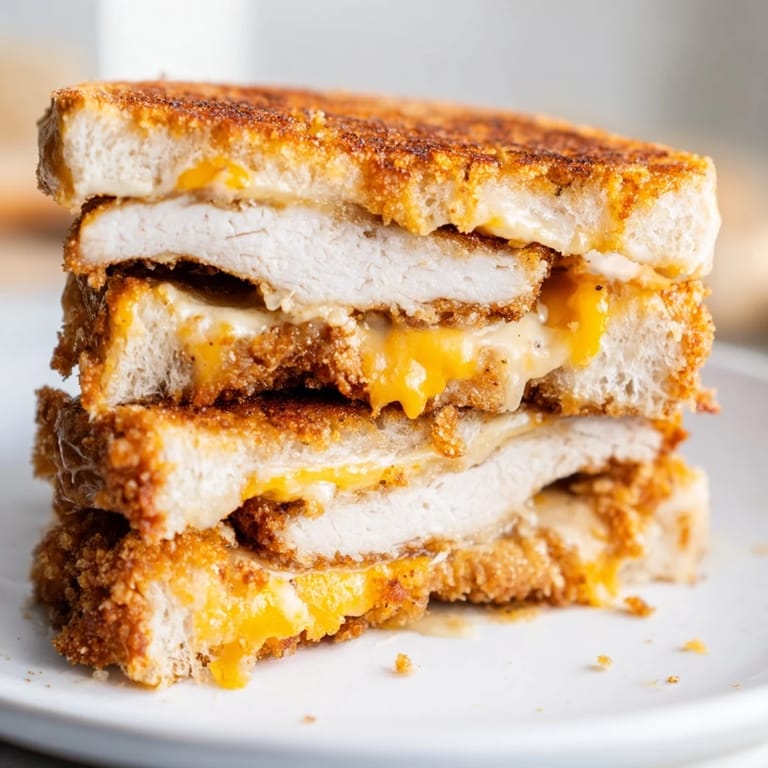
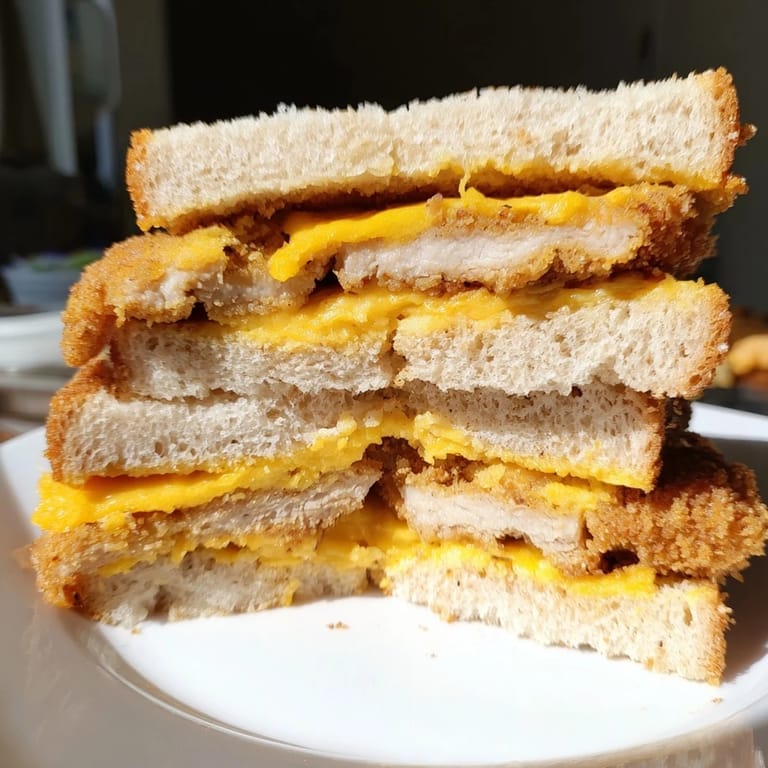
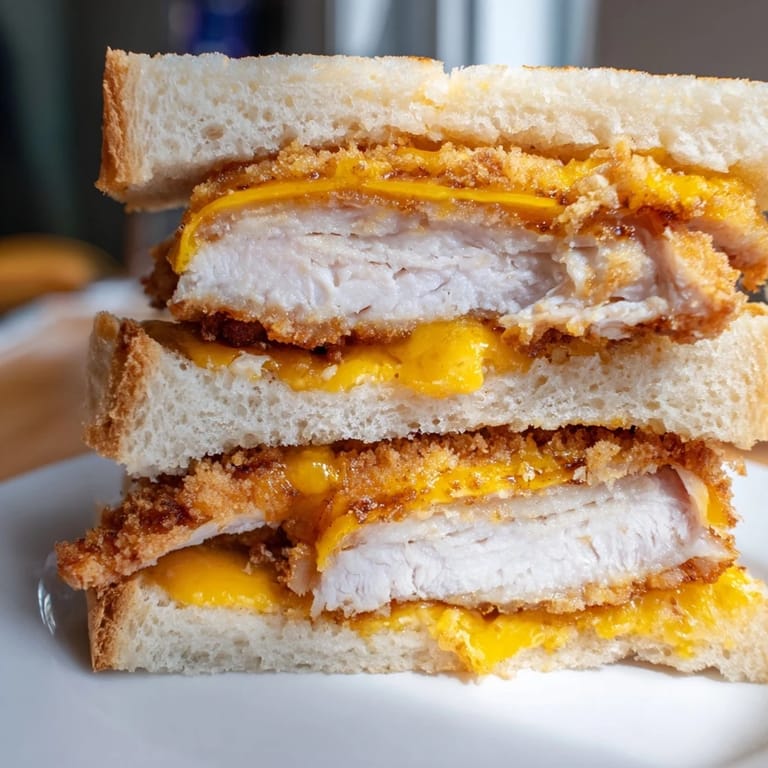
My partner was skeptical when I announced I was making pork chop grilled cheese for lunch, but then the kitchen filled with that nutty, buttery smell and suddenly they were hovering around the stove. When I plated the first sandwich and cut it in half, that golden-brown bread fell away to reveal the cheese-draped pork—and I knew I'd cracked something worth keeping.
Ingredients
- Boneless pork chops (about 1 lb total): Thinner chops cook faster and stay tender; ask your butcher to pound them gently to about half an inch if they're thicker than that.
- All-purpose flour: This is your dry layer before the egg wash, so don't skip it or the breading won't adhere properly.
- Large eggs (2): The glue that holds the panko to the pork; whisk them with a splash of water for smoother dredging.
- Panko breadcrumbs (1 cup): These stay crispier than regular breadcrumbs and actually deliver crunch through all the cheese.
- Garlic powder and smoked paprika: These seasonings add depth to the breading without overpowering the pork's natural flavor.
- Salt and black pepper: Season the pork twice—once before breading, once in the breading mix—so every bite carries flavor.
- Vegetable oil for frying: Keep it at medium-high heat; too hot and the outside burns before the pork cooks through.
- Sturdy bread (8 slices): White or sourdough won't fall apart under the weight of the filling; soft bread will turn to mush.
- Sharp cheddar cheese (8 slices): Sharp cheddar melts beautifully and tastes like something, unlike mild cheese that disappears.
- Unsalted butter (4 tablespoons, softened): Softened butter spreads without tearing the bread and creates that golden crust.
- Mayonnaise (2 tablespoons, optional): This is a texture trick—it browns faster than butter alone and creates an extra-crispy exterior.
Tired of Takeout? 🥡
Get 10 meals you can make faster than delivery arrives. Seriously.
One email. No spam. Unsubscribe anytime.
Instructions
- Dry and season your pork:
- Paper towels are your friend here—any moisture on the surface prevents the breading from sticking. Pat them completely dry, then season both sides generously with salt and pepper. This is not the time to be shy.
- Set up your breading station:
- Arrange three shallow bowls in a line: flour in the first, beaten eggs in the second, panko mixed with garlic powder and smoked paprika in the third. You'll move right through them without thinking twice.
- Bread each pork chop:
- Coat thoroughly in flour first, shaking off excess. Dip into egg, let the extra drip back into the bowl, then press firmly into the panko mixture so it really adheres. This three-step process creates a shell that won't abandon you in the skillet.
- Heat oil to the right temperature:
- Pour a quarter-inch of vegetable oil into your large skillet and heat over medium-high until a tiny piece of panko sizzles immediately when it hits the surface. The temperature is crucial—you want a golden crust and fully cooked pork, not burnt outside and raw inside.
- Fry the pork chops:
- Carefully lay them in the oil and don't move them for 3 to 4 minutes; let them develop that deep golden crust. Flip once and cook another 3 to 4 minutes until they reach 145°F internally and the coating is evenly browned. This patience pays off in every bite.
- Rest before slicing:
- Let the pork chops rest on paper towels for 5 minutes while you prep your bread. This keeps the meat tender and gives you time to catch your breath. Slice them thinly afterward so they nestle into the cheese.
- Butter your bread strategically:
- Lay out all eight slices and spread softened butter on one side of each, not both. This becomes the exterior that touches the skillet. If you're using mayonnaise, brush a thin layer on the unbuttered sides for extra crispiness.
- Layer your sandwiches:
- On the unbuttered side of the first slice, place one slice of cheddar, then a generous handful of your sliced pork chop, then another slice of cheddar. Top with a second bread slice, buttered side facing out. Don't skimp on the pork or cheese—this is not a dainty sandwich.
- Grill until golden and melted:
- Heat a skillet or griddle over medium heat. Once it's hot, lay down your sandwiches and cook 3 to 4 minutes without moving them, pressing very lightly with a spatula for even contact and browning. Flip carefully and cook another 3 to 4 minutes until the second side is equally golden and you can feel the cheese softening inside.
- Rest and serve:
- Let the sandwiches rest on a cutting board for 2 minutes so the cheese sets just slightly and won't cascade everywhere when you cut. Slice in half and serve immediately while the bread is still warm and the cheese is at its melty best.
 Save
Save What struck me most was how this sandwich broke down the barrier between comfort food categories—it wasn't quite a fried dinner, wasn't quite a sandwich, was somehow both and neither. My family asked for seconds before I'd even finished my first, which says everything about how satisfying this dish really is.
The Panko Difference
I used to use regular breadcrumbs for everything until someone mentioned that panko actually contains air pockets that fry up light and crispy instead of dense and heavy. Now I keep a box around specifically for things that need to stay crunchy—and this sandwich absolutely does. That contrast between the shattered crust and the creamy cheese is part of why this works so well.
Building the Perfect Grilled Cheese
A grilled cheese only works if the bread cooperates, and sturdy bread is everything. I learned this the hard way by making too many sandwiches on soft white bread that turned to paste the moment the butter hit the skillet. Sourdough has structure and character; if you can find a locally made version, it takes this sandwich from weeknight dinner to something you'd order at a restaurant.
Variations and Riffs
The foundation is strong enough to play with. I've added sliced pickles for a bright snap against the richness, a thin smear of Dijon mustard for subtle heat, and even swapped the cheddar for Swiss when I wanted something milder and more delicate. Serve it alongside tomato soup for the full diner experience, or just a crisp green salad to cut through the indulgence. This sandwich doesn't demand much, but it rewards good ingredients and honest attention.
- Swiss or provolone cheese melts beautifully if you want a softer, less sharp flavor profile.
- A thin spread of Dijon mustard or whole grain mustard adds unexpected flavor without overwhelming the pork.
- Sliced pickles or fresh tomato bring brightness and crunch that balance the richness perfectly.
 Save
Save This sandwich is proof that sometimes the best meals come from combining two things you already love and letting them make each other better. Make it once and it becomes the thing people ask you to make again.
Recipe Questions & Answers
- → How do I achieve crispy pork chop breading?
Dredge pork chops in flour, then egg, then panko mixed with seasonings. Fry in hot oil until golden brown on both sides for a crisp texture.
- → What cheese works best for melting?
Sharp cheddar offers rich flavor and melts beautifully, but Swiss or provolone are excellent alternatives for different tastes.
- → Can I add extra flavor inside the sandwich?
Yes, spreading Dijon mustard or adding sliced pickles enhances the savory profile without overpowering the main ingredients.
- → How do I keep the bread from getting soggy?
Spread softened butter on the outside of the bread before grilling to create a crunchy, golden crust that locks in moisture.
- → What side dishes complement this sandwich?
Tomato soup or a crisp green salad balance the richness with freshness and acidity, rounding out the meal.