 Save
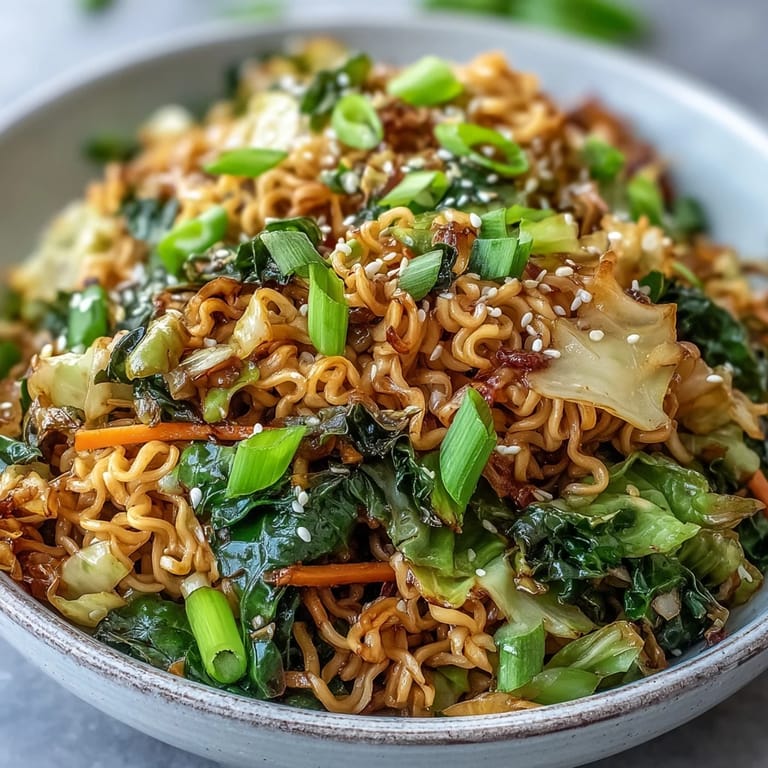
Save The smell of toasted sesame oil hitting a hot pan still makes me pause whatever I'm doing. One Tuesday night, I had half a cabbage wilting in the crisper and two forgotten ramen packs in the pantry. What started as fridge cleanup turned into something I now crave at least twice a month. The cabbage gets these caramelized edges that taste almost sweet, and the noodles soak up every bit of that salty, tangy sauce.
I made this for my roommate once when she came home exhausted from a double shift. She stood at the counter eating straight from the pan, and halfway through she just said, This is exactly what I needed. Sometimes a dish earns its place in your rotation not because its fancy, but because it shows up when it matters.
Ingredients
- Green cabbage (3 cups, thinly sliced): The star here, it fries up with crispy, sweet edges if you resist the urge to stir it constantly.
- Carrot (1 medium, julienned): Adds a little sweetness and a pop of color, plus it holds its crunch beautifully.
- Scallions (2, sliced): The whites go in early for depth, the greens at the end for brightness and a little bite.
- Garlic (2 cloves, minced): Always mince it fresh, the jarred stuff just doesnt bloom the same way in hot oil.
- Fresh ginger (1 tablespoon, grated): This is what makes the kitchen smell like a real stir fry, dont skip it or use powder.
- Instant ramen noodles (2 packs, about 160 g): Toss those seasoning packets, were making our own sauce thats actually worth eating.
- Soy sauce (2 tablespoons): The salty backbone of the sauce, I like using low sodium so I can control the saltiness better.
- Oyster sauce (1 tablespoon): Adds umami and a hint of sweetness, or use mushroom sauce if youre keeping it vegan.
- Toasted sesame oil (1 tablespoon): This is not the time for regular sesame oil, the toasted kind is what gives it that nutty, restaurant quality flavor.
- Rice vinegar (1 teaspoon): Just enough tang to keep the sauce from feeling heavy or one note.
- Sugar (1 teaspoon): Balances the salty and sour, I learned this from watching my friend's mom cook and it really does make everything taste rounder.
- Chili flakes (1/2 teaspoon, optional): I always add them because I like a little heat lingering after each bite.
- Vegetable oil (2 tablespoons): You need a neutral oil that can handle high heat without smoking up your kitchen.
Tired of Takeout? 🥡
Get 10 meals you can make faster than delivery arrives. Seriously.
One email. No spam. Unsubscribe anytime.
Instructions
- Boil the noodles:
- Bring a pot of water to a rolling boil and cook the ramen noodles according to the package timing, usually about 3 minutes. Drain them well and set aside, they'll finish cooking in the pan later.
- Mix the sauce:
- In a small bowl, whisk together the soy sauce, oyster sauce, sesame oil, rice vinegar, sugar, and chili flakes until the sugar dissolves. Having this ready means you wont be scrambling while the pan is smoking.
- Start the aromatics:
- Heat the vegetable oil in a large skillet or wok over medium high heat until it shimmers. Add the garlic, ginger, and white parts of the scallions, stirring constantly for about a minute until the kitchen smells incredible and the garlic just starts to turn golden.
- Fry the vegetables:
- Toss in the cabbage and carrot, then spread them out in the pan and let them sit for a minute before stirring. Stir fry for 4 to 5 minutes, letting the cabbage get those beautiful browned edges while staying a little crunchy in the center.
- Combine and toss:
- Add the cooked noodles to the skillet and pour the sauce over everything. Use tongs or two spatulas to toss it all together for 2 to 3 minutes, making sure every strand gets coated and heated through.
- Finish and serve:
- Pull the pan off the heat, scatter the green parts of the scallions over the top, and serve it immediately while its still steaming. The contrast between the hot noodles and the fresh scallions is perfect.
 Save
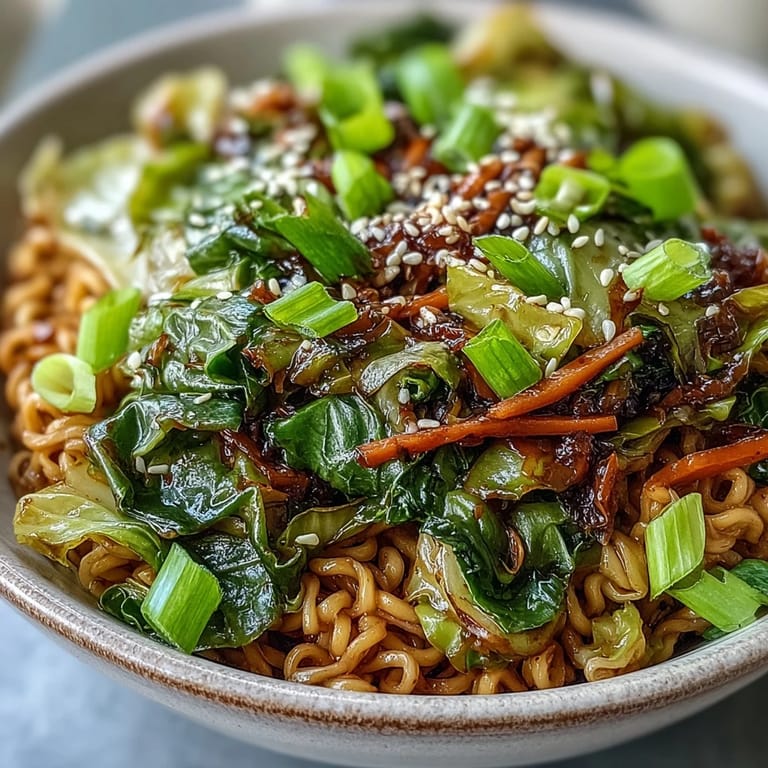
Save The first time I brought this to a potluck, someone asked if I'd ordered it from the Thai place down the street. I didnt have the heart to tell them it cost about three dollars to make and took less time than the drive there would have. Now its my secret weapon when I want to look like I know what Im doing in the kitchen.
Make It Your Own
This recipe is basically a template for whatever is hiding in your vegetable drawer. Ive thrown in sliced mushrooms, bell peppers, snap peas, and even frozen edamame with great results. If you want protein, a fried egg on top with a runny yolk is unbeatable, or crispy tofu cubes if youre keeping it vegan. Just cook the protein separately and add it at the end so everything keeps its texture.
Texture Is Everything
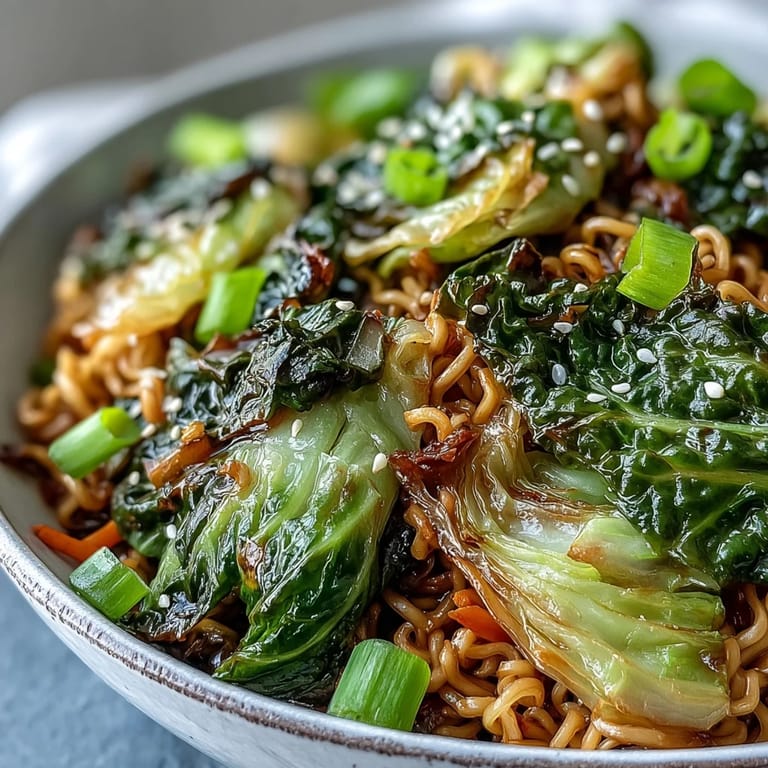
The secret to this dish is getting that cabbage to the edge of burnt without actually burning it. You want some pieces deeply caramelized and others still bright green and snappy. That contrast is what makes each bite interesting instead of just soft noodles all the way through. High heat and patience, let the pan do its work before you stir.
Storing and Reheating
Honestly, this is best eaten right away when the textures are still distinct. But if you have leftovers, store them in an airtight container in the fridge for up to two days. Reheat in a skillet over medium heat with a splash of water to loosen everything up, the microwave will make the noodles gummy and sad.
- Add a drizzle of sesame oil when reheating to freshen up the flavor.
- Toss in a handful of fresh greens like spinach or bok choy to give leftovers new life.
- If the noodles absorbed all the sauce overnight, whisk together a little more soy sauce and vinegar to bring it back.
 Save
Save This dish taught me that good food doesnt need to be complicated or expensive, it just needs to be made with a little attention and eaten while its hot. I hope it becomes one of those recipes you turn to when you need something fast, satisfying, and just a little bit special.
Recipe Questions & Answers
- → Can I use fresh noodles instead of instant ramen?
Yes, fresh ramen noodles or any Asian wheat noodles work wonderfully. Cook according to package directions and proceed with the stir-fry as directed.
- → How do I make this dish vegan?
Replace oyster sauce with mushroom sauce or additional soy sauce, and ensure your noodles don't contain eggs. The dish is naturally plant-based otherwise.
- → What other vegetables can I add?
Bell peppers, mushrooms, snap peas, broccoli, or bok choy all work beautifully. Add harder vegetables with the cabbage and softer ones toward the end of cooking.
- → Can I prepare this ahead of time?
The sauce can be mixed in advance and refrigerated. However, this dish is best served immediately for optimal texture, as noodles can become soft when stored.
- → How can I make it gluten-free?
Use gluten-free ramen or rice noodles, substitute tamari for soy sauce, and check that your oyster or mushroom sauce is certified gluten-free.
- → What protein options pair well with this dish?
A fried egg on top, crispy tofu cubes, sautéed shrimp, or thinly sliced chicken all complement the flavors perfectly. Add protein during the stir-fry step.