 Save
Save I stumbled onto this recipe during a particularly humid August when the thought of turning on the stove felt unbearable. A friend had sent me a video of some influencer twirling green pasta, and I thought, why not try it with zucchini instead? The first batch was watery and sad, but the second time I let the zoodles rest on a towel, everything clicked. Now it's my go-to when I want something that feels indulgent but won't leave me sluggish on a warm evening.
The first time I made this for guests, I panicked because I'd forgotten to buy pasta. I spiralized four zucchinis in a frenzy, tossed them with the sauce I'd just blended, and hoped for the best. My friend looked at her bowl, took a bite, and said it tasted like a fancy restaurant dish. I didn't tell her I was winging it until dessert.
Ingredients
- Zucchini: Pick firm, medium-sized ones because the huge ones tend to be seedy and watery, and always let the noodles rest on a towel or they'll dilute your sauce.
- Savoy cabbage: It's softer and sweeter than regular cabbage, and it wilts beautifully without turning to mush or tasting bitter.
- Cherry tomatoes: Halve them so they release a little juice and add pops of sweetness that balance the richness of the sauce.
- Avocado: Use a ripe one, but not so soft it turns to paste when you fold it in, you want cubes that hold their shape.
- Scallions: They add a mild oniony bite without overpowering the herbs, and the green parts look pretty scattered on top.
- Greek yogurt: The tangy creaminess is the base of the sauce, and full-fat makes it silkier, though low-fat works if that's what you have.
- Fresh basil, parsley, chives, and tarragon: This mix is what makes the sauce taste alive, so don't skimp or substitute with dried unless you absolutely must.
- Lemon juice: Freshly squeezed is best, it brightens everything and keeps the sauce from tasting flat.
- Garlic: One small clove is enough, too much and it'll overpower the delicate herbs.
- Extra virgin olive oil: A good one adds a peppery finish that makes the sauce taste more luxurious.
- Dijon mustard: Just a teaspoon gives the sauce a subtle depth and helps it cling to the noodles.
- Feta cheese: Salty and crumbly, it's optional but highly recommended for a little extra richness.
- Pine nuts: Toast them until golden and fragrant, they add a buttery crunch that makes every bite more interesting.
Tired of Takeout? 🥡
Get 10 meals you can make faster than delivery arrives. Seriously.
One email. No spam. Unsubscribe anytime.
Instructions
- Prep the zoodles:
- Spiralize your zucchini and spread them out on a clean kitchen towel or paper towels. Let them sit for at least 10 minutes so the moisture seeps out, otherwise your pasta will be swimming in water.
- Sauté the vegetables:
- Heat a drizzle of olive oil in a large skillet over medium heat, then add the cabbage and cook it until it just starts to soften, about 3 to 4 minutes. Toss in the zoodles and sauté for another 2 to 3 minutes, just until they're tender but still have a little bite.
- Blend the sauce:
- Throw the yogurt, basil, parsley, chives, tarragon, lemon juice, garlic, olive oil, mustard, salt, and pepper into a blender or food processor. Blend until it's smooth and vibrant green, then taste it and add more lemon or salt if it needs a lift.
- Toss everything together:
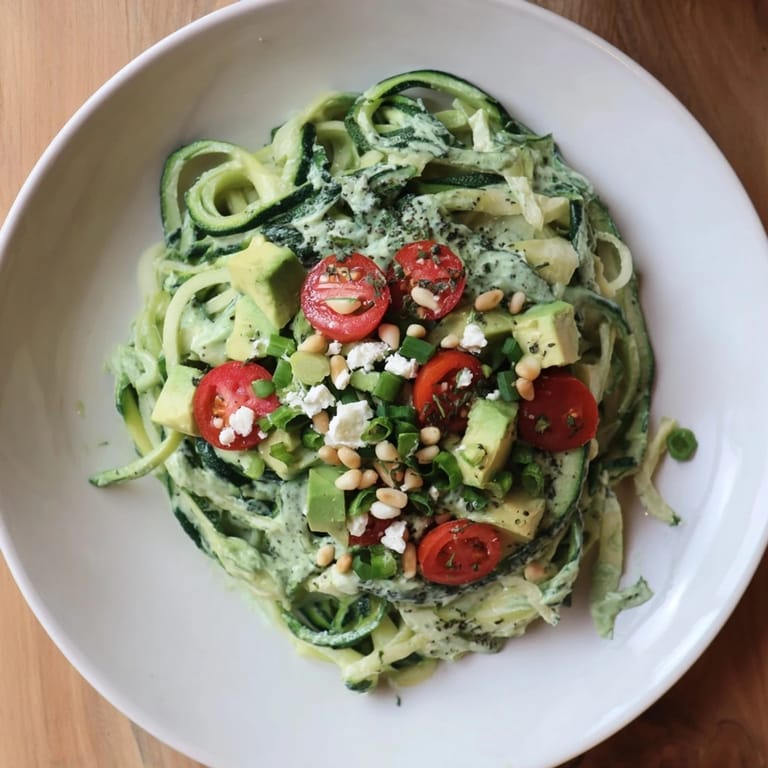
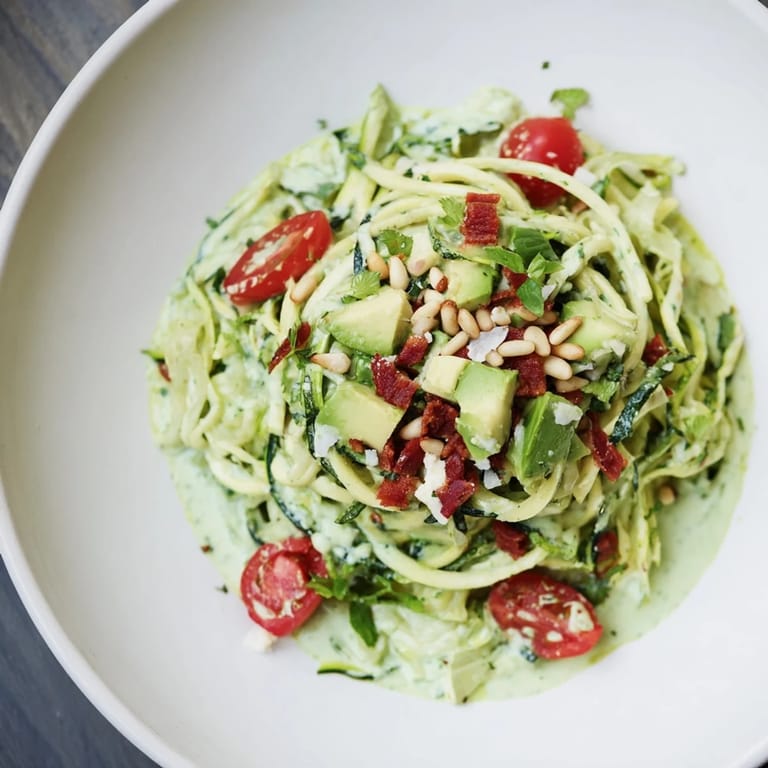
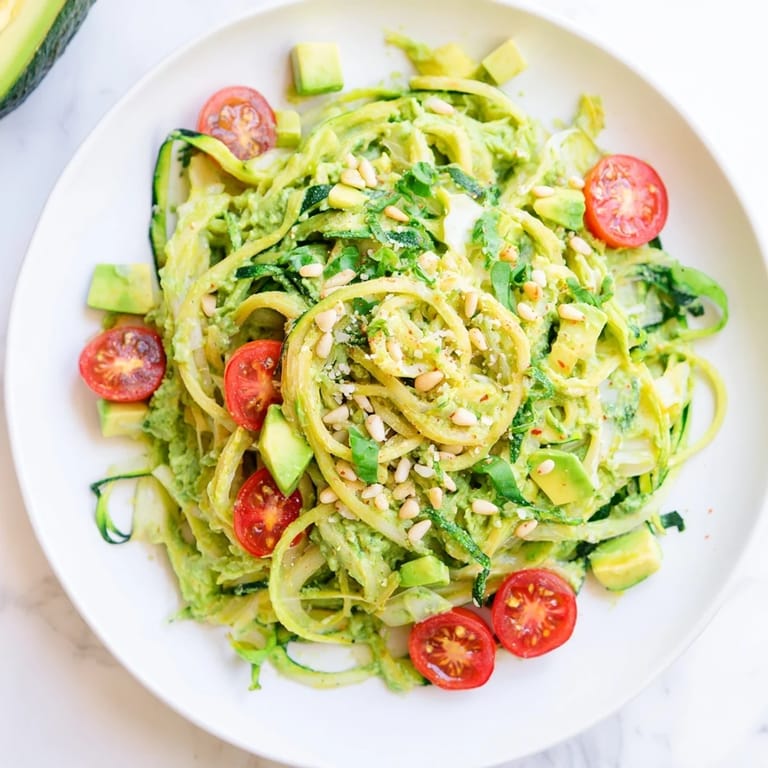
- Transfer the warm zoodles and cabbage to a large bowl, pour the sauce over them, and toss gently until everything is coated. Fold in the cherry tomatoes, avocado, and scallions so they're evenly distributed but not mushy.
- Serve and garnish:
- Divide the pasta among bowls and sprinkle with feta, toasted pine nuts, and a few extra herb leaves. Serve right away while it's still warm and the avocado is bright green.
 Save
Save One night, I served this to my sister who's usually skeptical of anything that tries to replace real pasta. She finished her bowl, looked at me, and asked for seconds. That's when I knew this recipe had earned its place in the rotation, not as a substitute, but as something worth making on its own.
Making It Your Own
This recipe is forgiving and adaptable, so if you want to add grilled chicken or shrimp, go for it. I've also stirred in roasted chickpeas when I needed something heartier, and they soak up the sauce beautifully. If you're not a fan of tarragon, swap it for more basil or even a little dill, the sauce will still taste fresh and bright.
Storage and Leftovers
The sauce keeps in the fridge for up to four days and actually tastes better the next day once the flavors have melded. I don't recommend storing the tossed zoodles because they'll release more water and get soggy, but you can prep the components separately and assemble them fresh. If you do have leftovers, drain off any excess liquid before reheating or eating cold as a salad.
Serving Suggestions
I like to serve this with a glass of chilled Sauvignon Blanc or a sparkling water with a squeeze of lime. If you want to make it a full meal, add a side of crusty bread or a simple arugula salad with lemon vinaigrette. It also works beautifully as a side dish for grilled fish or steak if you're feeding a crowd.
- Try it cold the next day, it's refreshing and the flavors deepen overnight.
- Double the sauce and use the extra as a dip for raw veggies or a spread for sandwiches.
- If you're meal prepping, spiralize the zucchini and store it separately so it doesn't get watery.
 Save
Save This dish reminds me that cooking doesn't have to be complicated to feel special. Sometimes the best meals are the ones that come together quickly, taste like sunshine, and leave you feeling light and happy instead of heavy and tired.
Recipe Questions & Answers
- → How do I prevent zucchini noodles from getting soggy?
After spiralizing, place the zucchini noodles on paper towels to absorb excess moisture before cooking or serving.
- → Can I substitute the Greek yogurt in the sauce?
Yes, use a dairy-free yogurt alternative to keep the sauce creamy while accommodating dietary preferences.
- → What is the best way to cook the cabbage for this dish?
Sauté the thinly sliced cabbage in olive oil over medium heat for 3–4 minutes until just softened, preserving its slight crunch.
- → Are there suitable protein additions?
Grilled chicken, shrimp, or chickpeas can be added to increase protein content without overpowering the fresh flavors.
- → Can this dish be served cold?
Yes, serving chilled makes it a refreshing option, perfect for warm weather or as a light salad alternative.
- → What herbs are used in the Green Goddess sauce?
The sauce features fresh basil, parsley, chives, and tarragon, blended with lemon juice, garlic, and Dijon mustard for depth.