 Save
Save I discovered this recipe by accident on a lazy Sunday morning when I grabbed a pint of melted vanilla ice cream instead of my usual milk carton. My hand hesitated over the bowl, wondering if I was about to ruin breakfast, but something told me to keep going. That first bite—golden, custardy, with edges that had caramelized into something almost toffee-like—changed how I think about French toast entirely. It turns out the richness of ice cream creates a custard so silky that regular egg mixtures suddenly feel thin by comparison.
I made this for my sister's birthday brunch last spring, and watching her face light up when she tasted it felt like I'd pulled off some kind of kitchen magic. She couldn't place what made it taste so much better than regular French toast, kept asking if I'd used some special cream or technique. I let her wonder for a moment before telling her the secret—sometimes the best shortcuts are hiding in your freezer.
Ingredients
- 8 slices thick-cut bread (brioche or challah), slightly stale: Thick bread holds the custard without collapsing, and stale bread actually absorbs better than fresh. I learned this the hard way after getting soggy results with day-old soft bread—you want bread that's been sitting out a day or two.
- 2 cups premium ice cream, melted: The foundation of this whole dish. I use vanilla because it lets the caramelization shine, but coffee, cinnamon, or even salted caramel work beautifully. Melt it slowly at room temperature rather than microwaving to keep the texture silky.
- 2 large eggs: Just enough to bind everything together without overwhelming the ice cream's richness.
- 1/4 teaspoon ground cinnamon: A whisper of warmth, optional but worth it on cooler mornings.
- 1 teaspoon pure vanilla extract: Deepens the flavor if you're using plain vanilla ice cream.
- Pinch of salt: Balances sweetness and makes everything taste more like itself.
- 2 tablespoons unsalted butter: For cooking without any competing flavors. You might need a bit more for the second batch.
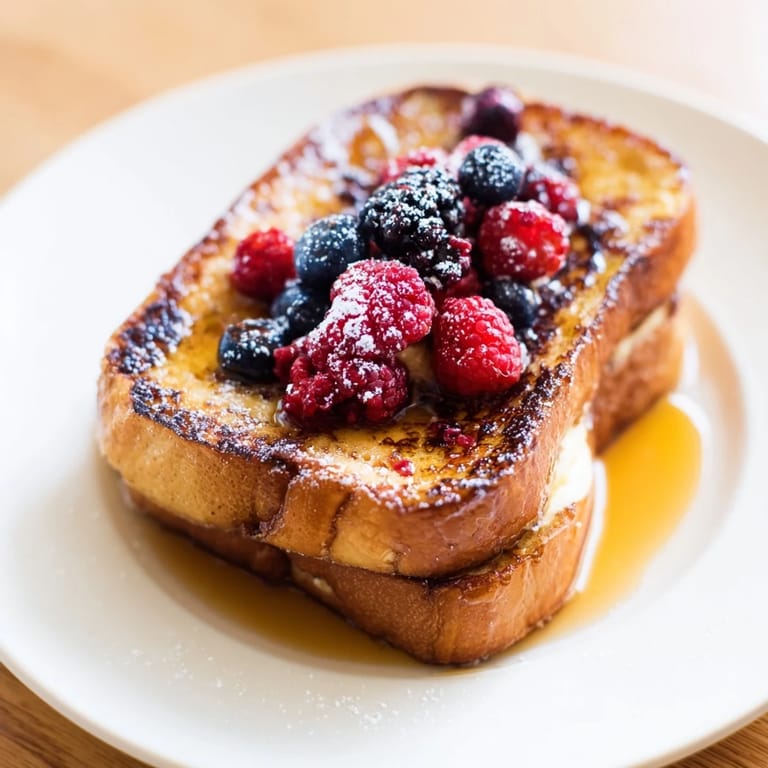
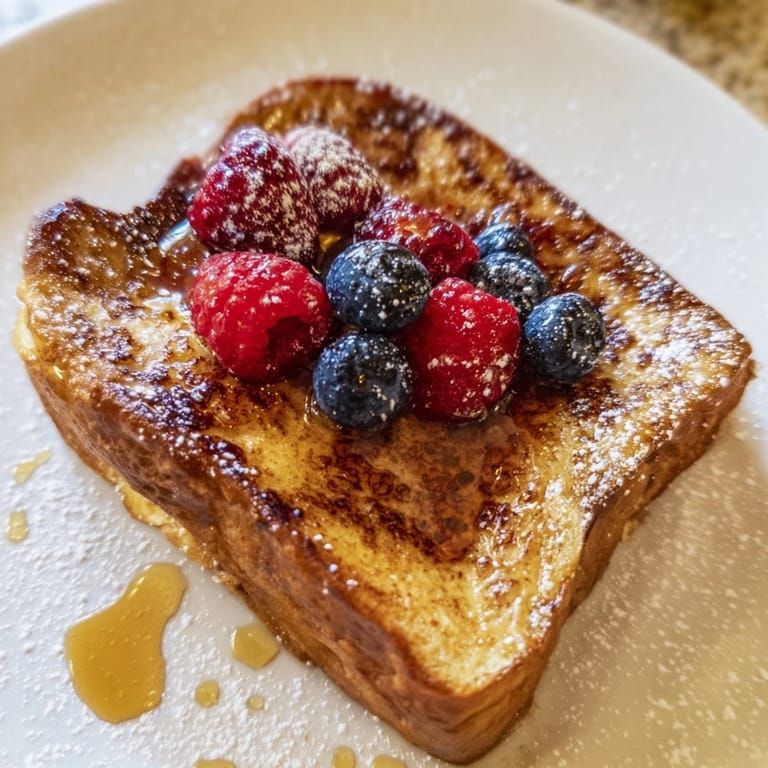
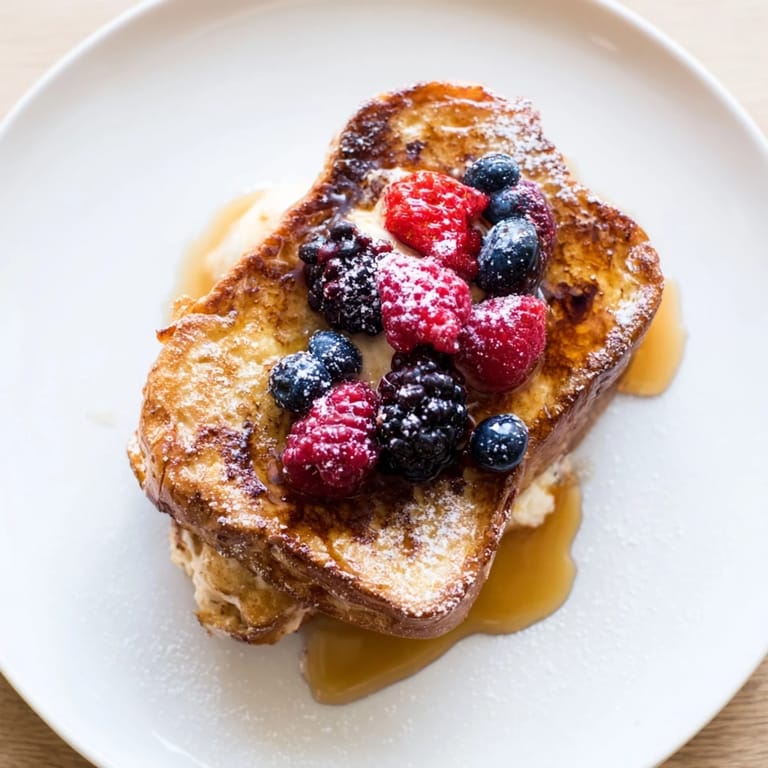
- Maple syrup, fresh berries, powdered sugar: Toppings that finish what the pan started, though honestly these slices are already so rich that even plain works.
Tired of Takeout? 🥡
Get 10 meals you can make faster than delivery arrives. Seriously.
One email. No spam. Unsubscribe anytime.
Instructions
- Combine your custard:
- Whisk the melted ice cream, eggs, cinnamon, vanilla, and salt in a large bowl until completely smooth. The mixture should look like thin pudding, not fluffy or separated. If you see any egg streaks, keep whisking until the color is uniform.
- Heat your pan:
- Preheat a nonstick skillet or griddle over medium heat and add one tablespoon of butter. Let it foam and smell nutty—that's when you know it's ready. Medium heat is key here; too hot and the outside burns before the inside cooks through.
- Soak and dip:
- Take each bread slice and submerge it in the custard for about 10 to 15 seconds on each side. You want it saturated but not dripping puddles onto the pan. I count slowly and lift it out before I think it's ready—it keeps soaking as it sits.
- Cook until golden:
- Place the soaked slices onto the hot butter and cook for 2 to 3 minutes per side until deeply golden and caramelized. You'll smell the sugar caramelizing before you see it, and that's your signal to check for color. The edges should look almost crispy.
- Keep them warm:
- Transfer finished slices to a wire rack or plate while you cook the rest. A rack keeps them from getting steamy on the bottom, but a plate works if that's what you have.
- Serve immediately:
- These are best eaten warm, within a few minutes of coming off the pan. Top with whatever calls to you—syrup, berries, sugar, or nothing at all.
 Save
Save The moment I understood this recipe's power was when my nephew, who claims to dislike breakfast foods, asked for thirds without me offering. Sometimes food is just about showing up for people the way they need, and this dish does that without trying too hard.
The Flavor Angle
Ice cream choice matters more than you'd think. Vanilla is the safest choice and lets every other flavor sing, but I've had stunning results with cinnamon ice cream, coffee, and even a salted caramel version that made people stop mid-conversation. The custard carries whatever flavor you choose into every layer of bread, so pick something you actually want to eat by the spoonful.
Texture and Timing
The caramelization is where this recipe wins against regular French toast. Because ice cream contains natural sugar, the surface goes golden and slightly crispy much faster—you're looking at a distinct crust forming within 2 to 3 minutes per side. Medium heat is your friend here; rushing to high heat browns the outside before the custard inside sets.
Make It Your Own
Once you understand the formula, this becomes a vehicle for whatever you're craving. I've made it with chocolate ice cream and topped it with fresh raspberries, with cinnamon ice cream and a drizzle of honey, even with a whipped cream layer in between slices for something more indulgent.
- For extra richness, dust with powdered sugar while the toast is still warm so it sticks to the caramelized sugar on top.
- If berries are in season, warm them gently in a skillet with a touch of butter and they become a sauce rather than a topping.
- Leftovers reheat beautifully in a low oven—wrap them loosely and warm for about 10 minutes at 300 degrees Fahrenheit.
 Save
Save This recipe taught me that the best kitchen discoveries often come from small mistakes and willingness to follow them wherever they lead. Make it, share it, and let people taste what happens when you trust your instincts.
Recipe Questions & Answers
- → What type of bread works best for this dish?
Thick-cut, slightly stale breads such as brioche, challah, or Texas toast absorb the custard well without becoming soggy, providing a soft yet sturdy texture.
- → Can different ice cream flavors be used in the custard?
Yes, using flavored ice cream like cinnamon, coffee, or chocolate can add depth and variety to the creamy base, enhancing the final taste.
- → How long should the bread soak in the custard mixture?
Each bread slice should be soaked for 10 to 15 seconds per side to fully absorb the custard without becoming overly saturated.
- → What cooking method ensures caramelized edges?
Cooking soaked bread slices on a medium-heat nonstick skillet with butter until golden brown on both sides creates a crisp, caramelized exterior.
- → What are ideal toppings to complement this dish?
Maple syrup, fresh berries, and a dusting of powdered sugar add sweetness and freshness, balancing the rich custard flavor.
- → Is this suitable for a vegetarian diet?
Yes, it contains no meat products and fits well within vegetarian guidelines, emphasizing dairy, eggs, and bread.