 Save
Save There's something about assembling a grain bowl that feels less like cooking and more like building something with your hands. I discovered this kale harvest bowl on a crisp October afternoon when my farmer's market bag was overflowing with jewel-toned produce and I had no idea what to do with it all. Instead of roasting everything separately and calling it dinner, I decided to layer the components intentionally, and somehow the whole became so much more than its parts. The sweet potatoes caramelized while the quinoa fluffed itself into clouds, and by the time I massaged the kale with salt and oil, I realized I'd stumbled onto something I'd be making all season.
I made this for my sister during her first week back to eating well after a rough month, and watching her expression shift from tired to genuinely delighted told me everything I needed to know about this bowl. The pomegranate seeds caught the kitchen light as she mixed everything together, and she laughed at how it looked almost too pretty to eat. We sat at the counter with our bowls, and she kept stealing bites of the roasted sweet potatoes, saying she'd forgotten how good real food could taste. That moment reminded me why I cook—it's not about the ingredients or the technique, it's about the quiet joy of nourishing someone you love.
Ingredients
- Quinoa: This ancient grain is the backbone of the bowl, offering complete protein and a subtle nutty flavor that doesn't compete with the other elements—always rinse it first to remove the bitter coating that no one talks about until they taste it.
- Kale: Curly kale works best here because the texture holds up beautifully when you massage it, but don't be shy with the salt and oil—this is where the kale transforms from tough to tender.
- Sweet potatoes: The roasting caramelizes their natural sugars and creates crispy edges that provide essential textural contrast throughout the bowl.
- Apple: Choose something tart like a Granny Smith to cut through the earthiness and add brightness right before serving so it doesn't oxidize and turn brown.
- Pomegranate seeds: These jewel-like bursts of tart sweetness are worth the effort to extract, and they add visual drama that makes the bowl feel special.
- Pepitas: Toasted pumpkin seeds bring a subtle earthiness and crucial crunch that keeps every spoonful from becoming too soft.
- Apple cider vinegar: The acid in the dressing brightens everything and prevents the bowl from feeling heavy, even when it's loaded with nutritious ingredients.
- Maple syrup: A touch of sweetness balances the vinegar, creating a dressing that tastes both sophisticated and comforting.
Tired of Takeout? 🥡
Get 10 meals you can make faster than delivery arrives. Seriously.
One email. No spam. Unsubscribe anytime.
Instructions
- Heat your oven and prep the potatoes:
- Preheat to 400°F and toss your diced sweet potatoes with olive oil, salt, and pepper until they're evenly coated. Spread them out on a baking sheet in a single layer so they'll caramelize rather than steam—give them space to breathe.
- Start the quinoa:
- While the potatoes roast, rinse your quinoa under cold water, then combine it with two cups of water and a pinch of salt in a saucepan. Bring it to a boil, cover, reduce the heat, and let it simmer gently for 15 minutes until the water disappears and tiny spirals appear on each grain.
- Massage the kale into submission:
- Chop your kale finely, place it in a large bowl, and drizzle it with a small splash of olive oil and salt. Use your hands to work the kale for a minute or two—you'll feel it soften and darken under your fingers, which is exactly what you want.
- Build your dressing:
- Whisk together olive oil, apple cider vinegar, maple syrup, Dijon mustard, salt, and pepper in a small bowl until the mustard helps emulsify everything into a cohesive, slightly creamy dressing. Taste it on a finger—it should be tangy with a subtle sweetness that makes you want more.
- Assemble your bowls:
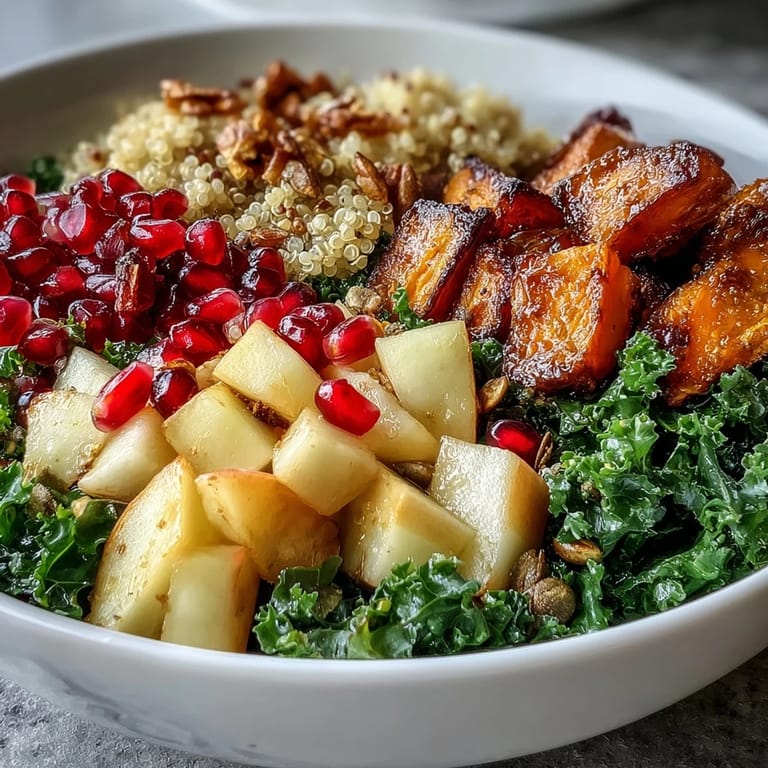
- Divide the massaged kale among four bowls, creating a bed for everything else. Top with equal portions of fluffy quinoa, roasted sweet potatoes, fresh diced apple, pomegranate seeds, and pepitas, arranging them so each component is visible.
- Dress and serve:
- Drizzle the dressing over each bowl just before eating so nothing gets soggy, and watch how the components come together with each bite.
 Save
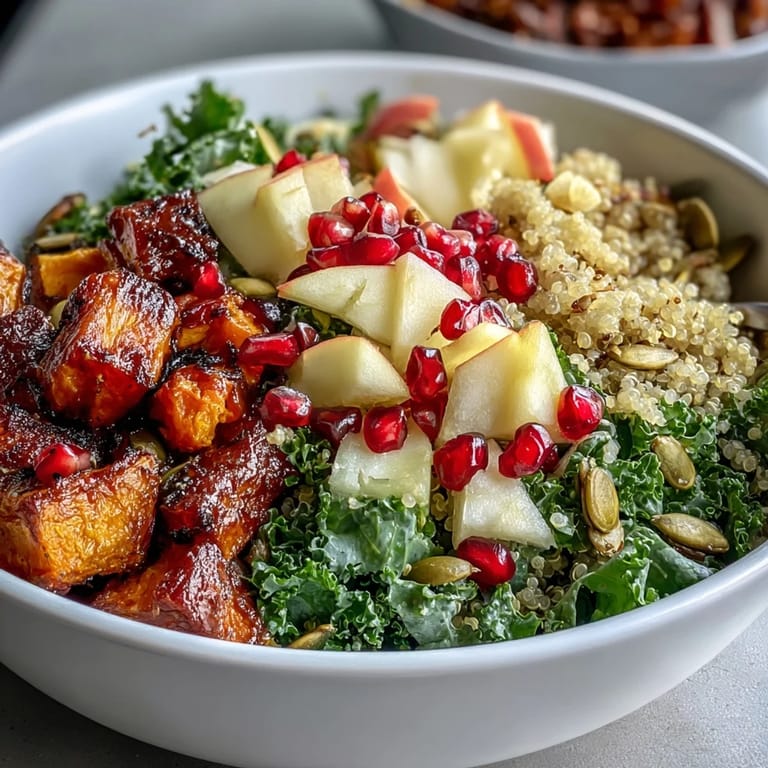
Save My neighbor stopped by one evening and caught me photographing my bowl like it was art, and instead of making fun of me, she asked for the recipe. Three weeks later she texted me a photo of her version with toasted chickpeas added for extra protein, and I realized this bowl had become something bigger than just my formula—it's become a template for people to make their own. That's when I knew I'd created something worth sharing.
The Magic of Component Cooking
This bowl taught me that sometimes the best meals aren't ones where everything blends together into a unified flavor. Instead, each component maintains its own identity—the bitter earthiness of kale, the sweet caramel of roasted potatoes, the bright tartness of pomegranate—and together they create a symphony rather than a solo. Once you understand this principle, you'll never look at salads the same way again, because you'll start seeing them as canvases for intentional flavor and texture combinations.
Customizing Your Bowl
The beauty of grain bowls is that they're endlessly flexible, and the base formula stays strong no matter what you swap in. If you want more protein, grilled chicken, crispy tofu, or roasted chickpeas all work beautifully without overwhelming the other flavors. The dressing is forgiving too—you can use balsamic instead of apple cider vinegar, honey instead of maple syrup, or even a splash of fresh lemon juice if that's what's in your pantry. The only rule is to keep the ratio of acid to oil roughly equal so the dressing stays balanced.
Seasonal Variations and Storage
This bowl evolved through my seasons—in summer I swap sweet potatoes for roasted beets and add cucumber slices, in winter I keep the sweet potatoes but add roasted Brussels sprouts for earthiness. The foundation stays steady while the details shift with what's fresh. As for storage, the components keep separately in the fridge for three to four days, which is why this becomes my go-to meal prep recipe when life gets hectic and I need something nourishing that doesn't require thinking.
- Prep all components the night before and assemble fresh in the morning so nothing wilts overnight.
- Store the dressing separately so it doesn't make the kale mushy before you're ready to eat.
- Toast extra pepitas on Sunday and keep them in an airtight container so your bowl stays crunchy all week.
 Save
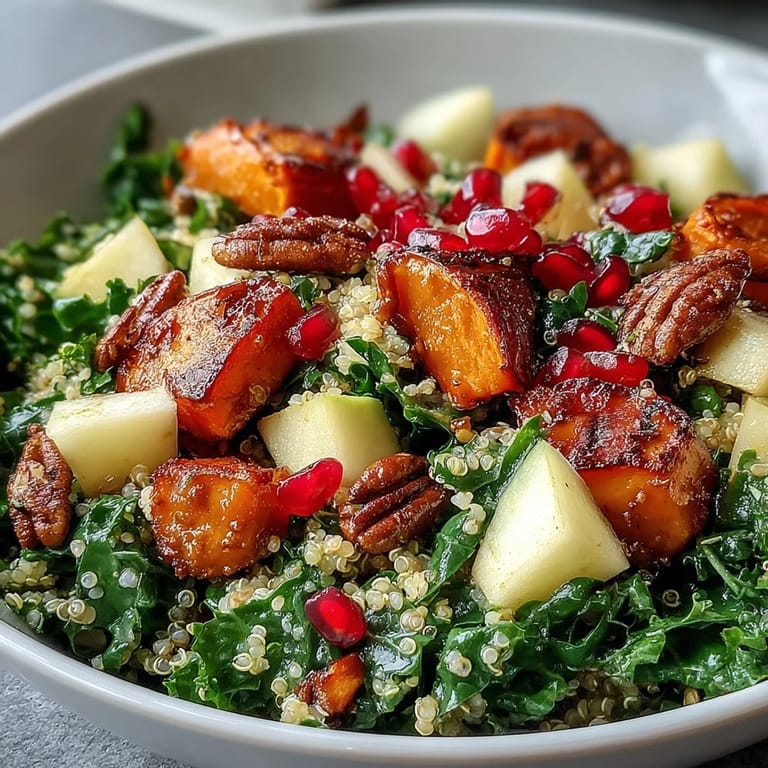
Save This kale harvest bowl has become my answer when someone asks what I want to cook but I'm tired, or when I want to feel genuinely nourished without the fuss of a complicated recipe. It's the kind of food that makes you feel good while you're eating it, not just afterward.
Recipe Questions & Answers
- → How do I massage kale properly?
Place chopped kale in a large bowl and drizzle with a small amount of olive oil and pinch of salt. Use your hands to gently rub and squeeze the leaves for 1-2 minutes until they turn dark green and feel tender. This breaks down tough fibers and makes the kale more palatable in raw preparations.
- → Can I make this bowl ahead of time?
Yes! Prepare all components separately and store in airtight containers for up to 4 days. Keep the dressing separate and add just before serving to maintain freshness. The quinoa and roasted sweet potatoes reheat beautifully, while the kale and fresh toppings can be served cold or at room temperature.
- → What protein options work well in this bowl?
Grilled chicken breast, baked tofu, roasted chickpeas, or even a soft-boiled egg would complement these flavors beautifully. For plant-based protein, chickpeas or lentils pair especially well with the sweet and tangy dressing. Add about 3/4 cup cooked protein per serving.
- → Can I substitute other grains for quinoa?
Absolutely! Farro, brown rice, wheat berries, or even bulgur would work well here. Adjust cooking time according to the grain you choose. For a grain-free option, try cauliflower rice or roasted sweet potato cubes as the base instead.
- → What if I can't find pomegranate seeds?
Dried cranberries, fresh raspberries, or chopped strawberries make excellent substitutes that provide similar tart sweetness and color. If using dried fruit, reduce the maple syrup in the dressing slightly to balance the sweetness.
- → Is this bowl gluten-free?
Yes, as written this bowl is naturally gluten-free. Quinoa is a seed, not a grain containing gluten. Just ensure your Dijon mustard and other packaged ingredients are certified gluten-free if you have celiac disease or severe gluten sensitivity.