 Save
Save The first time I made lemon posset was actually an accident. I had intended to make a tart but the pastry dough refused to cooperate in my tiny kitchen with broken AC. My grandmother mentioned something about a British cream dessert that sets without gelatin and I thought why not. The simplicity astonished me three ingredients transformed into something resembling culinary magic. Now whenever life feels too complicated I return to this recipe that reminds me elegance need not be difficult.
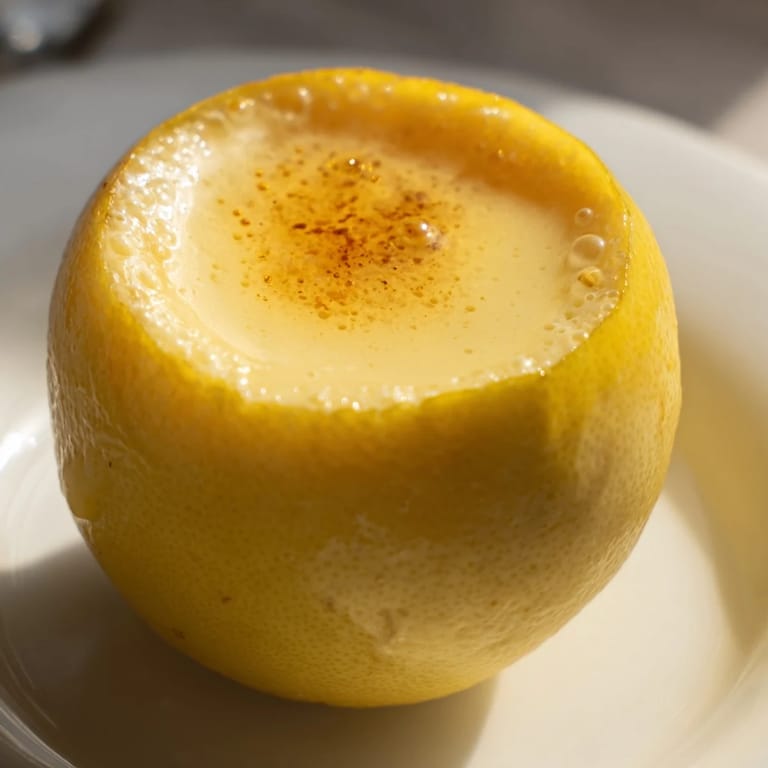
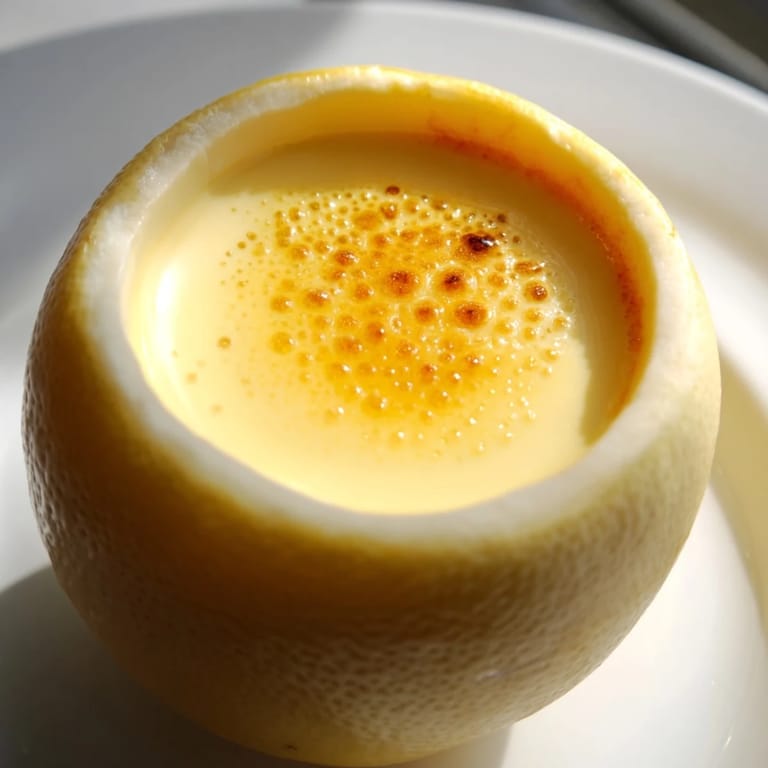
I served these at a dinner party last summer when my friend Sarah announced her engagement. The conversation had drifted toward wedding planning and I brought out these bright lemon cups still warm from the torch. Something about the contrast of cool cream and hot caramelized sugar made the moment feel celebratory without trying too hard. Everyone went quiet for that first bite which I consider the highest compliment a dessert can receive.
Ingredients
- 500 ml double cream (heavy cream): The higher fat content here is non negotiable. I tried once with half and half and the texture was disappointingly loose. British double cream at 48 percent fat creates that luxurious moussselike consistency that sets so beautifully.
- 140 g caster sugar: Superfine sugar dissolves more quickly into the cold cream. I have pulse regular granulated sugar in a food processor when desperation struck and it worked adequately enough.
- Zest of 2 lemons: The oils in the zest carry so much aromatic potential. Grate gently avoiding the bitter white pith beneath. This infusion step is what elevates the flavor from one note lemon lemon to something layered and complex.
- 90 ml freshly squeezed lemon juice: This is where the acid does its thickening alchemy. Fresh juice matters greatly here I tried bottled once out of curiosity and the result was disappointingly flat and one dimensional. About 2 to 3 lemons should yield the needed amount.
- 6 large lemons for shells: Select lemons with relatively thick skins that feel heavy for their size. The shells become edible serving vessels and their presentation value far exceeds the modest effort required to hollow them. Save any juice from these lemons for the 90 ml requirement.
- 6 to 8 tsp caster sugar for topping: This creates that signature crackle. An even thin layer works best. Too much sugar creates a thick hard slab that can overwhelm the delicate cream beneath.
Tired of Takeout? 🥡
Get 10 meals you can make faster than delivery arrives. Seriously.
One email. No spam. Unsubscribe anytime.
Instructions
- Prepare the lemon shells:
- Cut 6 large lemons in half lengthwise and gently juice them. Use a small spoon to scoop out any remaining flesh keeping the shells intact. Trim just enough from the bottom of each shell so they stand steady without wobbling. Place shells in the refrigerator to chill while you make the posset.
- Infuse the cream:
- In a medium saucepan combine the double cream 140 g caster sugar and lemon zest. Bring to a gentle boil over medium heat stirring constantly until the sugar dissolves completely. Let it simmer for exactly 3 minutes watching carefully so it does not boil over. Remove from heat.
- Add the acid:
- Stir in the 90 ml freshly squeezed lemon juice. You will notice the mixture thickening immediately which is the chemical magic happening right before your eyes. Let it cool for about 10 minutes then pour through a fine mesh strainer to remove the zest pieces.
- Fill the shells:
- Pour the warm posset mixture into your prepared lemon shells filling them almost to the rim. Work carefully and slowly to avoid spills. The mixture should still be slightly warm which helps it settle smoothly into the shells.
- Set the possets:
- Refrigerate for at least 3 hours or until completely set. I prefer making these the morning of a dinner party or even the night before. The texture improves slightly with time and having them ready reduces last minute stress dramatically.
- Create the brûlée finish:
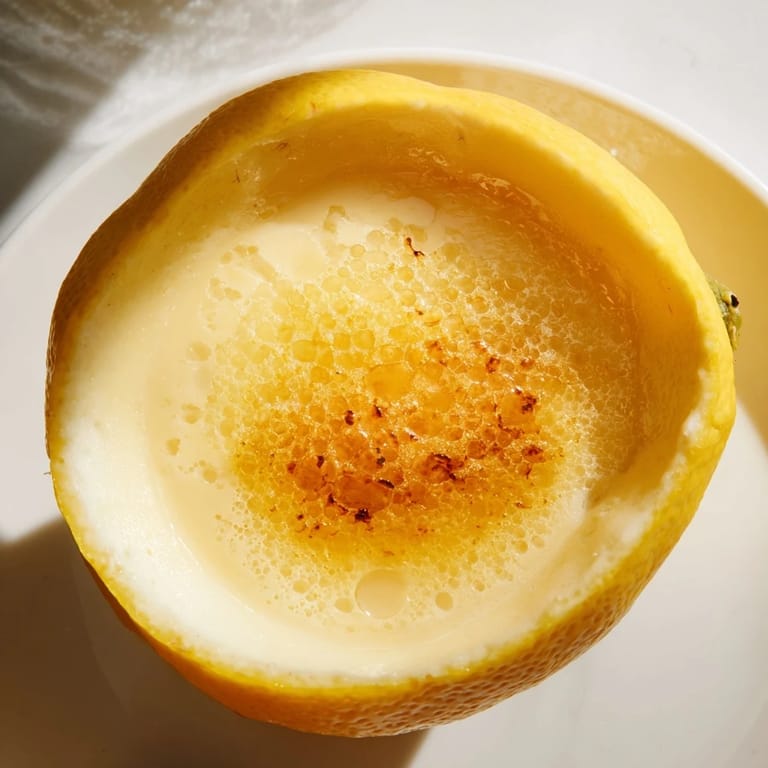
- Sprinkle about 1 teaspoon of caster sugar evenly over each chilled posset. Using a kitchen torch caramelize the sugar until it forms a deep amber crackly crust. Let the sugar harden for 2 to 3 minutes before serving so that signature crunch develops fully.
 Save
Save These have become my default response to dinner invitations. The look on peoples faces when you set down individual hollowed lemons filled with pale yellow cream is absolutely worth the minimal effort. Something about eating out of the fruit itself makes the experience feel more immersive and playful. My nephew now requests these specifically for his birthday dinner every year.
Flavor Variations
While the classic version is hard to improve I have found thoughtful additions can create entirely new experiences. A sprig of fresh thyme added during the simmering step creates an herbal undertone that cuts through the richness beautifully. Basil works surprisingly well lending a slight pepperiness. Always remove the herbs before straining.
Make Ahead Strategy
The posset base can be prepared up to 24 hours in advance and stored covered in the refrigerator. In fact the texture often improves after a night of rest as the flavors meld more completely. Only apply the brûlée topping immediately before serving. This separation of labor makes the dessert entirely manageable for entertaining.
Serving Suggestions
A crisp shortbread biscuit provides the perfect textural contrast and something to scoop up any remaining cream. Almond biscuits or even simple butter cookies work beautifully. A small glass of limoncello on the side echoes the lemon flavor without being redundant.
- Place each lemon shell on a small plate or saucer to catch any drips
- Provide small spoons though some guests will want to eat the soft shell with their dessert
- Consider extra lemon zest as garnish for an additional bright visual element
 Save
Save There is something deeply satisfying about a dessert that appears so sophisticated yet relies on such simple chemistry. These lemon brûlée possets have taught me that sometimes the most elegant things in life are also the most straightforward.
Recipe Questions & Answers
- → What type of cream works best for this dessert?
Double cream or heavy cream is ideal as it provides the rich, silky texture essential for the lemon cream base.
- → How do I prepare the lemon shells for serving?
Halve large lemons lengthwise, gently juice and scoop out the flesh, then trim the bottom so they stand upright. Keep shells refrigerated until use.
- → Can I add herbs to enhance flavor?
Yes, infusing the cream with herbs like thyme or basil during simmering adds subtle complexity. Remove herbs before adding lemon juice.
- → What is the best method to caramelize the sugar topping?
A kitchen blowtorch works best for even caramelization, but a hot grill or broiler can also be used carefully to avoid burning.
- → How long should the dessert chill before serving?
Chill for at least 3 hours to ensure the lemon cream sets properly and achieves a smooth texture.
- → Can the dessert be prepared in advance?
Yes, prepare up to one day ahead but caramelize the sugar topping just before serving to maintain its crispness.