 Save
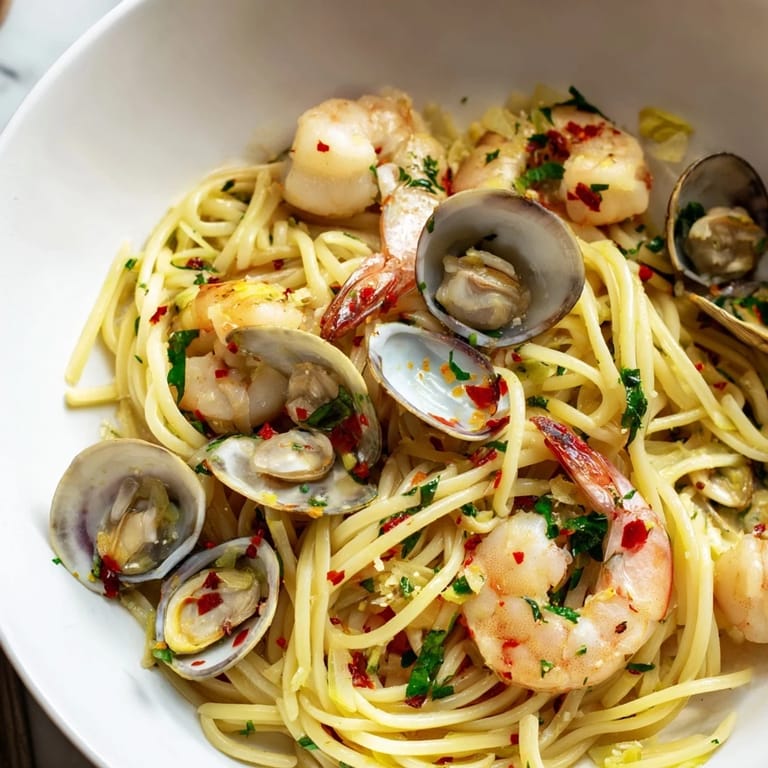
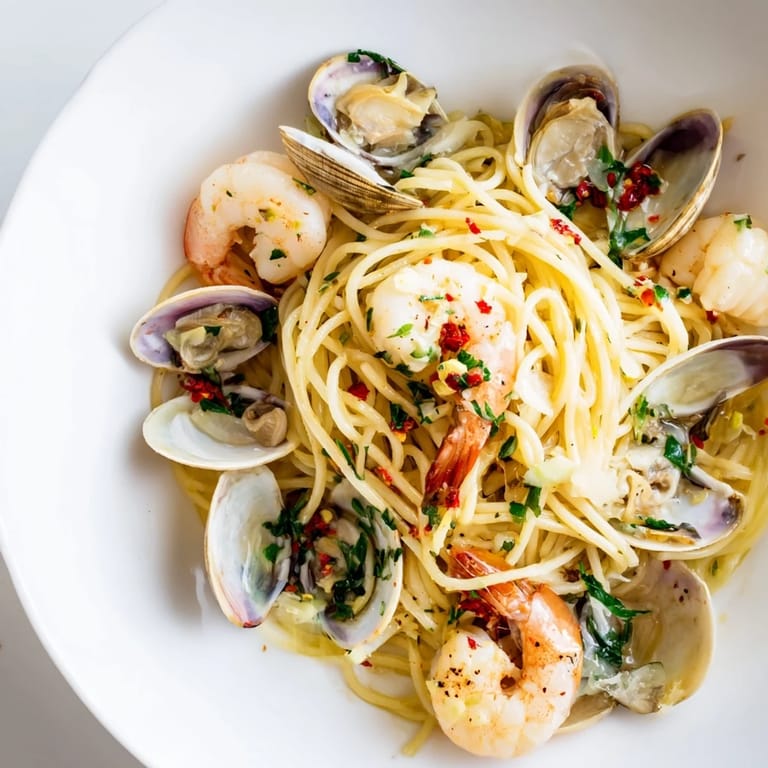
Save There's something about the smell of garlic hitting hot olive oil that pulls me right back to a tiny Roman kitchen where a friend's grandmother was cooking without measuring anything. She'd toss in shrimp and clams like she was conducting an orchestra, the wine hitting the pan with a theatrical hiss, and suddenly I understood why Italians don't complicate seafood pasta—they just let the ocean and garlic do the talking.
I made this for my partner after a long day, and watching their face when that first forkful hit—eyes closed, that small satisfied nod—I realized I'd nailed it. The kitchen smelled like a coastal village, and for a moment we weren't rushing through dinner, we were actually there.
Ingredients
- Large shrimp (250 g): Buy them already peeled if you can, and pat them dry before cooking so they sear instead of steam.
- Fresh clams (500 g): The briny liquid they release is your flavor secret, so choose ones that feel heavy and don't smell off.
- Spaghetti (400 g): The thinner strands let the oil coat every inch; don't use thick pasta here.
- Extra virgin olive oil (6 tbsp): This is where quality matters because it's not hidden in a complex sauce—taste it first and use something you'd actually want to drink.
- Garlic cloves (5), thinly sliced: Slice them yourself rather than using pre-minced; they'll toast more evenly and stay intact.
- Red chili flakes (1/2–1 tsp): Start with less and taste as you go, because it sneaks up on you in the warm oil.
- Dry white wine (1/2 cup): Something you'd drink matters more than an expensive bottle—acidity cuts through the richness.
- Lemon zest and juice: The brightness keeps everything from feeling heavy; zest it fresh and squeeze the juice by hand.
- Fresh flat-leaf parsley (1/4 cup), chopped: Add most of it at the end so it stays vibrant and tastes green, not cooked down.
- Salt and freshly ground black pepper: Taste constantly because the clam liquid adds salt, and you'll need less than you think.
Tired of Takeout? 🥡
Get 10 meals you can make faster than delivery arrives. Seriously.
One email. No spam. Unsubscribe anytime.
Instructions
- Salt your water generously and get the pasta cooking:
- Fill a large pot with water, add enough salt that it tastes like the sea, and bring it to a rolling boil. Add spaghetti and stir immediately so it doesn't clump; cook until al dente (usually a minute or two before the package says). Before you drain it, scoop out about half a cup of starchy pasta water—this is liquid gold for finishing the dish.
- Toast the garlic in warm oil:
- Pour olive oil into a large skillet and set it over medium heat. Once it shimmers, add the sliced garlic and chili flakes, stirring constantly for about 1 minute until the garlic turns golden and fragrant. This is the moment to watch carefully because garlic burns fast and tastes bitter if you miss it.
- Sear the shrimp quickly:
- Add the shrimp to the aromatic oil and let them cook for about 2 minutes on each side until they just turn pink. They'll continue cooking later, so don't leave them in too long or they'll toughen up.
- Steam open the clams:
- Pour in the white wine, add the clams, and cover the skillet. Shake the pan occasionally and listen for the soft clicks of shells opening—this takes 3 to 5 minutes. Discard any clams that stubbornly refuse to open; they weren't good to begin with.
- Bring it all together:
- Return the shrimp to the pan, add the drained pasta along with the lemon zest, lemon juice, and most of the fresh parsley. Toss everything together gently, adding pasta water a splash at a time until the dish becomes silky and glossy. The starch in the pasta water emulsifies with the oil to create something far better than any cream sauce.
- Taste and serve:
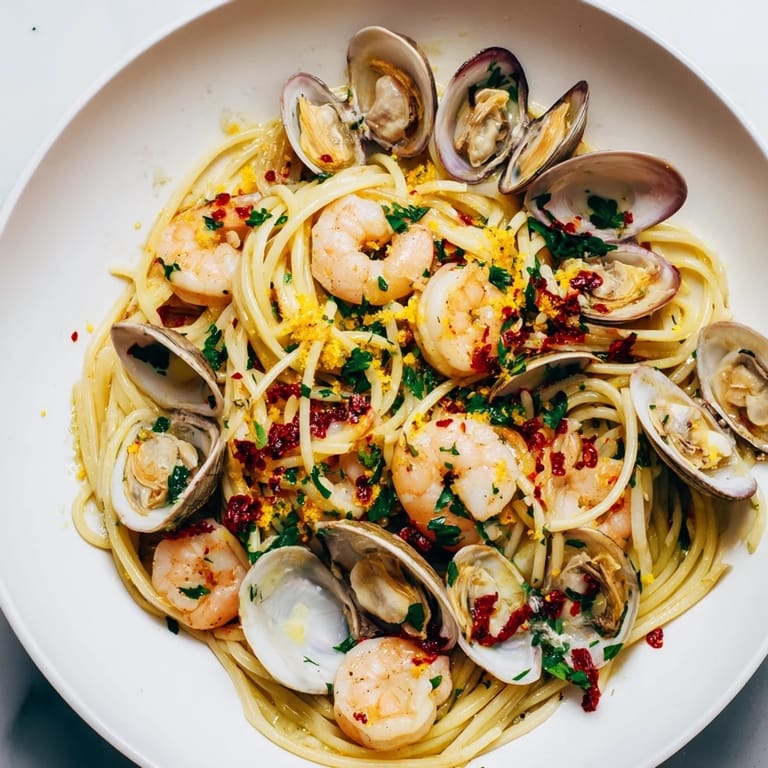
- Season with salt and pepper, remembering that the clams added brine to the party. Divide among bowls and scatter extra parsley on top, with lemon wedges on the side for anyone who wants more brightness.
 Save
Save There's a moment when you're tossing the hot pasta with the briny clams and fragrant oil, and everything comes together in the pan with a whisper—that's when cooking feels less like following instructions and more like speaking a language you've always known.
Choosing Your Seafood
The quality of your shrimp and clams makes or breaks this dish, so get to know your fishmonger or find a market where the seafood actually smells like the ocean and not like old ice. Fresh clams should be tightly closed or snap shut when you tap them, and shrimp should have a slight translucence and feel firm. If you're nervous about freshness, ask when they came in and don't settle for anything that makes you hesitate.
Why Garlic Oil Works Better Than You Think
The magic of aglio e olio isn't in the complexity—it's in the restraint. By infusing the oil slowly with garlic and chili, you're building a base that tastes like it took hours, but it only took minutes. The pasta water that you toss in at the end transforms that oil into something creamy and luxurious without a single drop of cream, which is why this dish feels indulgent but also light and clean.
Timing and Variations That Work
The beauty of this recipe is how fast it comes together once you've prepped everything, so mise en place—having everything sliced, measured, and ready—makes the actual cooking feel calm instead of chaotic. You can swap mussels for clams if that's what your market has, add a handful of calamari for sweetness, or even toss in some white fish if you want to stretch it further. The core technique stays the same: hot oil, quick cooking, finish with acid and herbs.
- Gluten-free pasta works perfectly here; just follow the same cooking instructions and use that starchy water for the final toss.
- If you're cooking for someone shellfish-allergic, keep the technique and swap in white fish or scallops instead.
- This is one of those dishes where a crisp white wine on the side isn't just a suggestion—it's part of the meal.
 Save
Save This is the kind of dish that reminds you why Italian cooking doesn't need to be complicated to be beautiful—just good ingredients, proper heat, and the willingness to let each flavor speak for itself.
Recipe Questions & Answers
- → What type of seafood is best for this dish?
Fresh large shrimp and clams work best to provide a balance of textures and flavors. You can also substitute clams with mussels or add calamari for variety.
- → How do I ensure the pasta is perfectly al dente?
Cook the spaghetti in boiling salted water following package instructions, then drain while still firm to the bite. Reserving some pasta water helps adjust the sauce consistency.
- → How should the garlic be cooked for optimal flavor?
Sauté sliced garlic gently in olive oil until golden and fragrant, about one minute. Avoid burning it to maintain a pleasant aroma without bitterness.
- → Can I make this dish gluten-free?
Yes, simply use gluten-free pasta and ensure that all other ingredients are free from gluten cross-contamination.
- → What wine pairs well with this pasta?
A crisp Italian white wine such as Pinot Grigio complements the seafood and bright citrus notes perfectly.