 Save
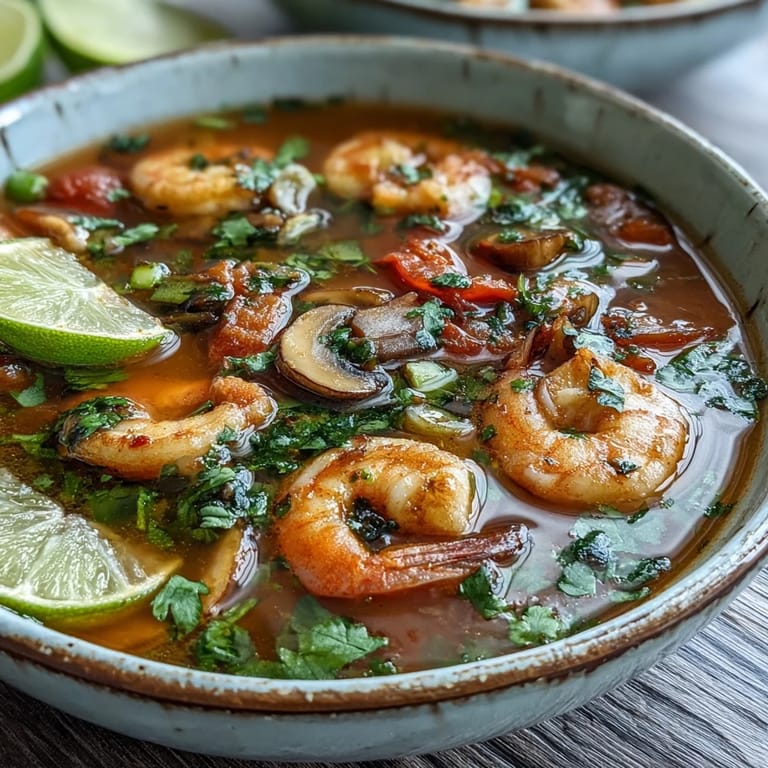
Save I used to live near a tiny Thai market where the air always smelled like bruised lemongrass and crushed chiles. One rainy Tuesday the shop owner handed me a bundle of kaffir lime leaves and told me that a good soup should make your nose tingle. I went home and spent the evening trying to replicate that specific electric heat. It was messy at first but the steam rising from the pot eventually turned the gray afternoon into something vibrant.
I once served this to a friend who claimed they hated spicy food only to watch them finish three bowls in silence. We sat on the kitchen floor because my table was covered in leftover lime peels and cilantro stems. It was one of those rare moments where the food did all the talking for us.
Ingredients
- Chicken or vegetable stock: Using a high quality base ensures the aromatics have a solid foundation to build upon.
- Lemongrass stalks: Make sure to really bruise these with the back of your knife to release the essential oils.
- Kaffir lime leaves: Tearing them by hand helps unlock that citrusy perfume that defines the whole dish.
- Galangal slices: This root provides a piney earthy zing that ginger just cannot quite replicate.
- Thai birds eye chiles: These little peppers pack a punch so start with one and work your way up.
- Mushrooms: I prefer button or straw mushrooms because they soak up the spicy broth like little sponges.
- Tomatoes: Adding these wedges provides a subtle sweetness and a beautiful pop of color to the pot.
- Shrimp: Keep the tails on if you want a more traditional look and a bit of extra flavor.
- Fish sauce: This is the secret to that deep umami funk that makes the soup taste authentic.
- Lime juice: Always squeeze this fresh at the very end to keep the brightness from fading.
Tired of Takeout? 🥡
Get 10 meals you can make faster than delivery arrives. Seriously.
One email. No spam. Unsubscribe anytime.
Instructions
- Infuse the broth:
- Drop your smashed aromatics into the simmering stock and let the kitchen fill with that incredible herbal scent.
- Soften the vegetables:
- Toss in the mushrooms and tomatoes watching as the broth takes on a golden hue from the vegetables.
- Cook the protein:
- Slide the shrimp into the pot and wait just a few minutes until they curl into perfect pink hooks.
- Balance the flavors:
- Stir in your seasonings and take a small sip to see if you need more lime or heat.
- Garnish and serve:
- Ladle the steaming liquid into deep bowls and scatter fresh herbs over the top for a final flourish.
 Save
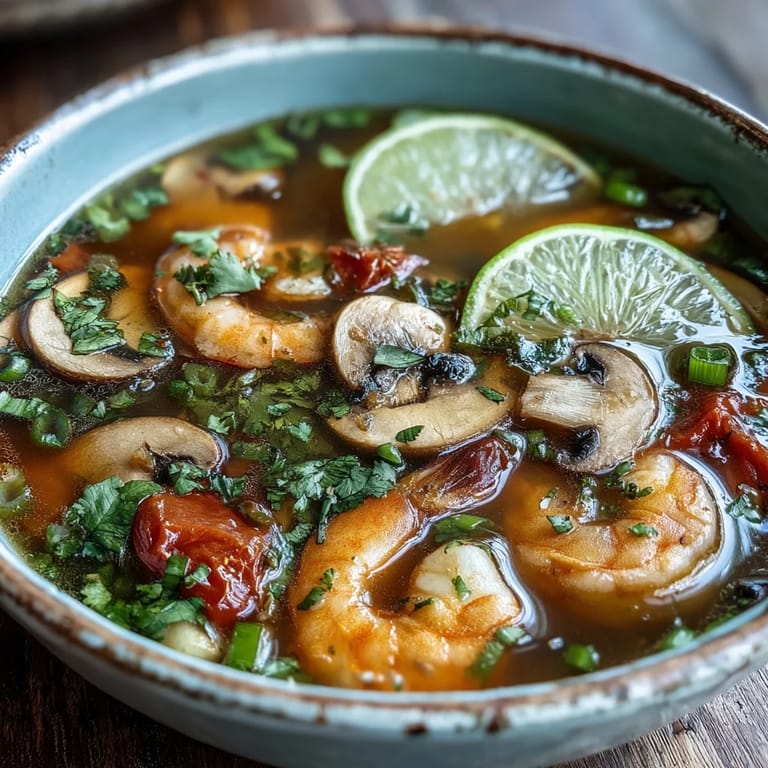
Save There is a specific sound the lid makes when it rattles against the pot that always reminds me of cozy nights in. It is the sound of a meal coming together while the rest of the world slows down.
The Art of the Bruise
When you prep the lemongrass do not be afraid to really give it a good whack with a heavy pan. This physical breakdown is what allows the citrus oils to seep into the stock rather than staying trapped inside the stalk.
Finding the Heat
Spiciness is a personal journey and what feels like a tickle to one person might be a firestorm to another. I like to keep a small bowl of sliced chiles on the table so everyone can customize their own level of intensity.
Making it a Meal
While this soup is stunning on its own I often find myself adding extra elements to turn it into a full dinner. It pairs beautifully with a side of jasmine rice that can soak up every last drop of the broth.
- Add a handful of glass noodles for extra slurpable texture.
- Try swapping the shrimp for firm cubes of tofu if you want something heartier.
- Keep extra lime wedges nearby to refresh the bowl halfway through.
 Save
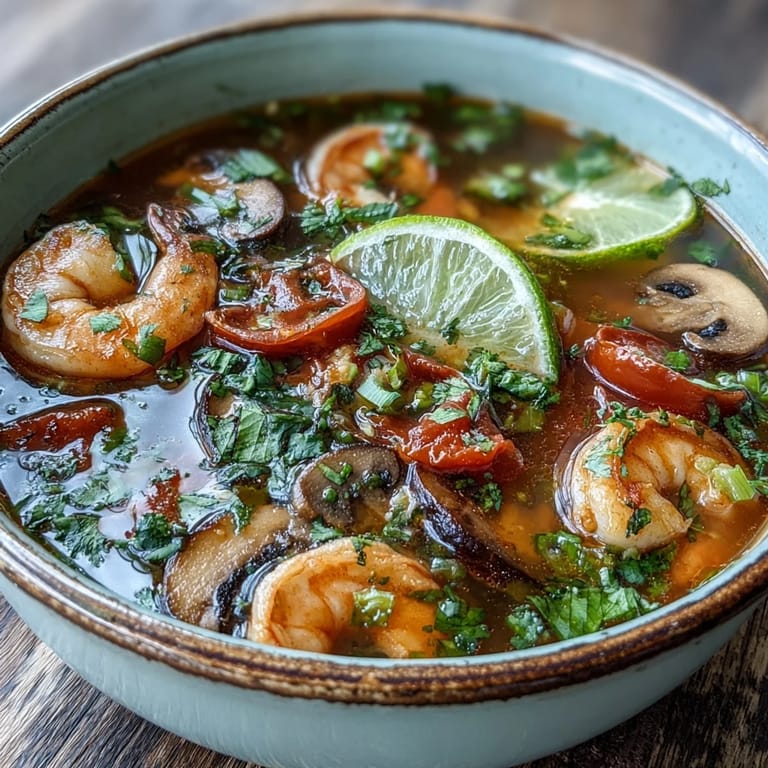
Save This bowl is a reminder that the simplest ingredients can create the most complex experiences. I hope it brings a bit of sunshine to your kitchen today.
Recipe Questions & Answers
- → What makes tom yum unique?
Tom yum's distinct character comes from the harmonious balance of four key flavors: sour from fresh lime juice, spicy from Thai chiles, salty from fish sauce, and aromatic from lemongrass, galangal, and kaffir lime leaves. This creates a complex, layered broth that's both refreshing and deeply satisfying.
- → Can I make tom yum vegetarian?
Yes, simply swap chicken stock for vegetable stock, replace shrimp with firm tofu cubes, and use soy sauce instead of fish sauce. The aromatic base remains the same, delivering that signature tangy, spicy flavor profile while being completely plant-based.
- → How spicy is this soup?
The heat level is easily adjustable. Two Thai bird's eye chiles provide medium spice, but you can reduce to one for milder heat or increase to three for more kick. Removing the seeds lowers the intensity while keeping the chili flavor. Taste and adjust during the final seasoning step.
- → What mushrooms work best?
Straw mushrooms are traditional in Thai cooking, but button mushrooms, shiitake, or oyster mushrooms all work beautifully. Slice them evenly so they cook through during the brief simmer time. Their earthy flavor complements the bright, citrusy broth perfectly.
- → Can I prepare this ahead?
The broth base can be made a day ahead and refrigerated. However, add the shrimp and vegetables just before serving, as overcooking makes shrimp rubbery and vegetables mushy. Reheat the aromatic broth gently, then proceed with adding fresh ingredients for the best texture and flavor.
- → What should I serve with tom yum?
Steamed jasmine rice is the classic accompaniment, soaking up the flavorful broth. You can also serve with rice noodles for a complete bowl. Fresh herbs like extra cilantro, mint, or basil on the side let diners customize. Lime wedges are essential for adding fresh acidity at the table.