 Save
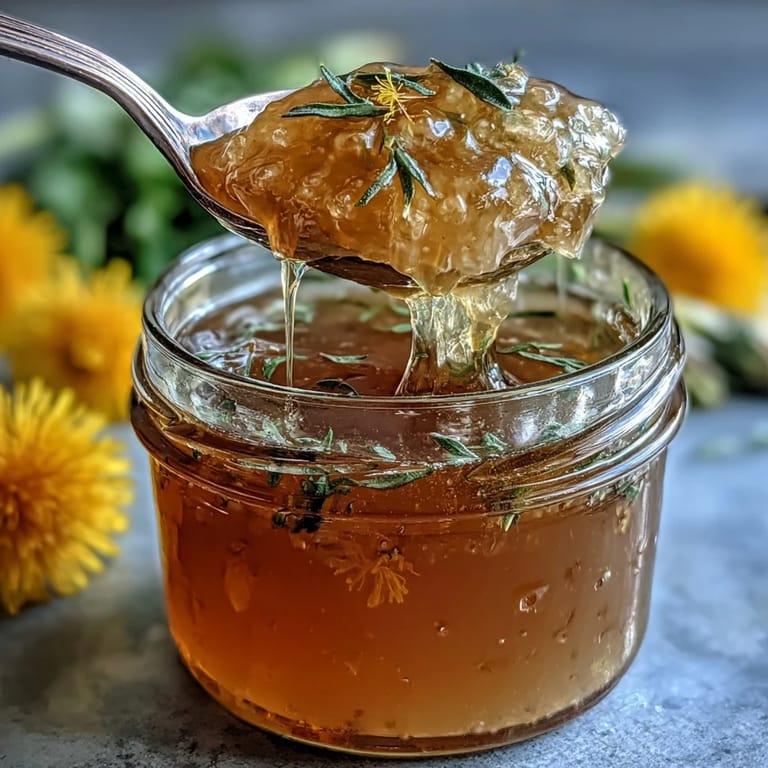
Save The first time I made dandelion jelly, sunlight streamed through the kitchen window and scattered golden patterns across my countertops. A faint grassy aroma hovered in the air as I separated petals, and it felt oddly meditative, like plucking a bit of spring into a jar. I remember wondering skeptically if these humble weeds could taste as magical as their color suggested. As I poured the amber liquid into jars, I realized how rare it is to bottle up the essence of a season. The anticipation built overnight, steeping quietly as I dreamt of breakfast toasts scented with honey and lemon.
Once, I made this jelly with my niece on a late April afternoon—she was convinced it would taste ‘just like sunshine.’ We spent ages picking petals, giggling over our sticky fingers, and the kitchen was filled with the sound of little feet and soft laughter. As the jelly cooled, she asked if we could bring some to her teacher, and suddenly our little experiment felt bigger than just a jar of jam. Even the most routine chores, like sterilizing jars, became meaningful shared moments. That day, the jelly became a celebration instead of just a condiment.
Ingredients
- Fresh dandelion petals: Picking only the yellow parts is key; avoid any green bits so you get pure floral flavor without bitterness.
- Water: Use filtered or spring water rather than tap, since it brings out the clarity in the jelly and keeps the taste clean.
- Fresh lemon juice: I always squeeze the lemon right before adding—never bottled—because the zing is much brighter.
- Granulated sugar: Balances the earthiness and works with the honey for a soft, smooth texture.
- Mild honey: I’ve tried stronger honeys, but a milder variety lets the dandelions shine.
- Fruit pectin: Pectin helps set the jelly; make sure to measure accurately and stir it in well so you avoid lumps.
Tired of Takeout? 🥡
Get 10 meals you can make faster than delivery arrives. Seriously.
One email. No spam. Unsubscribe anytime.
Instructions
- Petal Preparation:
- Start by gently pinching the dandelion petals off, leaving behind every trace of green. You might get sticky fingers, but don’t rush—this makes all the difference for flavor.
- Simmer and Steep:
- Bring petals and water to a boil, then lower to a gentle simmer. It’ll smell faintly herbal; cover and steep for at least six hours—overnight if you can—for maximum fragrance.
- Strain and Measure:
- Pour the infusion through a fine mesh sieve or cheesecloth, pressing until every drop is squeezed out. Adjust the liquid to exactly three cups before moving forward.
- Blend and Boil:
- Return this infused liquid to a saucepan, stir in lemon juice and pectin, and bring to a boil over high heat, stirring constantly. The swirling steam smells lightly floral and citrusy.
- Sweeten and Set:
- Add sugar and honey, stirring well, then boil hard for one or two minutes. Watch for the jelly test: drop a spoonful on a cold plate, and if it wrinkles under a finger, it’s ready.
- Jar and Seal:
- Skim any foam off the surface, then ladle into jars, leaving space at the top. Wipe the rims, seal, and process in a boiling water bath for five minutes; the jars will ping as they cool.
- Cool and Store:
- Let jars cool without moving them. Check the seals and store away from sunlight—the color will stay bright and golden for months.
 Save
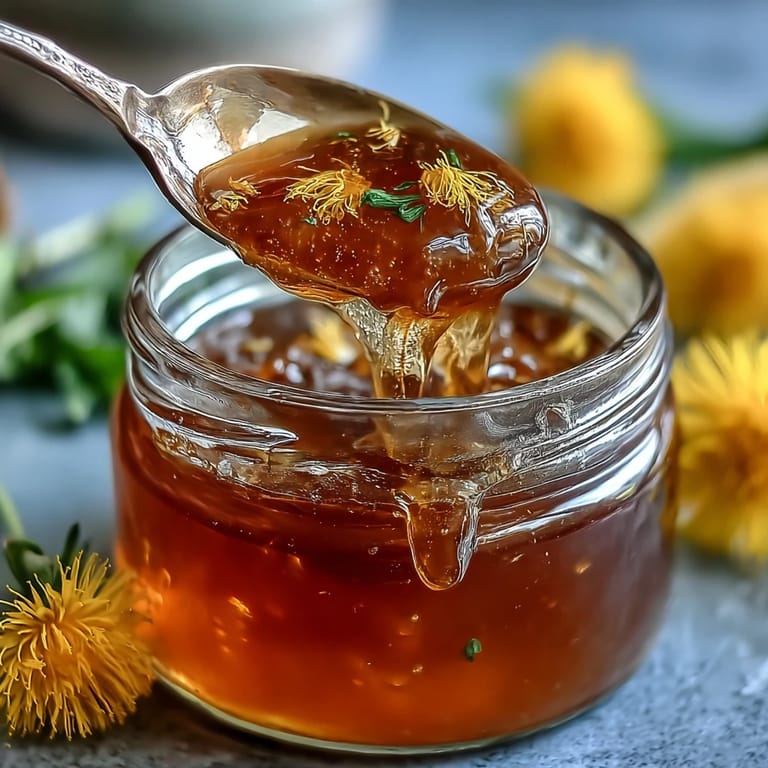
Save The first spoonful I ever tried was late at night, perched at the kitchen counter while the jars cooled in their neat row. It tasted crisp and floral, with honey lingering at the edges—suddenly, I understood how ordinary weeds could feel celebratory. This jelly always makes me pause and appreciate the quiet joy of foraging and sharing homemade preserves.
What Foraging Teaches You
Harvesting dandelions changed the way I see my backyard—now, I spot edible treasures where others see weeds. Carefully picking, sorting, and cleaning petals lets me slow down and notice nature’s subtle flavors. It’s always a team effort; bring friends or kids to help and turn the task into a spring ritual. Trust your eyes and hands: if in doubt, toss any petals with green. Clean, untreated lawns are safest and yield the brightest jelly.
Sterilizing Your Jars Like a Pro
Rushing the sterilizing step isn’t worth it if you want to preserve flavor and prevent spoilage. I learned to start the process early, so jars are piping hot and ready just as the jelly finishes boiling. A funnel makes pouring easier, but ladling with care keeps jars neat and avoids sticky rims. Double check your lids for any warping or residue before sealing. If you hear a satisfying ‘ping’ as jars cool, you know you’ve done it right.
Troubleshooting Your Jelly Texture
Sometimes, jelly just refuses to set and you’re left with a golden syrup—the culprit is usually inaccurate measuring or inadequate boiling. If your jelly seems too loose, boil an extra minute and retest with the cold plate method. Avoid overboiling, or the flavor diminishes and the jelly turns cloudy. A little patience pays off, and if all fails, syrup still tastes lovely atop pancakes or yogurt.
- Quickly skim foam to keep your jelly clear and vibrant.
- If you like softer set, reduce pectin slightly but beware runny outcomes.
- Let jars cool fully before moving or stacking to prevent disrupting the seal.
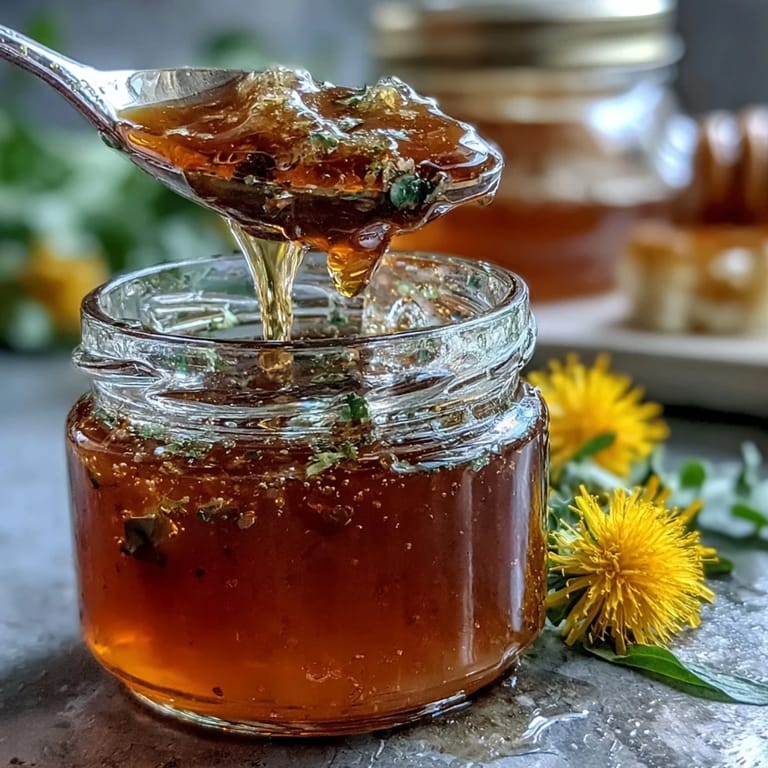 Save
Save There’s something quietly satisfying about sharing homemade dandelion jelly with friends who never imagined weeds could taste so good. Enjoy your spring harvest year-round, one bright spoonful at a time.
Recipe Questions & Answers
- → Can I make this vegan?
Yes, substitute honey with agave syrup or more sugar for a vegan-friendly option.
- → How do I know when the jelly is set?
Perform the plate test: spoon hot jelly onto a cold plate and push; if it wrinkles, it's ready.
- → What is the best way to harvest dandelion petals?
Pick yellow petals from pesticide-free areas and remove any green parts to avoid bitterness.
- → Which tools are needed?
You'll need a saucepan, fine sieve or cheesecloth, measuring cups, sterilized jars, ladle, and water bath canner.
- → Does the jelly contain common allergens?
Aside from honey, which isn't suitable for infants under 1 year, it is free of common allergens.
- → What foods pair well with dandelion jelly?
Enjoy on toast, drizzle over yogurt, or pair with soft cheeses for a floral twist.