 Save
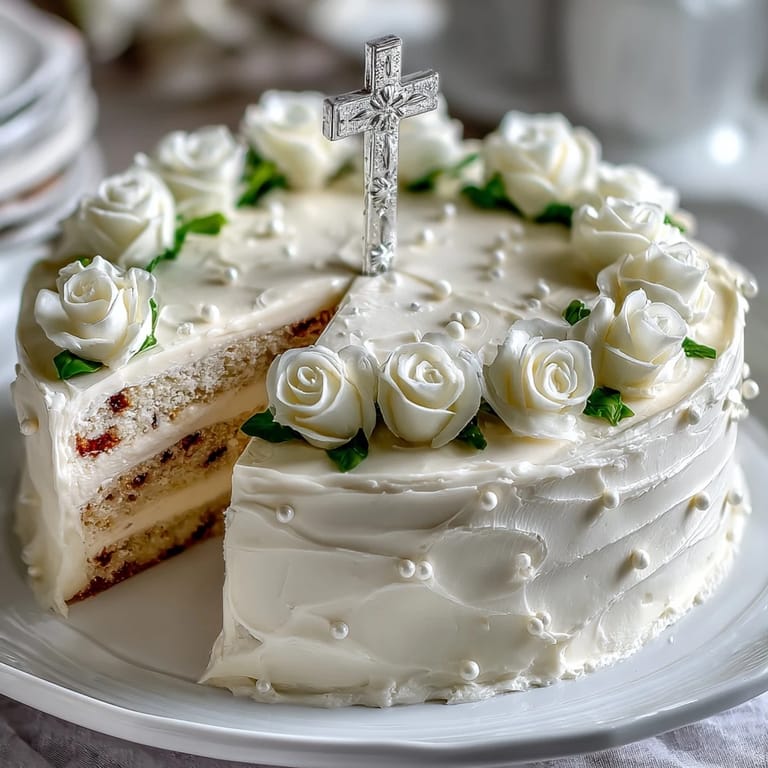
Save My sister called me in a panic two weeks before her daughter's First Communion, asking if I could bake something special. I'd never made a celebration cake quite like this before, but standing in her kitchen, imagining a small girl in white lace, I knew exactly what needed to happen—layers of tender vanilla cake, clouds of buttercream, and fondant roses that would look like they'd been plucked from a garden. There's something about baking for a milestone that makes you slow down, pay attention to every detail, and pour intention into each fold and swirl.
I'll never forget pulling this cake out of the oven and hearing my brother-in-law say, "It smells like every good thing at once." That's when I realized this wasn't just about getting the proportions right—it was about creating something that made people pause, take a breath, and feel the weight of the moment. Watching that little girl's face light up when she saw it on the table made every trembling hand moment and fondant mishap completely worth it.
Ingredients
- All-purpose flour: Use a good quality brand here because it actually matters; this is your cake's backbone and it deserves respect.
- Baking powder: Fresh baking powder makes the difference between a dense cake and one that rises with confidence, so check that expiration date.
- Unsalted butter: Room temperature butter creams properly with sugar, which traps tiny air bubbles that make the cake fluffy and light.
- Granulated sugar: Don't skip the creaming step with butter; those three minutes of beating are when magic happens.
- Large eggs at room temperature: Cold eggs resist mixing in and create lumps; let them sit out while you prep everything else.
- Pure vanilla extract: The real stuff makes a noticeable difference; imitation vanilla tastes thin against the elegance of this cake.
- Whole milk at room temperature: Cold milk can seize the batter, so plan ahead and pull it from the fridge early.
- Unsalted butter for frosting: Soften this thoroughly so it whips into clouds without lumps.
- Powdered sugar: Always sift it first, even if the bag says it's already sifted, because clumps hide in there waiting to ruin your frosting texture.
- White fondant: Store-bought is perfect here; making it from scratch is beautiful but honestly, life is short.
- Green gel food coloring: Gel colors don't thin out your fondant like liquid food coloring does, which keeps your roses from becoming mushy.
- Edible pearls or dragees: These tiny touches catch the light and make people think you spent way more time decorating than you actually did.
- Cross topper: Whether you buy a beautiful one or make it from fondant, this becomes the focal point that ties the whole celebration together.
Tired of Takeout? 🥡
Get 10 meals you can make faster than delivery arrives. Seriously.
One email. No spam. Unsubscribe anytime.
Instructions
- Prepare Your Pans and Preheat:
- Set your oven to 350°F and while it warms, grease those cake pans thoroughly, then line the bottoms with parchment paper—this step feels like a small kindness to your future self when you're turning out perfect cake layers. The parchment is insurance against sticking and heartbreak.
- Sift Your Dry Ingredients:
- Whisk flour, baking powder, and salt together in a bowl; this aerates the flour and distributes the leavening evenly, which is how you get that tender crumb. I learned this the hard way after making dense cakes before I understood the why.
- Cream Butter and Sugar:
- Beat softened butter and sugar for a full three minutes until it's pale, fluffy, and looks almost like frosting itself; this is where the cake's lightness begins. The transformation is visible and oddly satisfying to watch.
- Incorporate Eggs Slowly:
- Add eggs one at a time, beating well after each one, then mix in the vanilla extract; rushing this step creates an oily, separated batter that bakes into a heavy cake. Patience here pays off in texture.
- Alternate Dry and Wet Ingredients:
- On low speed, add a third of the flour mixture, then half the milk, then another third of flour, then the rest of the milk, then the final flour portion; this prevents overmixing and keeps your cake tender. The first time I did this I marveled at how the batter stayed smooth and beautiful.
- Divide and Smooth the Batter:
- Pour batter evenly between pans and smooth the tops so they bake at the same rate and rise evenly. Use an offset spatula or the back of a spoon dipped in water.
- Bake Until Golden:
- Bake for 30 to 35 minutes until a toothpick inserted in the center comes out clean and the tops are golden and spring back when lightly touched. The smell alone will make you believe you can do this.
- Cool Properly:
- Let cakes cool in their pans for 10 minutes so they set slightly, then turn them out onto wire racks to cool completely; this prevents them from becoming gummy. This waiting period is when you can finally breathe.
- Make Your Buttercream:
- Beat softened butter until it's creamy, then gradually add sifted powdered sugar, vanilla, and a pinch of salt, adding milk one tablespoon at a time until you reach spreading consistency. The frosting should be thick but spreadable, never grainy.
- Level and Crumb Coat:
- Use a serrated knife to level the cake layers if needed, place one layer on your cake board, spread with buttercream, then stack the second layer on top. Cover the entire cake with a thin crumb coat and chill for 20 minutes so loose crumbs don't get dragged into your final frosting layer.
- Apply Final Frosting:
- Once chilled, apply a smooth, generous final layer of buttercream using an offset spatula; work slowly and let the spatula do the work rather than overthinking it. This is where the cake transforms from assembled to polished.
- Roll and Shape Fondant Roses:
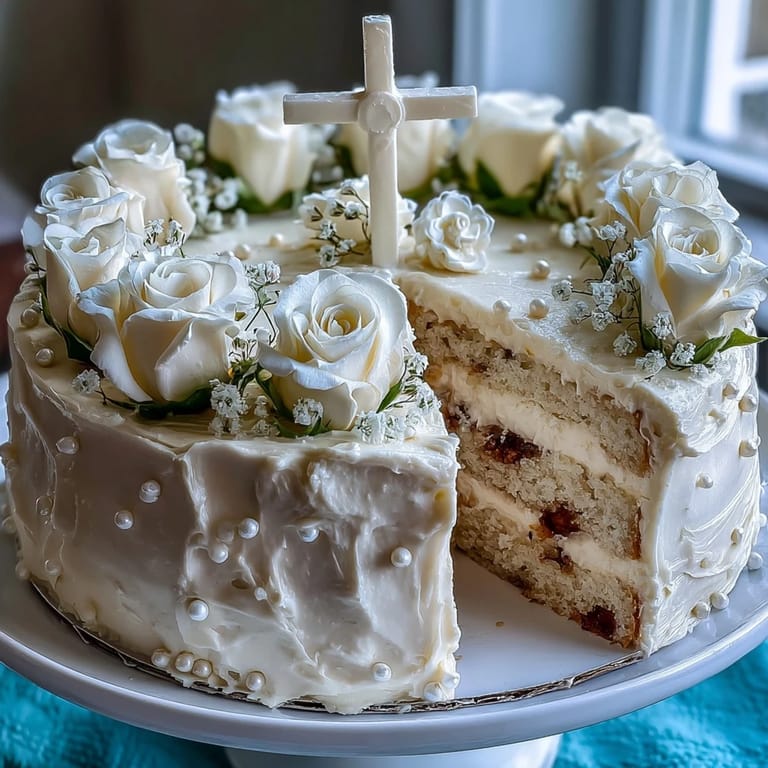
- Roll white fondant to 1/8-inch thickness, then cut small circles or hand-shape petals by flattening small fondant balls; curl them around each other to form rose shapes, building from the center outward. Each rose takes maybe a minute once your hands understand the motion.
- Create Fondant Leaves:
- Tint a small amount of fondant green if you want leaves, roll it thin, and shape with a knife or leaf tool; these add a garden-fresh touch next to the roses. Even simple leaf shapes look intentional and beautiful.
- Decorate and Chill:
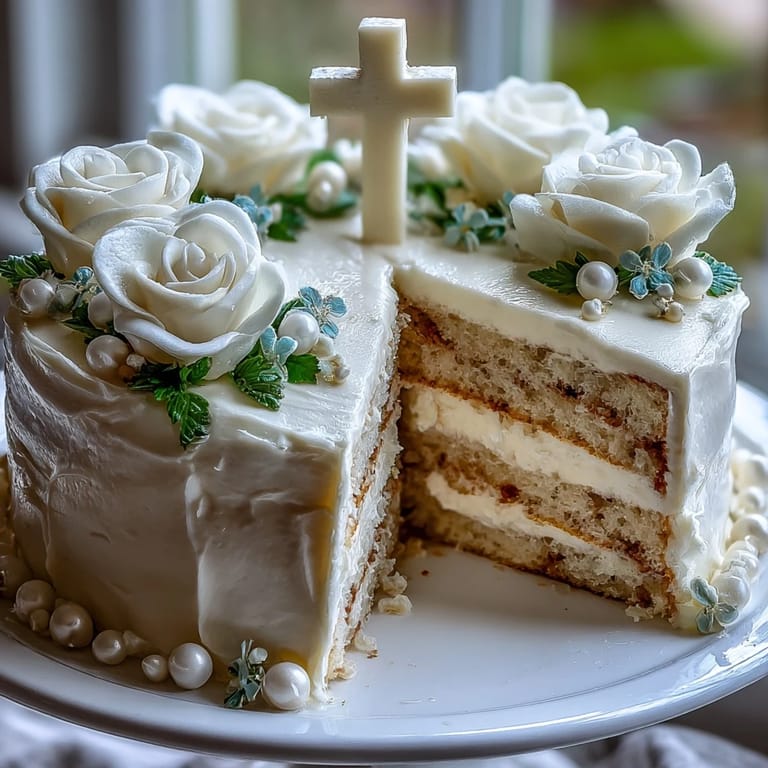
- Arrange your fondant roses and leaves on the frosted cake, add edible pearls or dragees for sparkle, place your cross topper at the center, and chill until serving time. This is the moment when everything you've worked toward becomes visible and real.
 Save
Save A week after the celebration, my sister texted me a photo of her daughter still talking about the cake, about the roses and the cross on top. What struck me was realizing that a cake could be more than sustenance—it could be a physical expression of how much someone matters, how a milestone deserves beauty and care. That's when I understood why people learn to decorate cakes in the first place.
The Fondant Rose Secret
The first time I made fondant roses, I was convinced they'd look like lumpy disasters. The truth is, fondant is incredibly forgiving; it doesn't require a culinary degree, just slightly damp hands and the willingness to shape something without perfectionism. Start with one rose and you'll find your rhythm—your hands will understand what round shapes need to become petal-like. After your fifth rose, you'll be humming and shaping without thinking about it.
Scaling This Cake
If you need to feed more people, this recipe doubles beautifully and bakes the same way—just use two 8-inch pans twice, or four 8-inch pans if your oven can handle it. You can also make this as a single layer sheet cake, which actually bakes faster and is easier to decorate if your confidence is still building. The buttercream recipe scales equally well; you'd just need to double it for a larger cake.
Flavor Variations Worth Considering
The vanilla base is classic for a reason, but once you've made this cake once, you'll start imagining possibilities. Some bakers swear by adding the zest of one lemon to the batter for brightness, or a quarter teaspoon of almond extract alongside the vanilla for depth. I've heard whispers of people using coconut milk instead of regular milk, or brushing the layers with a light simple syrup to keep them extra moist.
- A touch of cardamom or a whisper of rose water in the buttercream would be stunning and unexpected.
- White chocolate shavings scattered over the frosting add texture and elegance without changing the flavor profile.
- If the cake is for a summer celebration, a thin layer of fresh raspberry jam between the cake layers brings color and a subtle tart note.
 Save
Save This cake exists in that sweet spot where it's impressive enough for a celebration but achievable enough that you won't regret attempting it. Make it once and you'll have the confidence to make it again, and that's really what baking is about.
Recipe Questions & Answers
- → How do I achieve moist vanilla sponge layers?
Use room temperature eggs and milk, cream the butter and sugar well, and avoid overmixing once flour is added to retain moisture and tender crumb.
- → What tips help make smooth buttercream frosting?
Beat butter until creamy before adding powdered sugar gradually. Add milk or cream stepwise to reach desired texture without making it too runny.
- → How to shape realistic fondant roses?
Roll small fondant balls, flatten into petals, then layer and shape gently with fingers or a tool to form rose shapes. Tint some fondant for leaves if desired.
- → Can this cake be adapted for dietary restrictions?
Yes, substitute half the butter with vegetable oil for a lighter texture or use gluten-free flour blends to accommodate dietary needs.
- → What is the best way to assemble and chill the cake?
After layering with buttercream, apply a crumb coat and chill for 20 minutes before the final frosting and decorating to ensure clean finish and stability.